
There’s a specific kind of disappointment that comes from pulling a chicken out of the oven, slicing into it, and finding dry, stringy breast meat. If you’ve been there, you already know why so many home cooks avoid roasting a whole bird altogether. Learning how to cook a whole chicken properly isn’t complicated, but it does depend on a handful of details that most recipe cards skip over.
Get those details right and the payoff is real: crackling skin, meat that pulls cleanly off the bone, and enough leftovers for soup or sandwiches the next day. This guide walks through the actual mechanics of roasting a bird, not just a list of ingredients.
How to Cook a Whole Chicken: Getting the Bird Ready
Prep matters more than most people assume. A chicken pulled straight from the fridge and shoved into a hot oven will cook unevenly, and the skin won’t crisp the way it should.
Start by patting the bird completely dry with paper towels, inside and out. Wet skin steams instead of browning. Anyone who’s roasted a bird knows the difference between a chicken that sat uncovered in the fridge for a few hours and one that went straight from a wet package into the oven — the dry one wins every time.
Season generously. Salt under the skin, not just on top, seasons the meat itself rather than just the surface. Some cooks salt the bird a full day ahead and leave it uncovered in the fridge; this dry-brining step draws out moisture, then reabsorbs it along with the salt, which keeps things juicier during roasting.
Trussing — tying the legs together with kitchen twine — helps the bird cook more evenly by keeping the legs close to the body. It’s optional, but it does make a visible difference in how evenly the breast and thighs finish cooking.
Oven Temperature and Timing That Actually Work
There’s no single “correct” oven temperature. Different setups produce different results, and knowing the tradeoffs helps you pick the right one for the night you’re having.
A few reliable starting points:
- 450°F: fastest option, best for a smaller bird (around 3-4 lbs), roughly 13-15 minutes per pound
- 425°F: a strong middle ground for crisp skin without rushing the interior, about 15-17 minutes per pound
- 350°F: slower and more forgiving for beginners, closer to 20 minutes per pound
These numbers are guidelines, not guarantees. Oven calibration varies, bird shape varies, and a chicken with giblets still inside cooks differently than one without. That’s the whole reason a thermometer matters more than a clock.
Spatchcocking — cutting out the backbone and flattening the bird before roasting — cuts cooking time significantly and produces more even browning across breast and thigh. It’s become a popular shortcut for weeknight cooking because it trades a bit of visual drama for speed and consistency.
Checking for Doneness Without Guessing
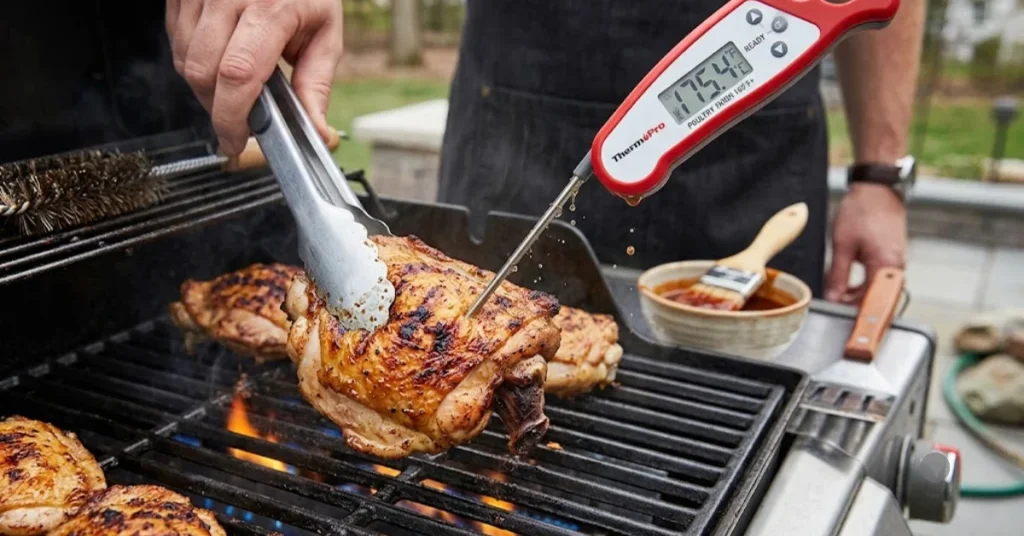
Color tells you almost nothing reliable. A chicken can look done and still be unsafe, or look slightly pink near the bone and be perfectly safe. Temperature is the only signal worth trusting.
Insert an instant-read thermometer into the thickest part of the thigh, avoiding the bone, and look for a reading of at least 165°F. That figure comes from federal food safety guidance and applies across cooking methods, whether you’re roasting, grilling, or smoking the bird.
Here’s something worth knowing: internal temperature keeps climbing for several minutes after the chicken leaves the oven, sometimes by a meaningful margin, because a whole bird holds enough mass to keep transferring heat inward. Pull the chicken a few degrees below your target and let it rest, tented loosely with foil, for ten to fifteen minutes. That rest period matters just as much as the cook time — cutting into the bird too early lets all those juices run straight onto the cutting board instead of staying in the meat.
What the Research Shows About Roasting Chicken
Detailed analysis of roasting behavior across different cuts reveals something counterintuitive: breast and thigh meat don’t reach ideal doneness at the same temperature. Breast meat turns dry and stringy past 165°F, while thigh and leg meat actually improves in texture up to around 175°F, since the extra heat breaks down connective tissue that would otherwise feel chewy.
That’s the core tension in roasting a whole bird, and it’s why some experienced cooks separate the parts or use a spatchcock method that exposes both cuts to slightly different heat zones. Home economists and professional test kitchens have converged on the same conclusion over the past several years: a single “done” temperature works for food safety, but real culinary judgment requires checking more than one spot on the bird.
Mistakes That Leave the Meat Dry
A few habits quietly ruin an otherwise good chicken:
Skipping the rest period is the most common one. Even a perfectly cooked bird turns dry if it’s carved immediately.
Basting too often opens the oven repeatedly, dropping the temperature each time and extending the total cook time without actually improving flavor. One or two bastes are plenty.
Cooking a cold bird straight from the fridge means the outside finishes well before the inside catches up. Letting it sit at room temperature for thirty to forty-five minutes before roasting closes that gap.
And relying on pop-up timers built into some store-bought birds isn’t foolproof — they’re calibrated to a single average temperature and don’t account for oven variation or bird size.
How to Cook a Whole Chicken for Different Occasions
A Sunday roast calls for a different approach than a Tuesday dinner. For a slower, more traditional meal, the 350°F method gives more room for basting, resting, and building a pan sauce from the drippings. For a weeknight, spatchcocking at 425°F gets dinner on the table in under an hour without sacrificing much in flavor.
Anyone cooking for a crowd should factor in oven space and carryover cooking time — a larger bird, say six pounds or more, benefits from a lower, slower roast so the outside doesn’t scorch before the inside catches up. Smaller households often do better buying a bird closer to three or four pounds, since it cooks faster and leaves fewer leftovers to manage.
As of 2026, more home cooks are leaning toward the spatchcock method specifically because it shaves real time off dinner without asking for extra equipment beyond a good pair of kitchen shears.
Final Thoughts
None of this requires fancy equipment or a culinary degree. Learning how to cook a whole chicken really comes down to three things: drying the skin, trusting a thermometer over a clock, and letting the bird rest before you carve it. Nail those three, and the rest — seasoning, sides, sauce — is just personal preference.
FAQs
Do I need to wash the chicken before cooking it?
No. Rinsing raw chicken under the tap doesn’t remove bacteria — it just splashes contaminated water around the sink. Pat it dry instead.
Can I stuff the chicken and still cook it safely?
You can, but it slows down cooking significantly and makes it harder to verify that both the stuffing and the meat hit a safe temperature. Cooking stuffing separately is simpler and safer.
Why is my chicken skin never crispy?
Usually moisture. Wet skin, a covered roasting pan, or a low oven temperature all work against crisping. Dry the skin thoroughly and roast uncovered at 425°F or higher.
How long can leftover roast chicken sit in the fridge?
Around three to four days when stored in a sealed container. Beyond that, freezing is the safer option.
Is it better to roast the chicken breast-side up or down?
Breast-side up is more common and gives more even browning on top. Some cooks flip the bird partway through to protect the breast meat from drying out, though it’s not strictly necessary if you’re pulling it at the right temperature.