
So your baby’s grabbing at your dinner plate again, and tonight it’s spaghetti. Can a 9 month old eat spaghetti, or is this one of those foods you’re better off skipping until later? The short answer: yes, with the right prep, but plain long spaghetti isn’t the easiest starting point at this age.
By nine months, most babies have started developing a pincer grasp — that thumb-and-finger pinch that lets them pick up smaller bits of food. That skill matters here, because how pasta is cut and served changes the safety picture completely.
Can 9 Month Old Eat Spaghetti? The Short Answer
Yes, but with modifications. Plain, long strands of spaghetti are technically edible for a 9 month old, but they’re not the most practical shape at this stage. Long noodles are slippery, hard to grip, and can trigger gagging when a baby tries to swallow a whole strand at once.
Pediatric feeding specialists generally suggest chopping spaghetti into shorter pieces, about half an inch to an inch long, or offering it in a loosely tangled pile that baby can scoop with a fist or fingers. Cooked past the “al dente” stage so it mashes easily between the gums also matters — babies this age don’t have molars yet, so soft texture does a lot of the work that chewing would otherwise do.
A thicker pasta shape, like rigatoni, penne, or fusilli, tends to be easier for a nine-month-old to manage than thin strands. If spaghetti is what’s on the family menu, cutting it up and mixing it with a bit of sauce, olive oil, or mashed vegetables gives your baby something graspable and easier to move to the mouth in a controlled way.
One detail worth knowing: fresh pasta, the kind made with raw egg, needs to be cooked a little longer than dried pasta to make sure the egg is fully cooked through. Dried pasta doesn’t carry that concern, so it’s a simpler starting choice for most families.
Pasta Shape Comparison for a 9 Month Old
| Pasta Shape | Suitability for 9 Month Old | Why |
|---|---|---|
| Spaghetti (long, plain) | Modify before serving | Slippery, hard to grip, easy to swallow whole |
| Spaghetti (chopped, ½–1 inch) | Good | Grip-friendly once cut down |
| Penne / Rigatoni | Best | Easy grip, softens well, holds sauce |
| Macaroni | Good | Small size suits pincer grasp |
| Fresh egg pasta | Good, cook fully | Needs longer cooking to cook the egg through |
Why Texture and Shape Matter So Much Right Now
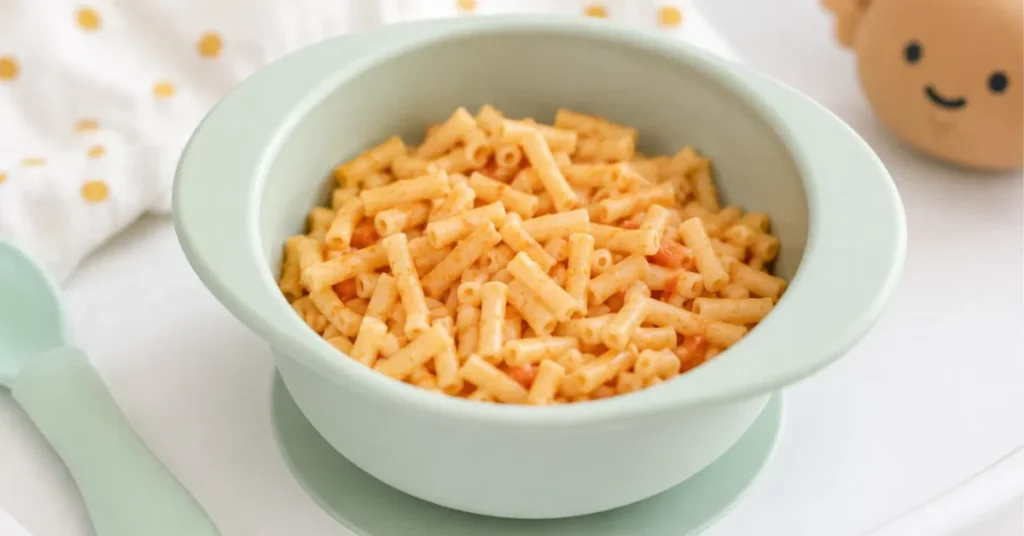
At nine months, babies are still building the coordination between grabbing, moving food to the mouth, and swallowing safely. That’s a lot happening at once, and it’s why texture matters more than almost anything else on the plate.
Overcooked, soft noodles reduce the risk of a piece breaking off in a shape that’s hard to manage. Undercooked or firm pasta, on the other hand, holds its shape too well and can be tougher to break down without teeth.
Here’s a quick way to think about shape and safety at this stage:
- Short, soft pieces (half an inch or less) reduce the chance of a large chunk reaching the back of the throat
- Tubular shapes like penne or ziti are easier to grip than flat, slippery strands
- A light coating of sauce or oil helps prevent noodles from sticking together in a clump
- Skip added salt during cooking, since babies need far less sodium than adults are used to
- Skip melted, stretchy cheese toppings like mozzarella on top of pasta, since sticky cheese can be its own choking risk separate from the noodles
Anyone who has fed a baby through the early finger-food stage knows the first few meals are messier than they are efficient. That’s normal, and it’s part of how babies practice the skill.
A reasonable starting portion is a few tablespoons of chopped, sauced pasta, offered alongside other foods rather than as the whole meal. Babies will naturally show when they’ve had enough by turning away, slowing down, or pushing food off the tray.
Choking Risk: What the Research Shows
Pasta itself isn’t flagged as a top choking hazard the way whole grapes, nuts, or hard candy are. It’s a soft, cookable food that can be gummed rather than chewed, which puts it in a different risk category than round, hard, or sticky foods.
That doesn’t mean the risk is zero. Any food can pose a choking risk if it’s the wrong size or texture for a baby’s stage, and long, thin noodles specifically show up in feeding guidance as something to modify rather than serve whole. The consistent theme across pediatric feeding resources is preparation, not avoidance: soft-cook it, cut it down, and stay within arm’s reach while your baby eats.
Parents who’ve gone through the early solids stage often describe gagging as one of the trickiest things to watch — it looks alarming, but it’s actually a protective reflex that pushes food forward, distinct from choking, where a baby can’t move air at all. Learning to tell the two apart before mealtime starts makes a real difference in how confidently you handle those first messy dinners.
If gagging happens on every bite, doesn’t ease up after a few tries, or your baby seems unable to move food to the back of the mouth at all, that’s worth mentioning to your pediatrician rather than pushing through. It may simply mean the pieces need to be smaller or softer for now.
Allergens and Ingredients to Watch
Most spaghetti is made from wheat, which means gluten and sometimes egg are part of the equation. If your baby hasn’t been introduced to wheat or egg individually yet, it’s worth offering those allergens on their own first, in small amounts, before serving a mixed dish like pasta with sauce.
A simple way to do this: offer wheat alone for a couple of days and watch for any reaction, then introduce egg alone the same way, before combining both in a dish like pasta. Spacing allergens out this way makes it easier to identify the cause if a reaction does show up.
Sauce ingredients deserve a second look too. Tomato sauce can be acidic and may cause a rash around the mouth in some babies, which usually isn’t an allergic reaction but simple skin sensitivity. Cheese, garlic, and certain seasonings are generally fine in small quantities, but added salt is still best avoided, since infant kidneys process sodium differently than an adult’s.
Store-bought jarred pasta sauces are worth checking closely, since many contain more sodium and added sugar than a quick homemade version. Reading the label or making a simple tomato and olive oil sauce at home gives you more control over what ends up on your baby’s plate.
For babies with a known or suspected gluten sensitivity, alternative pasta made from rice, chickpeas, or lentils works the same way texture-wise and can be prepared using the same cutting and cooking guidelines.
Can 9 Month Old Eat Spaghetti Every Day?
Pasta in moderation is a reasonable part of a varied diet at this stage, but it shouldn’t crowd out iron-rich foods, fruits, and vegetables that babies need heavily between six and twelve months. A few servings a week, mixed with protein and vegetables, fits comfortably into a balanced routine.
Iron needs actually spike around this age as a baby’s newborn iron stores start to run low, so pairing pasta with iron-rich additions like ground meat, lentils, or iron-fortified cereal makes the meal do more nutritional work. Plain noodles alone won’t cover that gap.
Setting Up a Safer Mealtime
A few habits make every finger-food meal safer, spaghetti included:
- Always have your baby sitting upright in a highchair, never reclined or in a car seat
- Stay within arm’s reach for the entire meal — no stepping away to grab something from another room
- Offer small amounts at a time rather than piling the plate high
- Learn basic infant choking first aid before starting finger foods, not after a scare happens
- Watch for consistent, forceful gagging that doesn’t resolve, which is worth mentioning to your pediatrician
None of this is meant to make pasta night stressful. Most babies handle noodles just fine once the shape and texture are right for their stage.
A Note for Different Feeding Approaches
Families following baby-led weaning tend to introduce noodle shapes earlier and let babies self-feed from the start, while those doing more traditional spoon-feeding might mix chopped pasta into a puree-adjacent texture before moving to full finger pieces. Both paths can reach the same destination safely — the shape and softness rules stay the same either way.
Parents managing a home with a toddler and a baby at the table often just adjust the same family meal two ways: longer, saucier noodles for the older child, and a smaller, choppier portion set aside before serving for the baby. It’s one pot, two textures, and a lot less stress at dinner.
How to Store and Reheat Baby Pasta
Cooking a full batch of pasta and portioning it out across a few days saves time, and it holds up well in the fridge when stored correctly.
Cooked pasta stays safe for about three to four days in an airtight container in the refrigerator. If you’re mixing it with sauce, meat, or vegetables, that combined dish follows the same three-to-four-day window, since the most perishable ingredient sets the limit.
Freezing works too, and it’s a practical option for parents who like to batch-cook. Portion cooled pasta into small containers or ice cube trays, freeze, then transfer to a labeled freezer bag once solid. Frozen baby pasta keeps well for about two months without a noticeable drop in texture or taste.
When reheating, a few habits matter more for a baby than they would for an adult:
- Reheat only the portion your baby will eat in that sitting, rather than the whole batch
- Add a splash of water, broth, or sauce before reheating, since pasta dries out and can turn tough or sticky otherwise
- Stir the pasta after microwaving and check the temperature yourself before serving, since microwaves heat unevenly and can leave hidden hot spots
- Let it cool to a warm, not hot, temperature — test a small bit on your own lip or wrist first
- Never reheat the same portion more than once, since repeated reheating raises the risk of bacterial growth
Reheated pasta may come out slightly softer than it was fresh, which usually works in your favor at this stage since softer texture is easier and safer for a baby to manage.
Conclusion
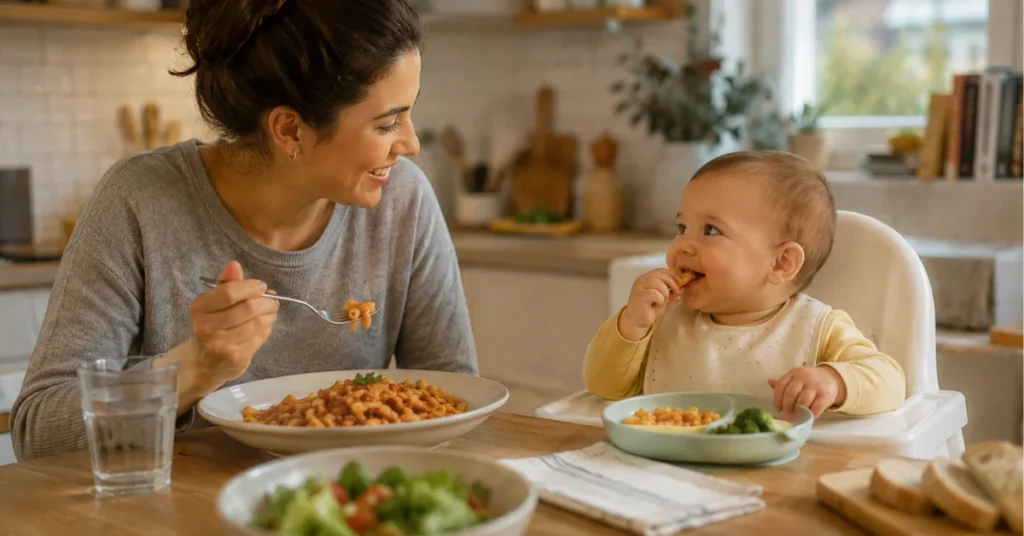
Can 9 month old eat spaghetti? Yes, once it’s cooked soft, cut into manageable pieces, and served without added salt. The shape of the noodle matters more than the ingredient itself, and a little prep work turns a potential choking hazard into an easy, iron-friendly family meal. When in doubt about your baby’s individual readiness, a quick check with your pediatrician or a pediatric dietitian will give you guidance specific to your child.
This article is for informational purposes only. Always consult a qualified pediatrician or healthcare professional before introducing new foods to your baby.
FAQs
Is spaghetti a choking hazard for a 9 month old?
Plain, long strands can be difficult to manage, but cut into short pieces and cooked soft, spaghetti is not considered a top choking hazard the way whole grapes or nuts are.
What pasta shape is best for a 9 month old?
Thicker, shorter shapes like penne, rigatoni, or ziti tend to be easier for a baby at this age to grip and self-feed compared with long, thin spaghetti strands.
Should I add salt to my baby’s pasta?
No. Skip added salt in the cooking water and sauce, since babies need far less sodium than the amounts typically added for adult taste.
Can I give my 9 month old pasta with tomato sauce?
Yes, in most cases, though a mild rash around the mouth from acidity is common and usually isn’t a true allergy. Watch for any other reaction and introduce new sauce ingredients gradually.
How often can a 9 month old eat spaghetti?
A few times a week fits fine within a varied diet, as long as it’s balanced with iron-rich foods, vegetables, and fruit rather than replacing them.