
My kitchen counter looked like a science fair gone wrong the first time I tried this. Glue everywhere, a toddler demanding “more sparkles,” and not a single drop of borax in sight. That’s the whole point of learning how to make slime without activator recipe steps — you skip the chemical aisle entirely and still end up with something stretchy, squishy, and genuinely fun to squeeze.
Most classic slime recipes lean on borax, liquid starch, or contact lens solution to bind the glue into that satisfying gooey texture. Skip that step and you’re left wondering if slime is even possible. It is. And honestly, some of these versions come together faster than the traditional kind.
How to Make Slime Without Activator Recipe: The Cornstarch Method
Cornstarch is the workhorse of activator-free slime, and for good reason. It thickens liquid without triggering the same polymer cross-linking reaction borax does, which means there’s nothing here that needs a warning label.
Here’s the basic version:
- Pour one cup of cornstarch into a mixing bowl.
- Slowly add water, about a tablespoon at a time, stirring as you go.
- Keep adding water until the mixture turns thick and slightly resistant when you press it, then loose when you let go.
- Drop in food coloring if you want it colorful.
This is technically oobleck, a non-Newtonian fluid — it behaves like a solid under pressure and a liquid at rest. Kids find that transformation endlessly entertaining, and it happens without a single chemical activator anywhere near the bowl.
Anyone who’s run a kids’ craft table knows the cornstarch method wins on speed. There’s no waiting around for a reaction. You mix, you play, you’re done in under five minutes.
Why Skip the Activator in the First Place?
Parents usually land here for one of two reasons: sensitive skin or plain old caution. Traditional activators like borax have a mixed safety reputation, and while small, supervised amounts are generally considered low-risk by most pediatric sources, plenty of families would rather sidestep the debate altogether.
According to Healthline, ingesting as little as 5 to 10 grams of borax can cause severe vomiting, diarrhea, and in extreme cases, shock in a young child. That’s not a reason to panic over a completed batch of slime — the amount used per recipe is small and diluted — but it’s exactly why so many parents now search for how to make slime without activator recipe instructions instead.
There’s also the sensory angle. Kids with eczema or reactive skin sometimes react to contact solution or borax residue. Swapping in cornstarch, lotion, or shampoo sidesteps that risk almost entirely.
Shampoo, Lotion, and Glue: The Household-Ingredient Route
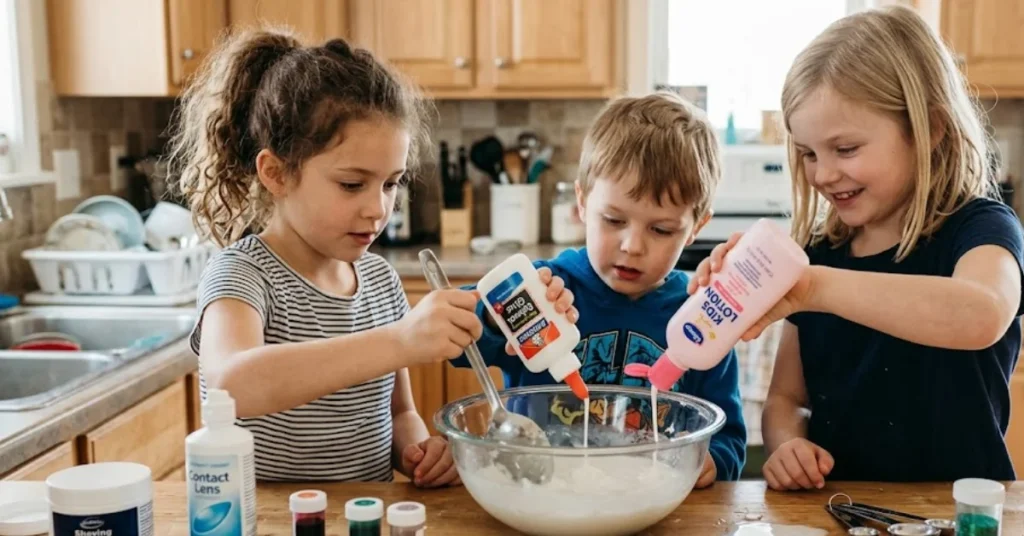
If your kid wants something closer to classic glue slime, without hunting down an activator, there’s a second path worth trying.
Combine washable school glue with a small amount of thick lotion or hair conditioner. Knead it by hand rather than stirring — this is where the magic happens. The fats and polymers in lotion interact with the glue’s structure just enough to create stretch, without needing borax or saline solution to do the heavy lifting.
A slightly firmer version uses glue, baking soda, and a splash of warm water, kneaded until the stickiness fades. It won’t have quite the same glassy stretch as borax slime, but it holds together well and cleans up easily with soap and water.
Shampoo works too, especially thicker, gel-based formulas. Mix it with a bit of cornstarch or salt until it thickens into a slime-like consistency. It’s not going to bounce like a rubber ball, but it stretches, and that’s usually enough to keep small hands occupied for a solid afternoon.
What the Research Shows About Activator-Free Slime Safety
Detailed analysis of pediatric and poison-control guidance points to one consistent theme: the risk in traditional slime rarely comes from the finished product. It comes from handling raw activator ingredients during the mixing stage.
Healthline notes that fatal borax exposure in adults sits between 10 and 25 grams — a dose far higher than what ends up in a typical batch of slime, but still enough to justify caution around the powder itself before it’s diluted.
Activator-free recipes remove that mixing-stage risk almost entirely. Cornstarch, glue, and lotion are ingredients most households already keep in the kitchen or bathroom cabinet, and none of them carry the same ingestion warnings as raw borax powder. That’s a meaningful safety gap, not just a marketing angle, and it’s the main reason interest in no-activator recipes has held steady through 2026.
How to Make Slime Without Activator Recipe for Sensitive Skin
Families dealing with eczema, contact dermatitis, or general skin reactivity need a slightly different approach than the general cornstarch method above.
Stick to fragrance-free lotion instead of scented varieties — added fragrance chemicals are a more common irritant than the base ingredients themselves. Choose a hypoallergenic glue where possible, and always do a small patch test on the inside of the wrist before letting a reactive-skin kid dive in hands-first.
This version of how to make slime without activator recipe guidance matters more than people realize. A slime batch that’s perfectly fine for one child can still cause redness on another, so testing first isn’t overcautious — it’s just practical.
Gloves are a reasonable middle ground too. Some kids don’t mind wearing thin disposable gloves while kneading, which keeps the sensory fun without direct skin contact.
Common Problems and How to Fix Them
Slime-making rarely goes perfectly on the first attempt, and that’s fine.
Too sticky: Add a small pinch of salt or a bit more cornstarch, working it in gradually. Stickiness usually means there’s more liquid than the mixture can hold.
Too stiff: Warm water, added a teaspoon at a time, loosens things back up. Cold water tends to seize the mixture rather than relax it.
Won’t hold shape at all: You’ve likely gone too far with liquid. Sprinkle in more of your thickening agent — cornstarch, salt, or baking soda depending on which recipe you used — and knead thoroughly between additions.
Smells off after a few days: That’s usually bacterial growth from moisture trapped inside. Store the batch in an airtight container and toss it if the smell doesn’t clear after airing it out.
Storage, Shelf Life, and Cleanup
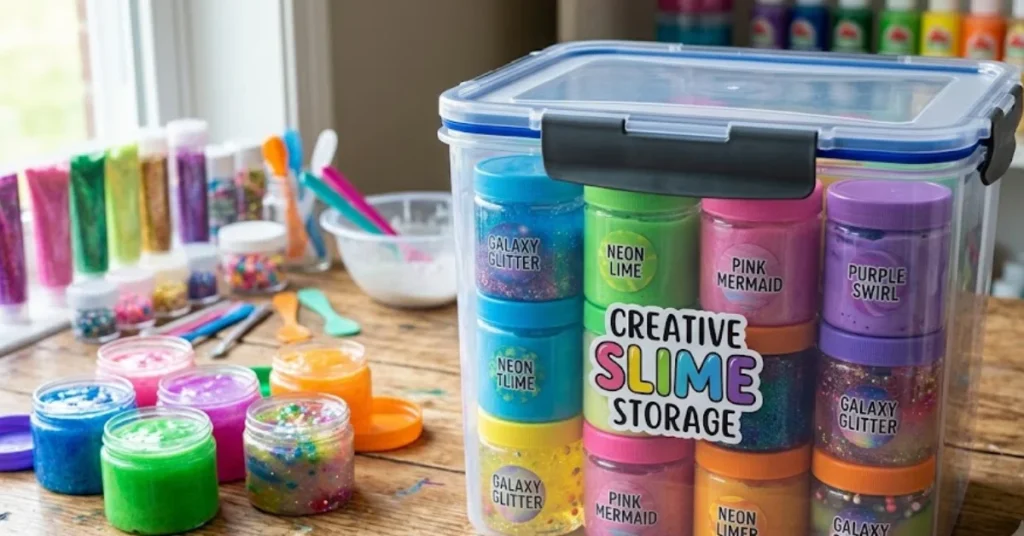
Homemade slime without activator typically lasts one to two weeks when stored in a sealed container at room temperature. Skip the fridge — cold temperatures make it stiffen up and lose its stretch.
Cleanup is refreshingly simple with these recipes. Warm soapy water handles hands and most surfaces. If slime ends up in hair, work a small amount of conditioner into the strands before combing it out gently, rather than reaching for scissors.
Label your container with the date you made it. It sounds unnecessary until you find a mystery jar in the craft bin three weeks later and can’t remember which batch it is.
Who This Recipe Actually Works Best For
Not every activator-free method suits every age group. Cornstarch oobleck is ideal for toddlers and preschoolers — it’s food-based, low mess in terms of ingestients, and forgiving if a little ends up in a mouth. The glue-and-lotion version suits older kids who want something closer to store-bought slime texture. Teens and adults who enjoy slime as a fidget tool tend to prefer the shampoo or baking soda routes, since those hold their shape longer during repeated stretching sessions.
Classroom teachers running group activities often default to the cornstarch method too, purely because it scales well. Mixing bowls, a shared bag of cornstarch, and a jug of water go a long way for a room full of kids without anyone needing individual bottles of specialty solution.
Wrapping Up
Figuring out how to make slime without activator recipe steps doesn’t require a chemistry degree or a trip to a specialty store. Cornstarch, glue, lotion, shampoo, and baking soda cover nearly every texture preference, from loose oobleck to firm, stretchy dough. Start with the cornstarch version if you’re testing the waters, then branch into the glue-based methods once you know what texture your kids actually enjoy. Either way, you get the same squishy, screen-free fun, minus the trip to buy contact solution.
This article is for informational purposes only. Always supervise children during craft activities and consult a pediatrician or poison control center with any ingestion concerns.
FAQs
Can you really make slime without any activator at all?
Yes. Cornstarch, glue with lotion, or shampoo-based mixes all create a stretchy, moldable texture without borax, contact solution, or liquid starch.
Is activator-free slime safer for kids than traditional slime?
It removes the mixing-stage risk associated with handling raw borax powder, though finished traditional slime is generally low-risk too when supervised properly.
How long does slime made without activator actually last?
Most batches stay usable for one to two weeks if kept in an airtight container at room temperature, away from direct sunlight.
Why is my no-activator slime too runny?
You’ve added too much water or lotion relative to your thickener. Gradually mix in more cornstarch, salt, or baking soda until it firms up.
Can adults use this kind of slime too?
Definitely. Many people find kneading and stretching slime a genuinely relaxing, fidget-friendly activity, no kids required.