
You reach into the fridge halfway through prep, and there they are — no eggs. Or maybe someone at the table has an allergy. Either way, learning how to make a cake without eggs recipe is one of the most genuinely useful skills you can pick up in the kitchen, and the results? Nobody at the table will guess anything’s missing.
This isn’t a workaround or a sad compromise. Done right, an egg-free cake is soft, moist, and every bit as satisfying as the classic version. In 2026, egg-free baking is one of the fastest-growing areas of home cooking — driven by allergies, rising egg costs, and a wave of plant-based households that want real desserts, not pale imitations.
Here’s everything you need to pull it off.
Why Eggs Are in Cake in the First Place
Before swapping anything out, you need to know what you’re replacing. Eggs do three separate jobs in a standard cake recipe: they bind the batter so it holds its shape when sliced, they trap air that expands during baking for that fluffy lift, and they add moisture that keeps the crumb from drying out.
Remove eggs without replacing those functions and you end up with a dense, dry, crumbly result that falls apart the moment you try to frost it. That’s the mistake most people make — they just leave eggs out and hope for the best. The fix is picking a substitute that matches the egg’s specific job in your particular recipe.
And that’s where things get interesting.
The Best Egg Substitutes for Cake
Not every substitute works for every cake. Here’s a clear breakdown of what works, and when.
Vinegar + Baking Soda
Combining vinegar and baking soda creates a chemical reaction that releases carbon dioxide, replacing the leavening typically achieved with eggs to produce light and airy baked goods. You can combine 1 tablespoon of vinegar with 1 teaspoon of baking soda to replace each egg in fluffy confections.
You can use apple cider vinegar or regular white vinegar. Both will work and neither will leave a taste behind. This is the most popular choice for vanilla cakes precisely because it doesn’t change the flavor. The only thing to watch: the reaction is most potent within the first 15 seconds, so ensure your oven is preheated and your wet and dry ingredients are already mostly mixed before preparing the substitute. Speed matters here.
Plain Yogurt
The fat in yogurt adds moisture, the protein helps bind the batter, and the slight acidity reacts with the leavening already in the box mix to give you that lift. Use ¼ cup of plain, unsweetened yogurt per egg. It works beautifully in denser cakes and layered birthday cakes — and it holds up well enough to frost without trouble.
Condensed Milk
Condensed milk is the star ingredient and does a magic by imparting a lovely bakery flavor and texture to the cake. Vinegar, condensed milk, and the leavening ingredients together work like a charm in aerating the batter which bakes up to a lovely egg-free cake. If you want that rich, slightly sweet crumb you get from a proper bakery, this is your substitute.
Mashed Banana
Ripe banana works well as both a binder and a moisture source. Use ¼ cup of well-mashed banana per egg. The flavor comes through, so it’s best matched with chocolate, spice, or banana cakes rather than a plain vanilla. Mashed ripe banana is a fantastic binder and adds significant moisture and a touch of sweetness. Its natural pectin content helps with structure.
Applesauce
Unsweetened applesauce acts as a binder and adds moisture. It’s a milder flavor than banana, making it more versatile for a wider range of cakes. Use ¼ cup per egg. It’s the better choice when you want a neutral-tasting egg-free sponge that works with most frostings.
Flaxseed Egg
To replace one egg, whisk together 1 tablespoon of ground chia or flaxseed with 3 tablespoons of water until fully absorbed and thickened. This one’s a binding agent more than a leavener, so it works best in denser bakes. For light sponge cakes, pair it with extra baking powder.
How to Make a Cake Without Eggs Recipe — Step-by-Step Vanilla Version
This is the base recipe that works every time. It produces a tender vanilla cake with a genuine bakery-style crumb, no egg flavor, and a structure firm enough to stack and decorate.
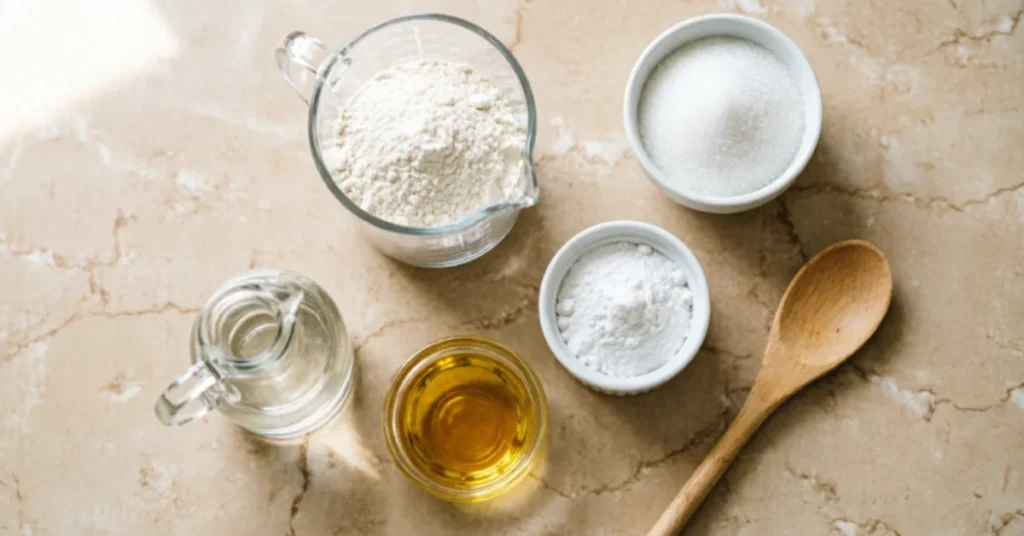
What You’ll Need
- 1½ cups all-purpose flour (or cake flour for a lighter result)
- 1 cup white sugar
- 1 teaspoon baking soda
- ½ teaspoon salt
- 1 teaspoon pure vanilla extract
- ⅓ cup neutral vegetable oil
- 1 tablespoon white vinegar or apple cider vinegar
- 1 cup milk (dairy or plant-based both work)
Serves: 8–10 slices | Tin size: 8-inch round
Step 1 — Prep your pan and oven
Preheat to 350°F / 180°C. Grease your cake pan with oil or butter and line the base with parchment paper. This matters more with egg-free batter, as it tends to stick slightly more than standard cake.
Step 2 — Combine dry ingredients
Sift together the flour, sugar, baking soda, and salt into a large mixing bowl. Whisk them together until there are no lumps. Whisking these ingredients together thoroughly ensures that the leavening agents and salt are evenly distributed throughout the flour, which is crucial for a uniform rise and flavor.
Step 3 — Add wet ingredients
Make a well in the center of your dry mix. Pour in the oil, vanilla extract, and milk. Stir until a smooth batter forms — but don’t overwork it. Overmixing is one of the biggest mistakes in egg-free baking because it builds gluten and toughens the crumb without eggs to soften the structure.
Step 4 — Add the vinegar last
Right before the batter goes into the pan, add your tablespoon of vinegar and stir quickly but briefly. You’ll see a slight fizz — that’s exactly what you want. Get the batter into the pan immediately. The vinegar in this recipe reacts with the baking soda to create a beautiful rise while helping maintain a velvety soft crumb.
Step 5 — Bake
Bake for 28–32 minutes at 350°F. The cake is done when a skewer inserted in the center comes out clean, and the edges begin to pull slightly from the tin. Don’t open the oven door in the first 20 minutes.
Step 6 — Cool completely before frosting
Let the cake cool completely before frosting. Otherwise, the frosting will glide off. Transfer to a wire rack after 10 minutes in the tin. Patience here means the difference between a clean, beautiful finish and a frosting disaster.
How to Make a Cake Without Eggs Recipe — One-Bowl Chocolate Version
Chocolate batter is even more forgiving without eggs because cocoa powder adds structure and depth that masks any slight textural difference. This version uses no mixer and produces a genuinely rich, moist result.
What You’ll Need
- 1½ cups all-purpose flour
- 1 cup white sugar
- ⅓ cup unsweetened cocoa powder
- 1 teaspoon baking soda
- ½ teaspoon salt
- 1 tablespoon white vinegar
- ⅓ cup vegetable oil
- 1 teaspoon vanilla extract
- 1 cup lukewarm water
Method how to make a cake without eggs recipe: In a large bowl, add the cake flour, white sugar, cocoa powder, baking soda, and salt and mix well. Add the oil, vinegar, vanilla extract, and warm water, and mix until a smooth batter remains. Transfer the batter into the greased cake pans and bake for 17–20 minutes, or until a skewer comes out mostly clean.
Hot water matters here — it “blooms” the cocoa powder, releasing its full flavor. The resulting cake is deeply chocolatey, and nobody will volunteer that it’s egg-free.
What the Research Shows About Egg-Free Baking
Eggs contribute to the overall structure, color, flavor, and consistency of baked goods. Some people cannot eat eggs or choose not to. Plenty of foods can replace eggs in baking, though not all of them act the same way — some egg alternatives are better for heavy, dense products, while others are great for light and fluffy baked goods.
The pattern emerging from egg-free bakers through 2025 and into 2026 is clear: the vinegar-and-baking-soda method consistently outperforms other single-ingredient substitutes for rise, while yogurt and condensed milk win on texture and moisture. If your recipe requires both binding and leavening, use the baking soda/vinegar mix for the first egg to achieve the necessary rise, and use a flax egg or commercial binder to replace the second egg for structural integrity. That hybrid approach is what professional egg-free bakers use on multi-layer cakes.
Common Mistakes and How to Avoid Them
Using too much substitution volume. Each egg replacement takes up roughly ¼ cup of space in the batter. Add too many wet substitutes and the batter loosens. Keep the liquid balance consistent with the original recipe.
Skipping room temperature ingredients. Cold milk mixed into room-temperature oil can cause the batter to seize slightly. Give your dairy a few minutes on the counter before mixing.
Opening the oven early. Egg-free cakes rely more heavily on leavening reactions for structure. Opening the oven door before the 20-minute mark releases steam and collapses the rise before it sets.
Substituting more than two eggs with a single replacer. Using vinegar and baking soda as an egg substitute works only when you have to replace one egg. If it’s more than 1 egg, you shouldn’t increase the vinegar and baking soda because it will have an after-taste. For recipes requiring 3+ eggs, split your substitutes — use vinegar/baking soda for lift and applesauce or yogurt for binding.
Storing Your Egg-Free Cake
Store any leftover cake in an airtight container at room temperature for 2–3 days or in the refrigerator for up to 2 weeks. To freeze: place leftover cake in a freezer-friendly container and freeze for up to 6 months.
Egg-free cakes actually tend to stay moist a day or two after baking — sometimes better than egg-based versions — because the oil-based substitutes don’t dry out the crumb the way egg proteins can.
Who This Recipe Works For
People with egg allergies. This is the most obvious use case, and it’s a genuinely reliable one. The vinegar-and-baking-soda combination produces cakes that are allergy-safe and indistinguishable in flavor.
Vegan households. Pair the recipe above with plant-based milk and dairy-free frosting and the entire cake is vegan-friendly without any specialist ingredients.
Anyone mid-recipe with an empty egg carton. This happens more than people admit. Having this method ready means you can finish what you started without a supermarket run.
Parents baking for children’s parties. When you’re feeding a group with mixed dietary needs, knowing how to make a cake without eggs recipe takes the pressure off and keeps everyone at the table.
Conclusion
An egg-free cake isn’t a lesser cake — it’s a different technique that, when done correctly, produces results that stand up to anything you’d find in a traditional recipe. Knowing how to make a cake without eggs recipe gives you real flexibility in the kitchen, whether you’re dealing with allergies, an empty fridge, or simply a preference for plant-based baking. Start with the vinegar and baking soda method for your first attempt. Get that chemistry right, don’t overmix, and let the cake cool completely before frosting. Everything after that is just decoration.
FAQs
Can I use lemon juice instead of vinegar in a cake without eggs?
Yes. Lemon juice is acidic enough to react with baking soda in the same way vinegar does. Use 2 tablespoons of lemon juice in place of 1 tablespoon of vinegar. It adds a very subtle citrus note that works well in vanilla or lemon cakes.
Will a cake without eggs taste different?
Not noticeably, if you use the right substitute. The vinegar-based method produces no detectable vinegar flavor once baked. Yogurt and condensed milk add a very slight richness that most people prefer. Banana or applesauce substitutes do carry some of their own flavor, so match those to complementary cake types.
Can I use a box cake mix without eggs?
Absolutely. Plain yogurt is the most reliable substitute for boxed mixes — it handles binding, moisture, and lift in one ingredient. Use ¼ cup of plain yogurt per egg listed on the box instructions.
Why did my egg-free cake come out dense?
Most likely one of three things: the vinegar wasn’t added last and lost its reaction before baking, the batter was overmixed after the vinegar went in, or the oven wasn’t fully preheated. Check all three before your next attempt.
Is it possible to make a layered cake without eggs?
Yes, and it’s done regularly. Use the vanilla recipe above, double the batch, and bake in two 8-inch pans. The structure is firm enough to stack once fully cooled. A buttercream or cream cheese frosting between layers provides stability.