
Your baby just grabbed a handful of dry cereal off the highchair tray, and now you’re standing in the kitchen wondering if that was okay. So, can a 9 month old eat Cheerios? For most babies at this age, the answer is yes, with a few conditions that actually matter.
This isn’t a simple yes-or-no question, though. It depends on whether your baby has a pincer grasp, whether they’re sitting upright unsupported, and whether the cereal in question is honey-free. Get those three things right and Cheerios become one of the easiest, most convenient finger foods a family can offer.
So, Can a 9 Month Old Eat Cheerios? The Short Answer
Nine months is the age most pediatric feeding specialists point to for introducing O-shaped cereals like plain Cheerios. That’s not an arbitrary number. It lines up almost exactly with when babies typically develop the pincer grasp, the thumb-and-forefinger pinch that lets them pick up something the size of a single Cheerio and actually get it into their mouth.
Before that skill shows up, babies tend to palm food into fists and cram it in all at once, which raises the odds of gagging on a mouthful rather than a single piece. Once the pincer grasp is there, self-feeding becomes far more controlled.
There’s also a texture reason Cheerios get recommended so often. They soften quickly once they hit saliva, which means they don’t sit in the mouth as a hard, unyielding lump the way, say, a raw carrot stick would. That softening quality is part of why so many parents treat Cheerios as a starter finger food rather than something to hold off on.
For babies who are still a little slow to chew or melt pieces down, dampening the cereal first with a small splash of breast milk, formula, or water softens it further and lowers the risk of a piece sitting whole in the mouth too long.
Can a 9 Month Old Eat Cheerios Safely? The Conditions That Matter
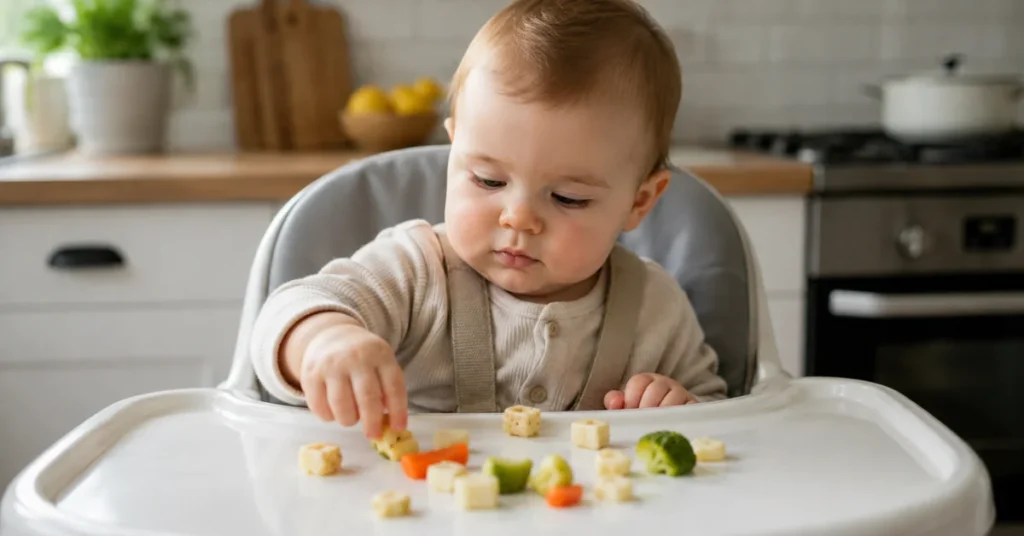
Answering “can a 9 month old eat Cheerios” honestly means looking past the age number and checking a short list of readiness signs first.
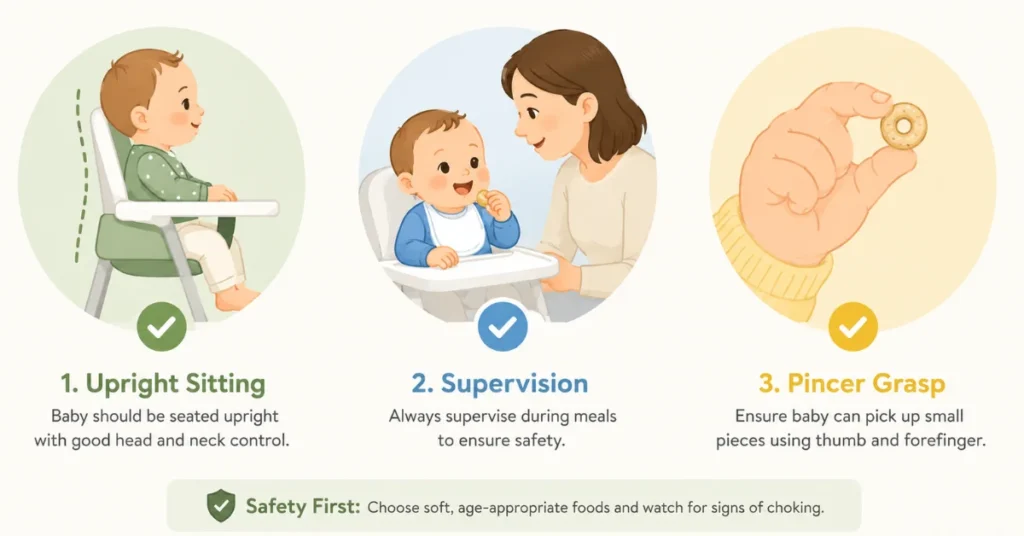
- Your baby can sit upright, unassisted or in a supportive highchair, with steady head control.
- They’ve already had some practice with softer finger foods like banana or steamed sweet potato.
- They can bring a small object to their mouth using thumb and forefinger, not just a fist.
- You’re choosing the plain, original variety rather than Honey Nut or any honey-sweetened version.
That last point isn’t a minor detail. Honey can carry spores linked to infant botulism, and pediatric guidance is consistent that it should be avoided entirely before a baby’s first birthday. Plain Cheerios don’t carry that risk, but the honey-coated versions do, so label-checking matters here.
Supervision is the other non-negotiable. Babies should always be seated upright and watched while eating, since choking in infants is often silent rather than the dramatic coughing scene people picture. It helps to know the difference before it ever becomes an issue: gagging usually looks loud, with coughing, retching, or a red face as the body pushes food forward, and it typically resolves on its own within seconds. Choking looks and sounds very different, often silent, with no cough, no cry, and a bluish tint around the lips or face. That distinction alone can save precious seconds in an actual emergency.
If choking does happen, caregivers should be ready to act immediately: support the baby face-down along your forearm with the head lower than the chest, and give up to five firm back blows between the shoulder blades, followed by chest thrusts if the object doesn’t clear. This is exactly the kind of skill that’s hard to recall under stress, which is why taking a short infant CPR and choking-response course before baby starts finger foods is worth the hour it takes.
What Age Milestones Actually Signal Readiness
Age alone is a rough guide, not a guarantee. Some babies hit the pincer grasp closer to 8 months, others closer to 10, and both are within normal range. Parents who have gone through this stage often describe it as a fairly obvious shift: one week your baby is smearing food across the tray, and a few weeks later they’re deliberately picking up small pieces one at a time.
Here’s a quick way to compare the readiness signs against what’s actually needed before offering Cheerios:
| Readiness Sign | What It Looks Like | Why It Matters |
|---|---|---|
| Pincer grasp | Baby pinches a small object between thumb and index finger | Prevents cramming a whole handful in at once |
| Upright sitting | Baby sits in a highchair without slumping or needing support | Reduces choking risk during swallowing |
| Prior finger food practice | Baby has handled soft foods like avocado or banana | Builds chewing and tongue-control skills first |
| Interest in self-feeding | Baby reaches for food and brings it to their own mouth | Signals oral-motor readiness beyond spoon-feeding |
| Honey-free ingredient check | Plain Cheerios, not honey-sweetened varieties | Avoids infant botulism risk before age one |
Nutritional Value: More Than Just a Snack
Original Cheerios are made from whole grain oats and are fortified with iron, a nutrient babies need in growing amounts once they move past exclusive breastfeeding or formula. They’re also relatively low in added sugar compared with many packaged toddler snacks, and lower in sodium than a lot of alternatives on the shelf.
That said, Cheerios shouldn’t replace the bulk of a baby’s diet. At 9 months, a baby still needs a mix of iron-rich foods, fruits, vegetables, and protein sources, with cereal pieces functioning more as a practice food and occasional snack than a meal replacement. As a general frequency guide, offering Cheerios once, maybe twice, a day as a snack between milk feeds and main meals keeps portions sensible without crowding out more nutrient-dense foods.
How Cheerios Compare to Other Finger Foods
Parents often ask how Cheerios stack up against other common starter snacks, especially since not every food dissolves or handles the same way.
| Snack Option | Dissolve Speed | Best Used When | Watch For |
|---|---|---|---|
| Plain Cheerios | Moderate, softens with saliva | Baby has pincer grasp, wants variety in texture | Honey-free label, upright seating |
| Baby puffs | Fast, dissolves almost instantly | Very early practice, minimal chewing ability | Added sugars in flavored varieties |
| Teething biscuits | Slow, meant to be gnawed | Teething discomfort, longer supervised sessions | Large chunks breaking off unexpectedly |
Puffs tend to be the gentler starting point for babies just beginning pincer-grasp practice, since they melt almost instantly. Cheerios sit a step up in texture, which is often why families introduce them once a baby has a bit more feeding experience under their belt.
Common Mistakes Parents Make
A few patterns show up again and again once families start offering Cheerios.
Giving too many pieces at once is probably the most frequent one. Offering three or four pieces at a time, rather than a small pile, keeps things manageable and gives you a clearer view of whether your baby is chewing and swallowing properly between bites.
Walking away during snack time is another. Even a food considered lower-risk still calls for a caregiver within arm’s reach, since choking doesn’t always look the way people expect.
Some parents also assume that because a baby has no teeth, cereal pieces are automatically unsafe. In practice, gums are usually firm enough to mash a softened Cheerio, and the lack of teeth isn’t the deciding factor here.
A less obvious mistake is leaving prepared, damped cereal sitting out too long. Once Cheerios have been moistened with milk or water, they should be used within that sitting rather than stored for later, since the softened texture doesn’t keep well and can encourage bacterial growth if left at room temperature for an extended stretch.
On-the-Go Feeding: Strollers, Car Seats, and Restaurants
One of the most common real-world uses for Cheerios is portability, and it’s worth addressing directly since it changes the supervision picture. A stroller or car seat snack cup feels convenient, but a baby eating while reclined or unsupervised in a moving car seat is at higher risk than one seated upright at a table with a caregiver watching. If Cheerios are offered on the go, it’s safer to do so during a stop, with the baby upright and an adult close enough to react immediately, rather than while the car or stroller is in motion.
What the Research Shows
Detailed analysis of infant feeding studies over the past several years has pushed back against the idea that baby-led, self-feeding approaches carry a higher choking risk than spoon-feeding. Comparative research on weaning styles has found no increased choking risk associated with letting babies self-feed appropriate finger foods, and some findings suggest babies with little practice handling finger foods on their own may actually face more difficulty, not less.
That distinction matters for the Cheerios question specifically. The risk isn’t really about the food category, it’s about matching the food to the individual baby’s stage of motor development and keeping supervision consistent.
Segments Parents Often Overlook
Not every family approaching this question is in the same situation. A few groups deserve a specific mention.
Parents of babies born prematurely often need to go by adjusted age rather than birth date when judging readiness, since motor skills like the pincer grasp typically follow the corrected timeline. A baby born two months early may not reach that milestone until closer to 11 months by the calendar.
Parents managing suspected food allergies should introduce any new cereal, Cheerios included, at home during a time when they can watch for a reaction, rather than at daycare or while out. Oat allergies are uncommon but not unheard of.
And for babies who show signs of oral-motor delay, such as a slower transition through textures or ongoing gagging on lumps, a conversation with a pediatrician or feeding specialist before introducing dry cereal is worth having rather than skipping.
When to Wait a Little Longer
If your baby still fists food rather than pinches it, or struggles to stay upright without support, that’s a reasonable signal to hold off a few more weeks and keep practicing with softer options first. There’s no real advantage to rushing into Cheerios early, and the more established their pincer grasp is, the smoother the whole process tends to go.
Conclusion
Circling back to the original question, can a 9 month old eat Cheerios comes down to development rather than the calendar. Most babies at this age have, or are close to having, the physical skills that make it a reasonably safe food to introduce, provided it’s the plain, honey-free variety and someone is watching closely while they eat. Pay attention to the pincer grasp, keep portions small and infrequent, know the difference between normal gagging and real choking, and treat this milestone as one more sign your baby is building the skills they’ll rely on for years of self-feeding ahead.
This article is for informational purposes only. Always consult a qualified pediatrician or healthcare professional before introducing new foods to your baby.
FAQs
Can a 9 month old eat Cheerios if they have no teeth yet?
Yes. Gums are usually firm enough to mash a softened Cheerio, so teeth aren’t the deciding factor, readiness signs like the pincer grasp matter more.
What’s the difference between original and Honey Nut Cheerios for babies?
Original Cheerios are honey-free and appropriate around 9 months, while Honey Nut Cheerios contain honey, which should be avoided before a baby’s first birthday due to botulism risk.
How many Cheerios should I give my baby at once?
Offering just three or four pieces at a time, rather than a handful, once or twice a day as a snack, makes it easier to watch for gagging and keeps portions manageable for a beginner self-feeder.
How do I tell gagging apart from actual choking?
Gagging is loud, with coughing or retching, and resolves on its own. Choking is often silent, with no cough or cry and a bluish tint around the lips, and needs immediate back blows and chest thrusts.
Is baby-led weaning riskier for choking than spoon-feeding?
Research comparing the two approaches has found no increased choking risk with baby-led weaning when age-appropriate foods and supervision are used.