
By nine months, most babies are past the purée-only stage and figuring out what to feed 9 month old baby becomes less about introducing food and more about building real meals. Milk still matters here — breast milk or formula should remain the main source of energy and nutrients through the first year, since infant formula or breast milk stays the main drink until 12 months, though continued breastfeeding is fine for as long as both parent and baby want. This isn’t just theory. Anyone who has sat through a 9-month-old’s mealtime knows it’s messier, slower, and far more interesting than the spoon-fed weeks before it.
This guide covers portion sizes, food groups, textures, allergens, vitamins, choking safety, and a full sample day — the practical stuff a parent actually needs at 3 pm when the fridge is open and nothing looks obviously right.
What to Feed 9 Month Old Baby: The Core Food Groups
At this age, a baby’s plate should start looking less like a single mush and more like a small, varied meal drawn from several groups.
Fruits and vegetables: Soft-cooked broccoli, carrots, green beans, and sweet potatoes work well, alongside bananas, soft pears, peaches, and watermelon.
Protein: Eggs, soft-cooked or ground meat, tofu, mashed beans, and low-mercury fish all fit here, alongside iron-containing foods such as eggs, meats, fish, and iron-fortified cereals.
Grains and starches: Iron-fortified infant cereal, soft bread, pasta, and rice give energy density that pure fruit and veg can’t match on their own.
Healthy fats: Avocado, nut butters (thinned, never in whole-spoon clumps), and olive oil drizzled over vegetables support brain development at a stage when a baby’s calorie needs per pound are unusually high.
Dairy: Full-fat yogurt, cheese, and cottage cheese can be offered, though cow’s milk itself shouldn’t yet replace breast milk or formula as the main drink.
Daily Meal Plan and Portion Sizes
Most 9-month-olds are ready for three solid meals a day, alongside two or three milk feeds. By this point, many babies naturally cut back on milk feeds as solids take over.
Portions vary a lot baby to baby, and that’s normal. A rough starting point:
- 3–4 tablespoons of vegetables or fruit per meal
- 2–3 tablespoons of protein (egg, meat, beans)
- 2–4 tablespoons of grains or cereal
- A thumb-sized amount of dairy, like yogurt
Don’t treat these as targets to hit. Babies regulate their own appetite better than adults tend to give them credit for, and pushing “one more bite” can work against that instinct rather than help it.
What to Feed 9 Month Old Baby With Different Texture Preferences
Not every baby handles textures the same way, and this is where a lot of first-time parents get stuck.
Spoon-fed babies: If your baby’s still on purées, this is the age to start adding lumps and soft chunks — mashed rather than blended, minced rather than smooth.
Baby-led weaning: Some parents skip purées almost entirely and go straight to soft, graspable pieces — steamed carrot batons, ripe pear wedges, strips of scrambled egg. There’s no single right approach — the priority is a baby eating a wide variety of food and getting the nutrients they need.
Reluctant eaters: For babies with reflux, low appetite, or general food wariness, smaller, more frequent offerings tend to work better than three large sit-down meals. It can take ten or more tries before a baby accepts a new food, and that’s normal, not a red flag.
Introducing Allergens Safely
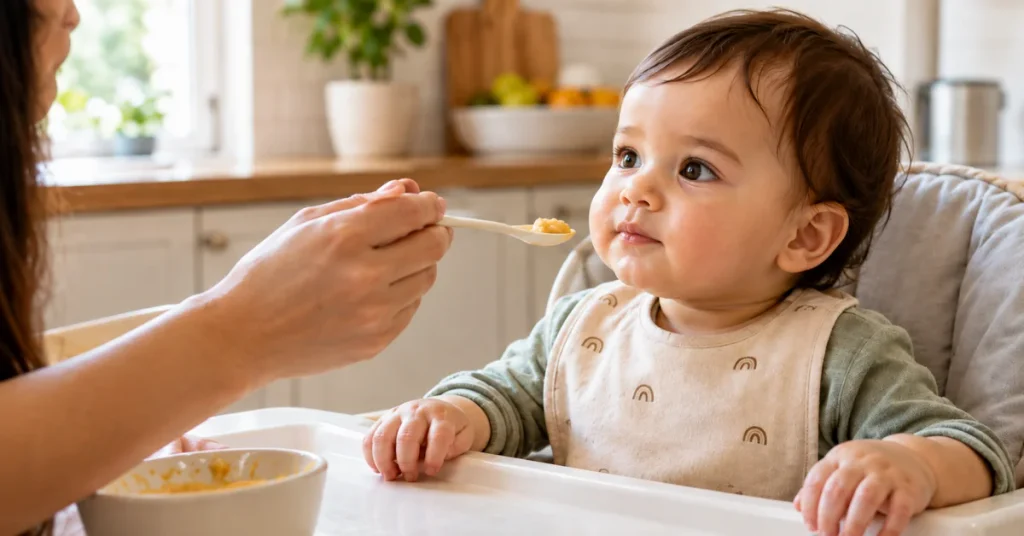
This is a step many feeding guides skip entirely, but it belongs at the center of this age group.
Delaying common allergens like egg and peanut past six to twelve months has been shown to raise the risk of developing an allergy to them, not lower it, so guidance now leans toward introducing foods that can trigger allergic reactions one at a time and in very small amounts from around 6 months, so any reaction can be spotted early. Once a food has been introduced and tolerated, keeping it in the baby’s regular diet helps minimise the risk of allergy developing later.
Practical rules for this stage:
- Offer one new allergenic food at a time, waiting two to three days before adding another
- Give it earlier in the day, never right before a nap or bedtime, so you can watch for a reaction
- Skip new allergens if the baby is unwell — it becomes harder to tell illness from reaction
- If your baby already has a diagnosed food allergy or eczema, or there’s a family history of food allergies, eczema, asthma, or hay fever, extra caution is needed when introducing new foods, so check with a health visitor or GP first.
Signs of an allergic reaction to watch for:
| Reaction Type | Signs | What to Do |
|---|---|---|
| Mild | Rash or redness around the mouth, a few hives, runny nose | Stop the food, note it down, mention it at the next checkup |
| Moderate | Hives spreading beyond the mouth, vomiting, persistent crying | Stop the food, contact your GP or health visitor same day |
| Severe (emergency) | Swelling of lips, tongue, or face; difficulty breathing; wheezing; sudden lethargy or floppiness | Call emergency services immediately |
Foods to Avoid and Choking Safety
A few things stay off the table at nine months regardless of how confident a baby seems with chewing:
- Whole grapes, cherry tomatoes, or blueberries (always halved or quartered)
- Whole nuts and large blobs of nut butter
- Honey, which carries a botulism risk under age one
- Added salt and sugar
- Unpasteurized milk, cheese, or juice
- Popcorn, hard raw vegetables, and hard candy
Gagging — a loud, visible reflex where food moves back toward the front of the mouth — is a normal part of learning to eat and different from silent, dangerous choking. Sitting upright, supervising every meal, and cutting food into baby-safe shapes cuts the real risk substantially.
If a baby under one year is actually choking: lay them face up along your thighs with their feet closest to you and their head lower than their feet, place two fingers in the middle of their chest just below the nipple line, and give up to five sharp chest thrusts, checking between each one to see if the object has come out. If back blows and chest thrusts don’t clear the blockage, call emergency services right away. This is a skill worth practicing in a certified infant first aid course rather than learning for the first time mid-emergency.
Vitamins: The Part Most Guides Skip
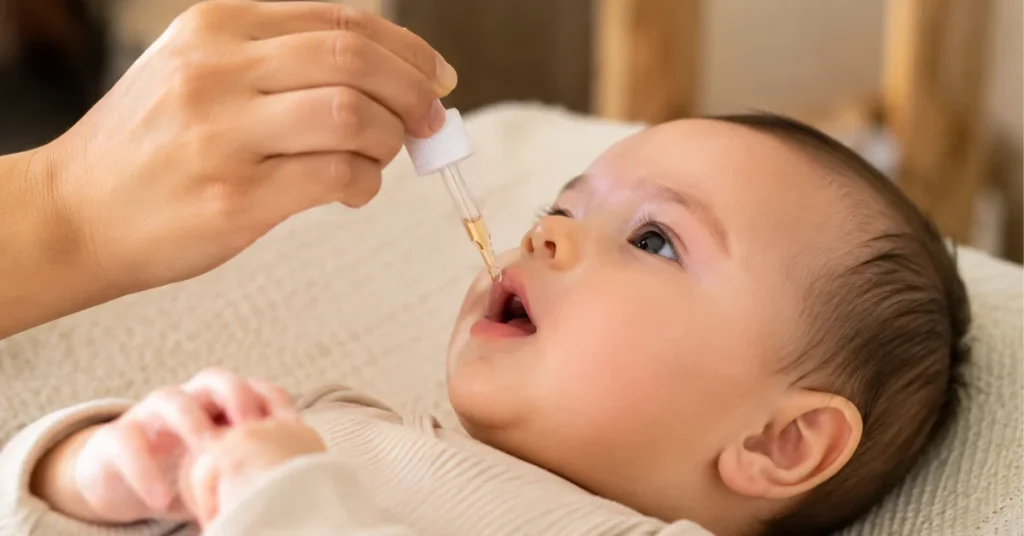
Food alone doesn’t always close every nutritional gap at this age, and vitamin D is the one parents hear about least.
Babies who are being breastfed should be given a daily vitamin D supplement from birth, whether or not the parent is taking a supplement themselves. Babies fed infant formula shouldn’t be given a vitamin D supplement if they’re having more than about a pint (500ml) of formula a day, since formula is already fortified with vitamin D and other nutrients.
From six months onward, daily vitamin A, C, and D supplements are generally recommended for all babies unless they’re taking that 500ml-plus of formula daily. A health visitor can advise on where to get drops, and some families qualify for free supplements through low-income support schemes.
Sample One-Day Meal Plan
| Time | Meal | Example Foods |
|---|---|---|
| 7:00 AM | Milk feed | Breast milk or formula |
| 8:00 AM | Breakfast | Iron-fortified cereal with mashed banana, soft egg pieces |
| 10:30 AM | Snack | Avocado strips, cheese cube |
| 12:00 PM | Lunch | Lentils with soft-cooked carrot, small pasta pieces |
| 3:00 PM | Milk feed | Breast milk or formula |
| 5:30 PM | Dinner | Ground chicken, mashed sweet potato, steamed green beans |
| 7:00 PM | Milk feed | Breast milk or formula |
This is a template, not a prescription — swap freely based on what your baby actually eats, cultural food preferences, and what’s realistically in the kitchen that day.
What Health Guidance Actually Shows
Pediatric feeding research consistently points to variety as the biggest lever parents have at this age, not perfect portions or rigid timing. Babies exposed to a wider range of flavors and textures between six and twelve months tend to be less selective eaters later in toddlerhood, which is part of why current guidance leans so heavily on offering bitter and unfamiliar vegetables early rather than sticking to sweet purées. Iron follows the same pattern: a baby’s own iron stores from birth start running low around six months, which is why eggs, meat, and fortified cereals show up repeatedly across feeding guidance for this age.
Feeding Beyond the High Chair
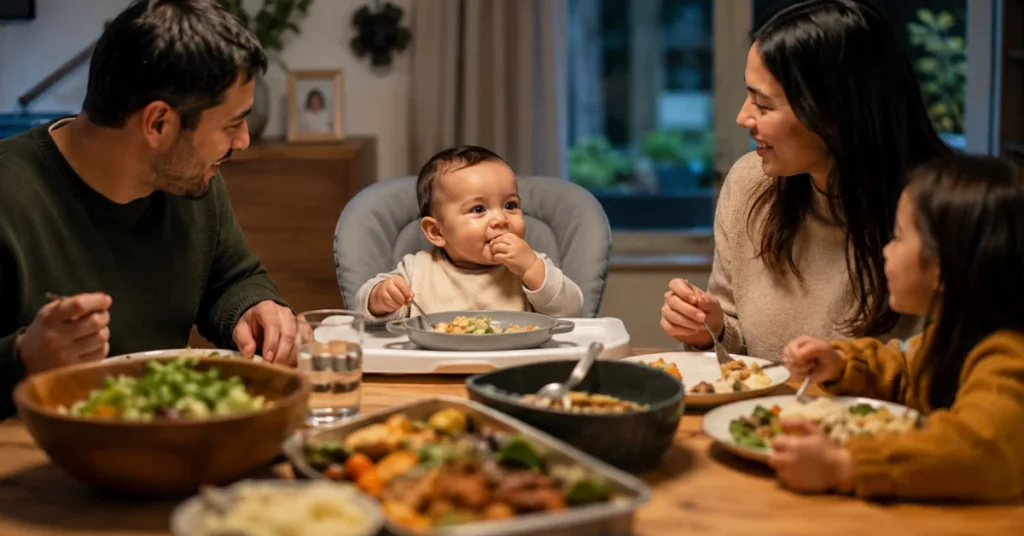
A 9-month-old eating mostly what’s on offer at family meals — smaller, softer, unsalted versions of it — tends to adapt faster to new foods than one eating separate “baby meals” every time. Parents managing multiple kids or tight schedules often find that batch-cooking a few base proteins and vegetables, then adjusting seasoning and texture at the table, keeps the whole household eating together without a second kitchen shift. For families following vegetarian or vegan diets, iron and B12 sources need closer attention, and a chat with a pediatric dietitian is worth the appointment.
This article is for informational purposes only. Always consult a qualified professional, such as a pediatrician or registered dietitian, before making major changes to your baby’s diet.
FAQs
How many meals should a 9-month-old eat per day?
Three solid meals alongside two to three milk feeds is the general target, though appetite and pace vary widely between babies.
Can a 9-month-old eat regular table food?
Yes, as long as it’s cut small, unsalted, and free of choking hazards like whole nuts or hard raw vegetables.
When should I introduce peanuts and eggs?
From around six months, alongside other first foods, one at a time and in small amounts — waiting longer can raise the allergy risk rather than lower it.
Does my baby still need vitamin drops if they’re eating solids well?
Often yes. Solid food alone rarely covers vitamin D needs at this age, especially for breastfed babies, so drops are usually still recommended.
What if my baby refuses most solid foods?
Repeated, low-pressure exposure works better than forcing bites, and it can take ten or more tries before a baby accepts a new food.