
Parents ask this question more than almost any other feeding one: can my 9 month old eat cheese? The short answer is yes, in most cases, but the details matter far more than the yes or no.
By nine months, most babies have moved past thin purees and into thicker textures and finger foods. Cheese fits naturally into that stage. It’s soft, it’s easy to flavor food with, and it packs calcium, protein, and fat into small bites. Still, not every cheese belongs on a baby’s tray, and portion size and preparation change everything.
Can My 9 Month Old Eat Cheese Safely?
Yes, most babies can eat cheese safely at nine months, as long as it’s pasteurized, low in added salt, and cut or shredded to reduce choking risk. Full-fat, pasteurized cheese is generally considered a healthy addition to a baby’s diet from around six months onward, which means a nine month old is well within the window most pediatric guidance supports.
The keyword here isn’t just can. It’s how. A baby who can gum soft foods and pick up small pieces with a pincer grasp is developmentally ready for grated or crumbled cheese. A whole cube of firm cheddar, though, is a different story and one that raises real choking concerns.
Parents who have gone through this stage often describe the same learning curve. They start with something soft like ricotta or cottage cheese, watch how their baby handles it, and only move to firmer textures once chewing skills catch up.
What Kinds of Cheese Are Safe at Nine Months
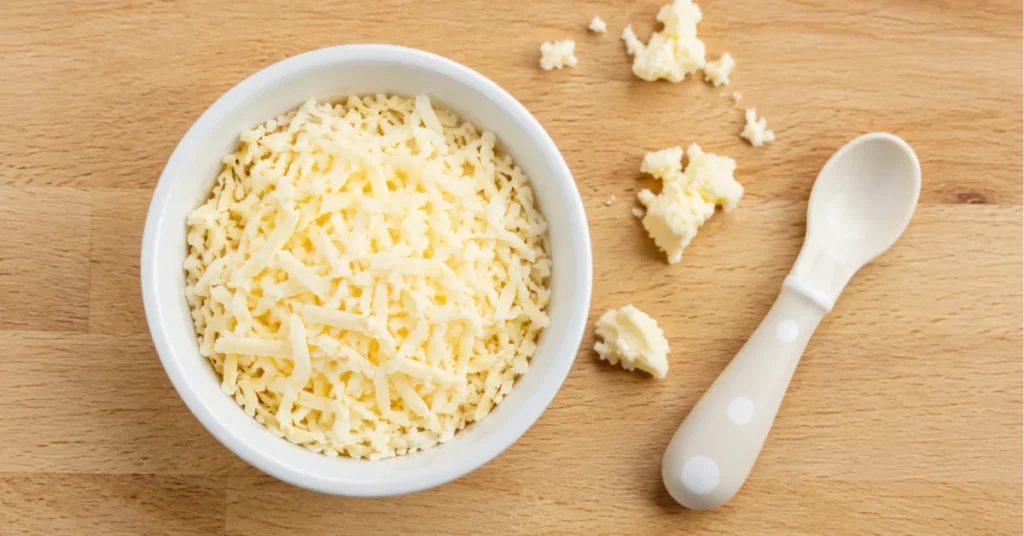
Not all cheese is created equal when it comes to infant feeding. Soft, pasteurized varieties are the safest starting point.
Good first choices include:
- Cottage cheese (full-fat, unsweetened)
- Ricotta
- Cream cheese, plain and unsweetened
- Mild, shredded mozzarella
- Grated cheddar or Monterey Jack in small amounts
Cheeses to avoid or approach with caution:
- Unpasteurized or raw-milk cheeses, including many soft, mold-ripened varieties like unpasteurized brie or camembert, due to listeria risk
- Heavily processed cheese products with high sodium
- Blue-veined cheeses
- Large cubes or slices that could pose a choking hazard
Checking the label for “pasteurized” isn’t optional. Soft, mold-ripened, and blue cheeses made from unpasteurized milk carry a documented listeria risk, and infants are among the higher-risk groups for that kind of infection.
Listeria Risk: What Every Parent Should Know
This is a gap worth closing properly, since it’s the single biggest safety reason behind the pasteurization rule. Listeria monocytogenes is a bacteria that survives refrigeration and even freezing, and it’s most often linked to soft cheeses made from unpasteurized milk, along with queso fresco-type cheeses that skip a proper aging process.
Symptoms in a healthy child can include fever, diarrhea, and general fussiness, and they may appear days to weeks after eating contaminated food rather than right away. That delay is exactly why parents often can’t connect a symptom to a specific meal. Healthy children rarely become seriously ill from it, but babies remain a higher-risk group, which is why the pasteurization label check matters more here than it would for an older child or adult.
Heating a soft or queso fresco-type cheese until it’s steaming hot can kill listeria if pasteurization status is unclear, though sticking to clearly labeled pasteurized products is the simpler route for daily feeding.
How Much Cheese Should a 9 Month Old Eat
Portion control matters more than most parents expect. Cheese is calorie-dense and, in many cases, sodium-dense too. A baby’s kidneys aren’t built to process large amounts of salt.
A reasonable starting portion is about one to two tablespoons, or roughly half an ounce, offered a few times a week rather than daily in large amounts. This isn’t a rigid rule so much as a sensible ceiling. Babies who eat other dairy, like yogurt or formula, throughout the day don’t need cheese piled on top of that.
Pediatric dietitians generally recommend introducing cheese the same way any new food gets introduced: in small amounts, watched closely for a few days before adding more variety.
Sodium Guidance for Babies 7–12 Months
Sodium limits are one of the most concrete pieces of missing context parents need, since “avoid high salt” means little without a number to compare against.
| Guidance Source | Recommended Daily Sodium (7–12 months) | What Counts as “High Salt” |
|---|---|---|
| US adequate intake (AI) standard | Less than 370 mg/day | No single-food threshold set |
| UK infant guidance | Less than 1,000 mg/day (under 1 year) | More than 600 mg sodium per 100g of food |
| Practical takeaway | Cheese servings should stay small and infrequent | Check labels, especially on processed or flavored cheese |
Both figures exist because sodium recommendations are built differently across regions, and it’s worth knowing both rather than treating one as the only correct number. Either way, the direction is the same: keep cheese portions small and skip cheese products with added salt or flavoring.
Choking Risk and Texture — What Actually Matters
Cheese texture changes everything about safety. Soft cheese mashed onto a spoon or spread thin on toast behaves very differently in a baby’s mouth than a solid, springy cube of firm cheese.
Solid Starts, a well-known feeding resource used by pediatric professionals, notes that firm cheese can form a sticky mass in the mouth, which raises genuine choking concerns for babies who are still learning to chew and swallow efficiently. That’s why grating, shredding, or crumbling firm cheeses is the safer route until closer to twelve months, when biting and chewing skills are more developed.
A few practical rules for texture:
- Shred or crumble firm cheese rather than cubing it
- Spread soft cheese thinly on toast strips instead of offering a spoonful of paste
- Avoid cheese strings or thick slices that don’t break apart easily
- Always supervise meals, staying within arm’s reach
Anyone who has fed a baby through this stage knows the anxiety around new textures. It fades with practice, but the caution around firm, sticky foods stays relevant well past nine months.
Texture Progression by Age
| Age Range | Safe Cheese Texture | Example |
|---|---|---|
| 6–8 months | Very soft, spreadable or mashed | Ricotta on toast, blended cottage cheese |
| 9–10 months | Soft crumbles or fine shreds baby can pick up | Crumbled goat cheese, shredded mozzarella |
| 11–12 months | Small soft cubes, still supervised | Small cubes of soft mozzarella |
| 12+ months | Can begin biting firmer cheese with developed chewing | Small matchsticks of cheddar |
What the Research Shows
Pediatric nutrition guidance has shifted over the past decade. Earlier advice leaned toward delaying potentially allergenic foods like dairy. Current guidance, reflected in national infant feeding programs, now supports introducing dairy foods like cheese and yogurt from around six months, alongside other complementary foods, rather than waiting.
This shift matters for the exact question parents are asking: can my 9 month old eat cheese without unnecessary delay? For most healthy babies without a diagnosed dairy allergy, the answer aligns with current pediatric thinking, not the older, more cautious approach.
Cow’s milk protein allergy is worth watching for regardless. Cheese made from cow’s milk, and cheese made from other animal milks like goat or sheep, can trigger a reaction in babies with a dairy sensitivity. Introducing cheese earlier in the day, rather than right before bed, gives parents a better window to notice symptoms like rash, vomiting, or unusual fussiness.
What Global Health Guidance Says
International complementary feeding recommendations list dairy, including cheese, as one of the core food groups babies should be offered starting at six months, alongside breast milk or formula, to help meet growing nutritional needs. For infants between six and eleven months, full-fat animal milk products are recommended over low-fat versions, since babies need the concentrated energy that fat provides. This guidance also reinforces that salt should not be added to complementary foods, which lines up directly with the sodium caution already covered above.
Cheese Is a Complement, Not a Replacement
This is worth stating plainly, since it’s easy for cheese and other solids to feel like they’re doing more nutritional work than they actually are at this stage. A 9 month old still needs the majority of daily nutrition from breast milk or formula, generally around 24 ounces a day of formula where applicable, alongside solids. Cheese and other complementary foods fill nutritional gaps and build eating skills; they don’t replace the primary milk feeds yet. Parents sometimes cut back on milk feeds once solids ramp up, but that’s not the intended balance at nine months.
Don’t Forget Vitamin D
Cheese provides calcium, but it isn’t a meaningful source of vitamin D, and this gets overlooked often. Babies are generally advised to receive a daily vitamin D supplement throughout infancy, separate from whatever solids or milk they’re consuming, since diet alone rarely covers this need at this age. Adding cheese to the diet doesn’t change that requirement, so it’s worth checking with a pediatrician about supplementation regardless of how varied the solid food diet becomes.
Signs Your Baby Might Not Be Ready for Cheese
Not every nine month old is at the same developmental point. A few signs suggest waiting a little longer or sticking with very soft textures:
- Difficulty sitting upright without support during meals
- No interest in self-feeding or picking up small pieces
- A history of reflux or swallowing difficulty flagged by a pediatrician
- Known or suspected dairy allergy in the family
None of these mean cheese is off the table forever. They just mean starting slower, with smaller amounts and softer textures, makes sense.
Cheese for Different Feeding Styles
Families approach solids differently, and cheese adapts to most of them.
Baby-led weaning: Offer finger-sized strips of toast spread with a thin layer of soft cheese, or let baby self-feed small crumbles of mozzarella.
Spoon-fed purees: Blend cottage cheese into vegetable or fruit purees for added creaminess and calories.
Combination feeding: Mix shredded mild cheese into soft scrambled eggs or mashed sweet potato for texture variety without a full finger-food commitment.
Anyone who has managed a mixed feeding approach with a nine month old knows the flexibility helps. Some days a baby wants to grab everything themselves. Other days a spoon works better. Cheese fits into either routine without much adjustment.
Cheese is just one small part of the plate, though. If you’re still mapping out what your 9 month old can eat across breakfast, lunch, and dinner, it helps to look at the full range of solids beyond dairy too.
Nutritional Benefits Worth Knowing
Cheese isn’t just a convenient food. It brings real nutritional value at a stage when babies need concentrated calories and nutrients in small stomachs.
- Calcium and phosphorus support bone development
- Protein aids muscle and tissue growth
- Fat provides the dense energy babies need, since low-fat diets aren’t appropriate before age two
- Vitamin A and B12, found in many cheeses, support vision and nervous system development
For babies who are slow to gain weight or picky about other protein sources, cheese offers an easy, energy-dense option that doesn’t require much preparation.
Common Mistakes Parents Make
A few patterns come up again and again when parents introduce cheese too casually:
- Offering a whole cheese stick or slice without cutting it down
- Choosing heavily salted, processed cheese products marketed for kids
- Skipping the pasteurization check on soft or specialty cheeses
- Introducing cheese right before a nap or bedtime, making allergy symptoms harder to catch
- Assuming vitamin D needs are covered just because cheese is part of the diet
Fixing these is mostly about slowing down for the first few tries, not avoiding cheese altogether.
Conclusion

So, can my 9 month old eat cheese? For most babies, yes, and it’s a genuinely useful addition to a growing diet. The details that matter are pasteurization, portion size, sodium content, and texture safety. Soft, mild, low-sodium cheese cut or shredded appropriately gives babies real nutritional value with minimal risk. When in doubt about allergies, family history, or developmental readiness, a quick conversation with your pediatrician settles most concerns before the first bite.
This article is for informational purposes only. Always consult a qualified pediatrician or registered dietitian before introducing new foods to your baby.
FAQs
Is cheddar cheese safe for a 9 month old?
Yes, in small, grated or crumbled amounts. Avoid offering whole cubes or slices due to choking risk, and check that it’s pasteurized.
Can a 9 month old have cheese every day?
Small amounts a few times a week is a reasonable approach for most babies. Daily large portions can push sodium intake higher than necessary.
What cheese should I avoid giving my baby?
Unpasteurized soft cheeses, blue-veined cheeses, and heavily processed cheese products with high salt content are best avoided in the first year.
Can cheese cause an allergic reaction in babies?
Yes, since cheese is a dairy product and cow’s milk protein is a common allergen. Introduce it earlier in the day and watch for reactions like rash or vomiting.
Is string cheese okay for a 9 month old?
Not in its original form. The stringy, stretchy texture and thickness make it a choking hazard. Shred it first if you want to offer that variety.