
You rub your eyelid, blink twice, and it’s still there: a dull ache, a stabbing pull, or that gritty feeling like sand got trapped under your lid. Naturally, you start typing “why do my eyes hurt” into your phone at 11 p.m., half worried and half annoyed. You’re not overreacting. Eye pain is one of those symptoms that can mean almost nothing, or it can mean quite a lot, and the only way to tell the difference is to understand where the pain sits and what it feels like.
This guide breaks down the real, research-backed reasons behind eye discomfort, walks through the red-flag symptoms that need same-day medical attention, and covers what actually helps when the cause is mild. As of 2026, screens, allergens, and longer indoor hours have made eye pain one of the most searched health complaints online, so you’re in good company.
Why Do My Eyes Hurt? The Short Answer
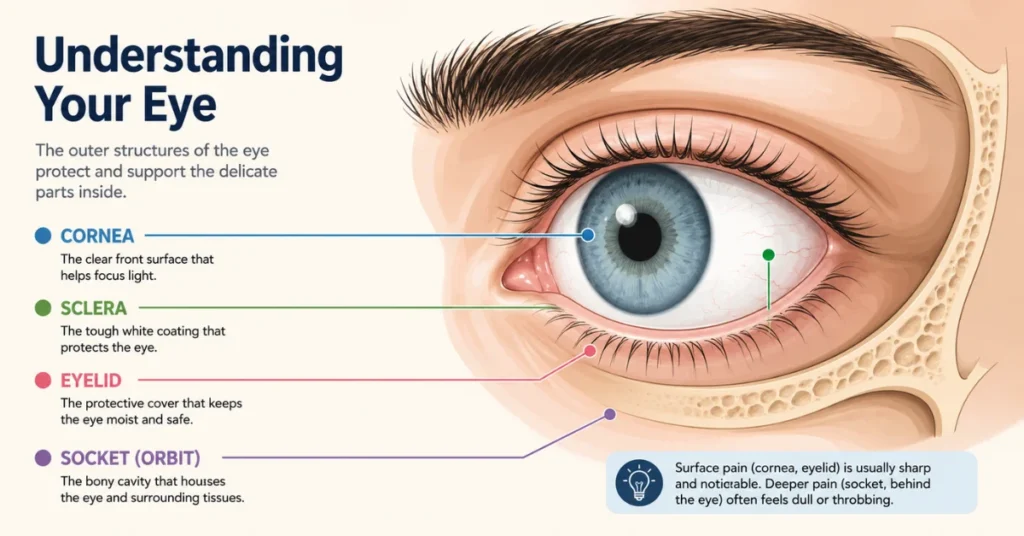
Most of the time, when people ask why do my eyes hurt, the cause is something ordinary: dryness, tiredness, or irritation from wind, smoke, or pollen. Doctors split eye pain into two broad zones. Surface pain sits on the outer layer of the eye and often feels sharp, burning, or gritty. Deeper pain sits behind or inside the eye and tends to feel dull, throbbing, or pressure-like.
That distinction matters because it points doctors toward a cause. A scratchy, stinging surface pain usually traces back to dryness, an eyelash, a contact lens problem, or conjunctivitis. A deep, aching pain that worsens with eye movement points toward inflammation further inside the eye, or sometimes toward a headache disorder rather than the eye itself.
Anyone who has dealt with a long bout of screen work knows this pattern well. The eyes feel fine in the morning, get progressively drier through the afternoon, and by evening there’s a tight, tired ache around the sockets. That’s a textbook surface-level pattern, and it’s rarely dangerous on its own.
Common Causes Behind Eye Pain
There isn’t a single answer to why do my eyes hurt, because the eye has nerve endings scattered across the eyelid, the clear front surface, the white outer coat, and the socket itself. Each structure reacts differently when something goes wrong.
- Dry eye and screen fatigue. Staring at a monitor slows your blink rate, which lets the tear film evaporate faster than normal. The result is burning, grittiness, and a heavy, tired feeling by late afternoon.
- Digital eye strain. Beyond dryness, the focusing muscles inside the eye work overtime during long near-vision tasks like reading small text or scrolling a phone. That muscular fatigue produces a dull ache behind the eyes.
- Foreign body or corneal scratch. An eyelash, a speck of dust, or a fingernail scrape across the cornea can trigger sudden, sharp pain along with tearing and light sensitivity, even from something almost invisible.
- Conjunctivitis and eyelid inflammation. Infections or blocked oil glands along the eyelid margin cause redness, crusting, and a sore, itchy feeling that’s worse first thing in the morning.
- Sinus pressure. Because the sinus cavities sit directly beneath and around the eye sockets, congestion from a cold or allergy flare can radiate upward and mimic eye pain.
- Migraine and cluster headache. Head pain disorders frequently refer pain to one eye, sometimes with light sensitivity or a visual aura that shows up before the ache begins.
- Contact lens overuse. Wearing lenses longer than prescribed, or sleeping in daily lenses, reduces oxygen flow to the cornea and can cause soreness that lingers even after the lenses come out.
People managing chronic dry eye or seasonal allergies often say the pattern repeats itself every year around the same trigger, whether that’s pollen season, heating season, or a stretch of long work deadlines.
Why Do My Eyes Hurt More After Screen Time?
If your pain climbs steadily through the workday and eases overnight, screens are almost certainly involved. A widely cited meta-analysis pooling more than 100 studies found that digital eye strain affects roughly two-thirds of regular device users worldwide, with symptoms ranging from dryness to blurred vision and soreness. More recent workplace tracking in 2026 puts that figure even higher among people logging eight or more screen hours a day.
The mechanism is straightforward. Printed text has sharp, solid edges. Screens rebuild images from thousands of flickering pixels, which forces the eye’s focusing muscles to work harder to keep the image sharp. Add a reduced blink rate, and you get a one-two combination of muscular fatigue and dryness that shows up as soreness around and behind the eyes.
Office workers, students on laptops, and anyone doing close detail work like graphic design or accounting tend to notice this most. The good news: this cause responds well to simple habit changes, covered further down.
When Eye Pain Signals an Emergency
Most causes behind why do my eyes hurt are mild and self-limiting. A smaller number are genuine emergencies, and knowing the difference can protect your vision.
Seek urgent medical care, same day, if you notice any of the following alongside eye pain:
- Sudden vision loss, blurring, or a dark shadow moving across your sight
- Severe pain paired with nausea, vomiting, or seeing halos around lights
- Pain that started right after a chemical splash, a blow to the eye, or an object piercing the surface
- One pupil looking noticeably larger than the other, or pain when you move the eye
- A red, painful eye in a baby under 28 days old
Sudden, intense pain with rainbow halos and nausea is a classic pattern for a spike in eye pressure, a condition doctors treat as time-sensitive because delayed care raises the risk of permanent vision damage. Pain that worsens specifically with eye movement, especially alongside blurred or dimmed color vision, can point toward inflammation of the optic nerve, which usually needs a same-week specialist review.
Pain following any direct injury deserves attention regardless of how minor it looks. A small scratch on the eye’s surface can feel disproportionately painful and heal within a couple of days with the right care, but an object that’s actually pierced the eye needs emergency treatment, not home remedies.
What Early Research and Clinical Data Suggest
Clinical surveys consistently show that eye pain rarely travels alone. In one recent questionnaire-based study of clinicians who spend long hours on electronic records, roughly 28% reported eye pain directly, alongside higher rates of dryness, burning, and headaches. That overlap matters: when people ask why do my eyes hurt, the honest clinical answer is often “more than one thing at once.”
Professionals in eye care consistently note that patients rarely present with pain as an isolated symptom. It tends to arrive bundled with dryness, light sensitivity, or head pressure, which is exactly why doctors ask several follow-up questions before naming a cause. Anyone who has sat through an eye exam for a persistent ache has likely noticed the provider working through this checklist methodically, ruling out the mundane causes before considering the rarer ones.
How to Ease Eye Pain at Home
For mild, surface-level discomfort, a handful of simple steps often bring relief within a day or two.
Follow the 20-20-20 pattern. Every 20 minutes, look at something roughly 20 feet away for 20 seconds. It gives the focusing muscles a genuine break and reduces the ache that builds during long screen sessions.
Use preservative-free lubricating drops. Artificial tears restore the moisture layer that screens and dry indoor air strip away. Using them proactively, rather than waiting until the burning starts, tends to work better.
Apply a warm compress. A clean, warm washcloth held over closed lids for five minutes can loosen blocked oil glands and ease eyelid-related soreness.
Adjust your screen setup. Position the monitor so the top edge sits roughly at eye level, about an arm’s length away, and cut down glare from overhead lighting.
Rest and hydrate. Basic as it sounds, adequate sleep and water intake support a stable tear film and reduce next-day fatigue.
If the pain doesn’t ease within two to three days of trying these steps, or if it starts worsening instead of improving, that’s the point to book an appointment rather than keep waiting it out.
A Quick Comparison: Mild vs. Serious Eye Pain
| Feature | Usually Mild | Possibly Serious |
|---|---|---|
| Onset | Gradual, builds through the day | Sudden, within minutes |
| Vision | Normal or briefly blurry | Noticeably reduced or lost |
| Pain type | Gritty, burning, tired | Sharp, throbbing, severe |
| Other symptoms | None or mild redness | Nausea, halos, one large pupil |
| Response to rest | Improves | Doesn’t improve or worsens |
Who Should Pay Closer Attention
Contact lens wearers face a higher baseline risk because lenses reduce oxygen supply to the cornea, especially with overnight wear or poor cleaning habits. Anyone managing autoimmune conditions like ankylosing spondylitis or lupus should treat new eye pain seriously, since inflammation inside the eye is more common in that group. People over 40 reporting sudden, severe pain with halos around lights should be seen the same day, given the higher background rate of pressure-related eye conditions in that age bracket. Parents of young children should never try to diagnose a red, painful eye at home, particularly in babies under a month old.
Preventing Eye Pain Before It Starts
Prevention beats treatment here, and most of it comes down to small daily habits rather than expensive gear.
Anyone who spends hours at a desk benefits from setting a recurring break reminder rather than relying on willpower alone. A simple timer app or browser extension that prompts the 20-20-20 pattern removes the guesswork.
Contact lens wearers should replace lenses on schedule, never sleep in daily-wear lenses, and swap out old lens cases every three months, since bacteria build up quickly in damp plastic. Non-technical readers who don’t track screen time manually can simply watch for the first signs of fatigue, a slight blur or heaviness around the eyes, and treat that as the cue to look away and blink deliberately several times.
Mobile-heavy users face a slightly different challenge than desktop workers, since phones are typically held closer to the face and used in variable lighting, including in bed with the lights off. Increasing text size, enabling dark mode in low light, and holding the device at least 30 centimeters away reduces the strain that builds from close-range phone use.
For households managing seasonal allergies, keeping windows closed during high-pollen days and rinsing the face after being outdoors can meaningfully cut down on the itching and soreness that tends to spike each spring.
The Bottom Line on Eye Pain
There’s rarely one tidy answer to why do my eyes hurt, because so many separate structures inside and around the eye can generate that sensation. Most cases trace back to something ordinary: dryness, screen fatigue, or a lingering sinus flare, and these usually settle with rest, lubricating drops, and a few habit tweaks. A smaller share of cases carry warning signs worth taking seriously: sudden vision changes, severe pain with nausea, or pain following an injury. Paying attention to how the pain started, where it sits, and what else comes with it gives you the clearest signal for when to wait it out and when to call a professional.
This article is for informational purposes only. Always consult a qualified professional for diagnosis and treatment of eye pain or any other health concern.
FAQs
Why do my eyes hurt after using my phone for a long time?
Extended close-up screen use reduces your blink rate and forces your eye’s focusing muscles to work harder than usual, which produces dryness and a dull ache. Taking regular breaks and using lubricating drops usually resolves it.
Why do my eyes hurt when I move them?
Pain that specifically worsens with eye movement can point toward inflammation of the eyelid, the outer eye coat, or the optic nerve. If it’s paired with blurred or dimmed vision, get it checked promptly rather than waiting.
Can allergies make my eyes hurt?
Yes. Allergens like pollen, dust, and pet dander commonly cause itching, redness, and soreness. Cold compresses and antihistamine eye drops often help, but see a provider if swelling is severe.
Should I go to A&E or urgent care for eye pain?
Mild, gradual pain without vision changes can usually wait for a routine appointment. Sudden severe pain, vision loss, halos with nausea, or pain after an injury needs same-day emergency care.
Is eye pain from screens permanent?
No. Digital eye strain is considered a functional, reversible condition. Symptoms typically ease with rest, proper lighting, and breaks, though people with underlying dry eye may need ongoing management.