
Families landing in the Loop this year have a decision to make fast: with a T. rex, a free zoo, and a giant Ferris wheel all within a few miles of each other, where do you even start? Figuring out what to do with kids in Chicago gets easier once you know which stops are genuinely worth the trip and which ones are just tourist filler. In 2026, that list has gotten more interesting too, with a new immersive magic venue downtown and the Obama Presidential Center opening on the South Side in June.
This guide skips the generic “top 10” format. Instead, it breaks activities down by what actually matters to parents: cost, weather backup plans, age fit, and how much walking a stroller can realistically handle.
What To Do With Kids In Chicago Right Now
Start with the free stuff, because Chicago has an unusual amount of it. Lincoln Park Zoo has stayed free since it opened in 1868, and city officials locked that arrangement in through 2049, so it’s not going anywhere. The 35-acre grounds hold close to 200 species, plus a small Lionel train ride and a carousel built around endangered animals that toddlers tend to love more than the actual lions.
The Art Institute of Chicago waives admission for anyone under 14, every single day, which makes it one of the few world-class art museums where a family of four doesn’t wince at the door. Millennium Park costs nothing either. Cloud Gate (“The Bean”) is the obvious photo stop, but the Crown Fountain a few steps away, where two towers spray water over rotating faces, tends to hold a kid’s attention far longer.
The Museums Every Family Circuit Includes
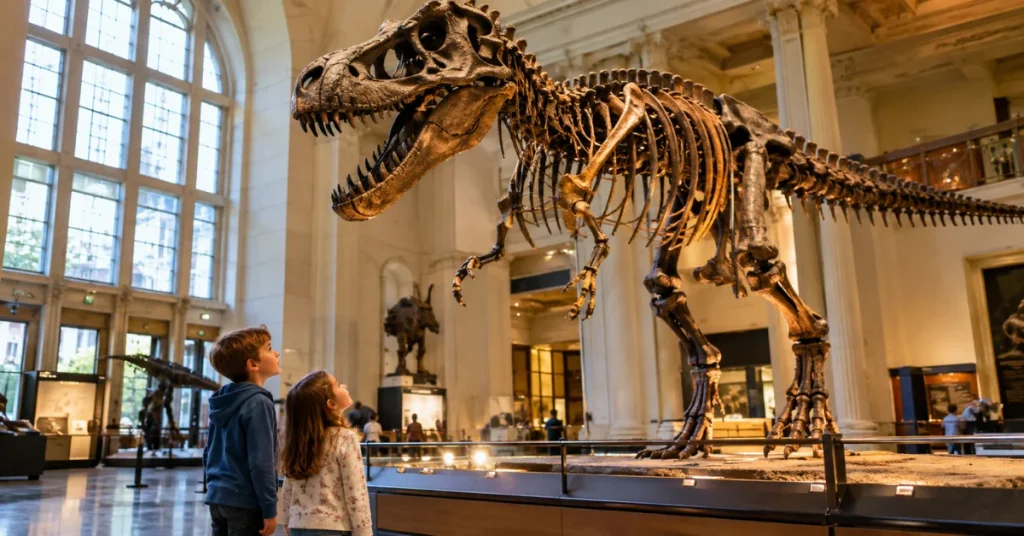
Museum Campus groups three of the biggest names within walking distance of each other: the Field Museum, Shedd Aquarium, and Adler Planetarium. That clustering matters logistically, since you can park once and cover all three without repacking the car.
The Field Museum’s main draw is still SUE, the largest and most complete T. rex skeleton found to date, displayed in its own dedicated hall. Younger kids gravitate toward the hands-on stations nearby, where they can try writing in Egyptian hieroglyphs or handle real fossil casts.
Shedd Aquarium runs a beluga and dolphin habitat along with a four-story Caribbean reef tank, and it’s genuinely one of the better rainy-day options because the whole visit happens indoors. The Museum of Science and Industry, further south in Hyde Park, adds a submarine you can walk through and a coal mine replica, both of which skew toward slightly older kids who can handle tighter, darker spaces.
Free Days And Cheap Tricks Worth Planning Around
Several museums run recurring free windows that don’t show up on the ticket page’s homepage. The Field Museum offers Illinois residents free entry on Wednesdays. The Adler Planetarium opens free from 4 to 10 p.m. every Wednesday evening, which works well for older kids who want to see the night sky exhibits actually lit up. The DuSable Black History Museum runs free Wednesdays too.
A CityPASS or Go City pass can still make sense if you’re hitting four or more paid attractions in one trip, since it bundles Skydeck, Shedd, and the Field Museum at a lower combined rate than buying tickets separately.
Here’s the deal: none of this requires advance planning software. A phone note with the free-day schedule for the week you’re visiting covers most of it.
Real 2026 Ticket Prices You Should Budget For
Most guides skip actual numbers and just say “affordable,” which doesn’t help anyone building a real budget. Here’s what a family should expect to pay before add-ons, parking, or food.
| Attraction | Adult (12+) | Child (3-11) | Reservation Needed? |
|---|---|---|---|
| Field Museum | ~$29 | ~$22 | Recommended, required on busy weekends |
| Shedd Aquarium | ~$40 | ~$30 | Yes, timed entry |
| Skydeck Chicago (Willis Tower) | ~$30 | ~$22 | Yes, timed entry |
| Museum of Science and Industry | ~$22 | ~$13 | Recommended |
| Chicago CityPASS (5 attractions bundled) | ~$142 | ~$112 | Book each attraction separately after purchase |
Skipping the reservation step is the single most common mistake first-time visitors make. Shedd and Skydeck both run timed entry, and showing up without a slot booked can mean standing in a walk-up line for an hour or more, or not getting in at all on a peak weekend.
Parks, The Lakefront, And Why Locals Skip The Crowds
The Chicago Park District manages more than 600 parks across 8,800 acres acres, and dozens of those include free splash pads that run all summer. Anyone who’s raised a kid through a Midwest July knows a splash pad beats an expensive attraction on a 95-degree afternoon, every time.
Maggie Daley Park, just east of Millennium Park, has a climbing wall, a mini-golf course, and a play garden shaped like a giant slide hill. It’s less photographed than The Bean but gets far more actual use from local families. Oz Park, in Lincoln Park, has statues of Dorothy and the Tin Man and a decent playground, and it rarely feels crowded compared to the lakefront draws.
Rainy Day And Winter Backups
Chicago weather doesn’t cooperate on schedule, so a backup plan matters. The Chicago Children’s Museum at Navy Pier is built for exactly this, with water tables, a dinosaur dig pit, and an art studio, all indoors. It’s closed Tuesdays, worth checking before you show up.
In winter, ice skating opens at Millennium Park’s rink, and Lincoln Park Zoo runs its ZooLights display, which turns the whole property into a walk-through light show through early January. The Garfield Park Conservatory is a solid indoor option too, especially when a Chicago February makes anything outdoors a hard sell.
Sensory-Friendly Options for Families
This part gets left out of most guides, but it matters for a real number of families. Several of Chicago’s biggest attractions now run dedicated sensory-friendly programming, not just a ramp and a brochure.
The Field Museum offers a free app called Field for All, built for visitors with autism or sensory processing needs. It includes a customizable visit schedule, a sensory-friendly museum map, and sensory bags at Guest Services stocked with fidgets, headphones, sunglasses, and emotion cards.
The Museum of Science and Industry runs free Low-Sensory Early Exploration mornings, when the whole museum stays lower-sensory until noon, crowds are smaller, lighting is dimmed, and a quiet room is available for breaks. The Museum of Contemporary Art holds a similar Sensory-Friendly Morning, with pre-registration, dimmed lighting, and the building closed to general visitors until 11:30 a.m.
Quick-Pick Chicago Kids Itinerary by Age
| Age Group | Best Fit | Backup If It’s Raining | Rough Cost |
|---|---|---|---|
| Toddlers (0-3) | Lincoln Park Zoo, splash pads | Chicago Children’s Museum | Free–$25 |
| Young kids (4-8) | Field Museum, Maggie Daley Park | Shedd Aquarium | $0–$40/person |
| Tweens (9-12) | Adler Planetarium, Skydeck | Museum of Science and Industry | $20–$35/person |
| Teens | The Hand & The Eye (immersive magic), Willis Tower | Art Institute (free under 14 only, otherwise ticketed) | $25–$45/person |
What To Do With Kids In Chicago With Tweens And Teens
Older kids get bored fast at exhibits built for toddlers, so the calculation shifts. This spring, the world’s largest immersive magic venue, The Hand & The Eye, opened downtown, and it’s pitched squarely at an audience that’s aged out of petting zoos but still wants something interactive.
Skydeck Chicago at the Willis Tower has The Ledge, a glass box that extends out from the 103rd floor. Teens tend to find it more thrilling than younger siblings, who sometimes refuse to step on it entirely. Anyone who’s managed a family outing with a wide age gap knows the trick is picking one “big kid” activity per day and balancing it with something slower for the younger ones.
Practical Logistics Parents Actually Need
The “L” train is cheaper than parking downtown and kids generally treat it as part of the adventure rather than a chore. As of the 2026 fare update, the base CTA fare runs $2.50 for buses and $2.75 for rail, with a single-day unlimited pass priced at $6. Children younger than 7 ride free with a fare-paying adult, and kids 7 to 11 qualify for a reduced fare, which makes transit one of the cheaper parts of any Chicago family trip.
Stroller access varies. Field Museum and Shedd both have wide, flat corridors that handle strollers fine. The Adler Planetarium’s dome theaters have narrower aisles, so a lightweight umbrella stroller works better than a full travel system there. On CTA buses and trains, strollers are allowed but never permitted on escalators, so it’s worth checking a station’s elevator status before heading out.
Meal planning matters more than people expect. Navy Pier has food courts geared toward kids, while the Museum Campus cafeterias run pricier and slower during peak hours. Packing snacks for the walk between museums saves both money and a meltdown.
Crowd Patterns Worth Knowing Before You Go

Chicago Park District’s own figures put its holdings at more than 600 parks across roughly 8,800 acres, making it one of the largest municipal park systems in the country. That scale is a big part of why free outdoor options for families are so easy to find here, compared with cities where park space is more limited or fee-based.
Museum attendance patterns also tell a story worth knowing before you go. Free-day Wednesdays at the Field Museum and Adler Planetarium consistently draw heavier crowds than weekday afternoons without a discount, according to the museums’ own visitor guidance. If a quieter visit matters more to your family than saving on tickets, a regular weekday morning beats a free day by a wide margin.
Conclusion
Figuring out what to do with kids in Chicago really comes down to matching the activity to the kid you actually have, not the one on the brochure. A toddler needs a splash pad and a nap window. A tween wants something interactive enough to hold their attention past twenty minutes. A teenager mostly wants to feel like the trip wasn’t planned entirely around a five-year-old sibling.
Between the free zoo, the museum-heavy Museum Campus, the lakefront parks, and new 2026 additions like the Obama Presidential Center and The Hand & The Eye, Chicago covers most of those needs without requiring a second mortgage. Pack layers, book your timed-entry tickets ahead, grab a Ventra card, and build in at least one indoor backup, because the weather here does not read the itinerary.
FAQs
Is Chicago actually affordable for a family trip?
It can be. Between the free zoo, free museum days, and no-cost parks, a family can fill several days without paying for a single ticket, though a hotel downtown will still be the bigger expense.
What’s the best age range for the Field Museum?
Kids around 6 and up tend to get the most out of it, since the hands-on stations and SUE the T. rex hold attention better than the more text-heavy exhibits aimed at older visitors.
Do I need a car to see the major attractions?
No. Museum Campus, Navy Pier, and Millennium Park are all connected by the “L” train or a short walk, and parking downtown tends to cost more than a full day of transit fares.
Is Navy Pier worth it if we’re only there for a day?
It’s worth a few hours, mainly for the Chicago Children’s Museum and the Centennial Wheel, but it’s not necessary to spend a whole day there when Museum Campus is close by.
What should we do if it rains for our whole trip?
Lean on the Shedd Aquarium, the Chicago Children’s Museum, the Museum of Science and Industry, and the Garfield Park Conservatory. All four are fully indoors and built for a full afternoon each.