
You ran out of yeast. Or maybe you just don’t want to wait two hours for dough to rise. Either way, this how to make bread without yeast recipe is exactly what you need — a real, sliceable loaf that comes together in under an hour with stuff already sitting in your pantry.
This isn’t a workaround or a substitute. Bakers have been making yeast-free bread for centuries, and the results — when done right — are deeply satisfying. Dense, golden, and crusty outside with a tight, moist crumb inside. Different from sandwich bread, yes. But delicious in its own very honest way.
And here’s the deal: once you’ve made it, you’ll keep a loaf going every week whether you have yeast or not.
What Actually Makes Bread Rise Without Yeast?
Yeast creates gas bubbles by fermenting sugars over time. Without it, you need a chemical leavening agent to do that job instead. Two options work well, and they each behave differently.
Baking powder acts on its own. Add it to flour, pour in liquid, and the reaction starts immediately. It gives you a quicker rise with a milder flavor. Most no-yeast loaves targeting a sandwich-style bread use baking powder.
Baking soda is the stronger of the two, but it needs acid to activate. Baking soda requires an acidic ingredient to leaven the dough — buttermilk is the classic choice, and it adds richness and flavor while doing exactly that job. The result is what most people know as Irish soda bread, which has been a staple in kitchens long before commercial yeast existed.
Beer is a third option that surprises people. Beer acts as both the liquid and leavening agent in quick bread, giving the loaf a golden, crunchy crust and a soft, tender inside — a lager or ale provides a mild maltiness that balances beautifully with the bread’s savory notes.
Which method you choose depends on what’s in your fridge. All three work. All three produce loaves worth eating.
The Classic How to Make Bread Without Yeast Recipe
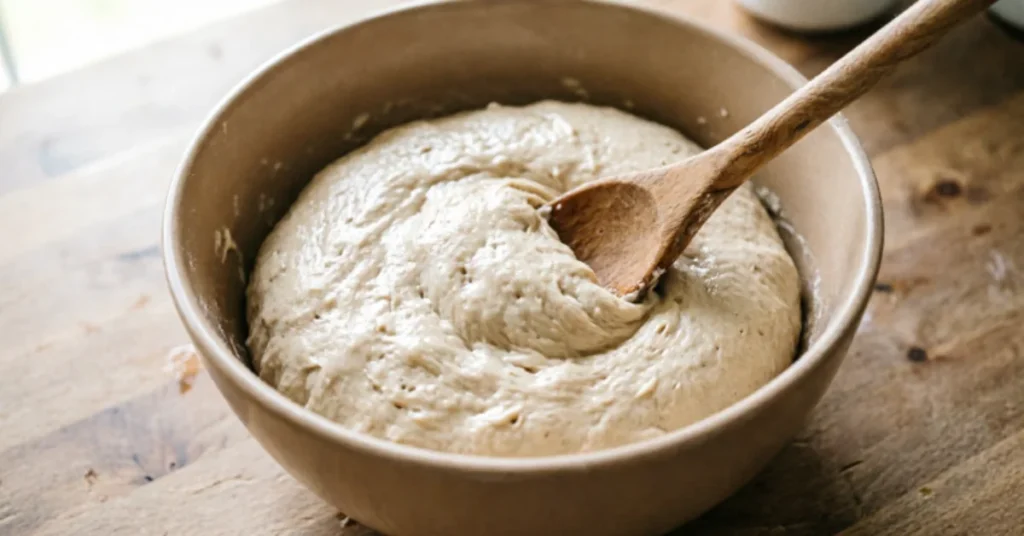
This is the base recipe. No buttermilk needed, no baking soda. Just baking powder, flour, and a handful of pantry staples.
Ingredients:
- 3 cups all-purpose flour
- 1 tablespoon baking powder
- 1 teaspoon salt
- 1 teaspoon sugar
- 1 cup milk (any kind works — dairy or plant-based)
- 2 tablespoons oil or melted butter
Instructions:
- Preheat your oven to 400°F. Line a baking sheet with parchment paper, or grease a standard 9×5 loaf pan.
- In a large bowl, whisk together flour, baking powder, salt, and sugar until fully combined.
- Make a well in the center of the dry mix. Pour in the milk and oil together.
- Stir just until the dough comes together. It’ll be shaggy and thick — that’s exactly right. Don’t overwork it.
- Transfer dough to your prepared surface. Shape into a rough oval or press it into your loaf pan.
- Score the top with a sharp knife — a single long slash or an X both work well.
- Bake for 30 to 35 minutes, until the top is deeply golden and the bottom sounds hollow when tapped.
- Cool on a rack for at least 20 minutes before slicing. Resist the urge to cut in immediately — the crumb sets during cooling.
The bread is at its absolute best on the day it’s made, though it stays quite good the next day too. By day three, a quick toast brings it right back. It also freezes well — slice it first, wrap tightly, and pull slices out as needed.
Variations Worth Trying Right Now
One of the best things about this how to make bread without yeast recipe is how easy it is to customize. The base is neutral and plays well with almost anything.
Rosemary and Parmesan — Add two tablespoons of grated parmesan and a teaspoon of dried rosemary to the dry mix. The result is something that smells incredible coming out of the oven and pairs perfectly with pasta or soup.
Cinnamon Raisin — Swap the savory salt for a slightly larger pinch, add two teaspoons of cinnamon and a third cup of raisins. This version toasts beautifully and tastes like something from a proper bakery.
Whole Wheat — Replace up to half the all-purpose flour with whole wheat. When using whole wheat in place of all-purpose, the loaf will be a bit denser and heartier, and you may need to add a splash more liquid to bring the dough together. Don’t go full whole wheat on your first try — the density goes up considerably.
Herb and Garlic — Mix in half a teaspoon of garlic powder and a tablespoon of mixed dried herbs. Slice thin and serve alongside roasted chicken or a hearty stew.
The Flatbread Option — Done in 30 Minutes
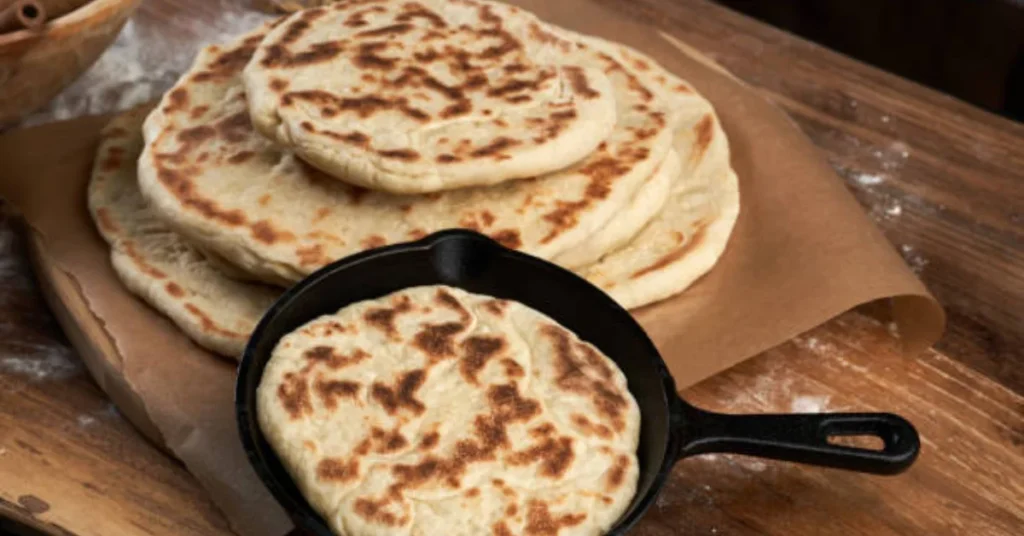
If a full loaf feels like too much commitment, flatbread is the fastest version of this how to make bread without yeast recipe — and honestly, one of the most useful things you can make in your kitchen.
Cold water keeps the baking powder from activating too enthusiastically until the dough hits the pan, which is why flatbreads made with cold water tend to puff up properly and hold their structure.
Mix flour, baking powder, salt, a drizzle of olive oil, and just enough cold water to form a soft dough. Let it rest for ten minutes — that rest matters for texture. Then pull off pieces, roll them thin, and cook in a dry, very hot skillet for about 90 seconds per side. You’ll see the bubbles form. That’s the good sign.
Use them as wraps, pizza bases, or tear them into pieces for dipping. Anyone who’s made them once finds it hard to go back to store-bought flatbread.
What the Research Shows About Home Baking in 2026
Home bread-making has surged well beyond pandemic levels. Home baking continues gaining momentum, with 65% of US consumers baking at least weekly. And the appetite for quick, pantry-friendly baking is clearly part of that shift. People aren’t just looking for convenience — they want to understand what they’re eating.
Research into consumer bakery preferences shows that 67% of consumers now select foods based on the health benefits they offer, and yeast-free bread made from simple ingredients fits squarely into that demand. Clean labels, recognizable ingredients, no additives. Home bakers working from this recipe know exactly what went into every slice.
The “homemade” label carries real consumer weight too. Consumer demand signals show that “homemade” carries a 15% share among the most powerful needs driving bakery choices — which is a significant signal about what people actually want when they bake at home.
Common Mistakes and How to Avoid Them
Slicing too early. The crumb needs time to set. Cut too soon and you get a gummy center even when the outside looks done. Give it 20 minutes minimum on a rack.
Overmixing the dough. This activates too much gluten and makes the bread tough. Stir just until the flour disappears. Lumps are fine. Overworked dough is not.
Expecting it to behave like yeast bread. This bread isn’t light, airy, or bouncy — and it’s not meant to be. It works beautifully toasted for sandwiches, served alongside soups, or eaten with a generous smear of butter.
Using bread flour instead of all-purpose. Bread flour doesn’t give a better result here the way it would in a yeast-based loaf — the protein content that makes yeasted bread chewy just creates density without purpose in a quick bread.
Skipping the score. Scoring the top before baking lets steam escape evenly. Without it, the loaf often splits unpredictably on the sides during baking.
How to Make Bread Without Yeast Recipe for Different Kitchens
No oven? Use a heavy skillet with a lid. Set on low-medium heat, cook covered for about 20 minutes per side. It’s slower, but the result is a rustic country loaf with a different, slightly smoky crust.
Gluten-free kitchen? Almond flour bread relies on eggs and baking powder for rise, creating a loaf that’s grain-free and simple to make without yeast or lengthy proofing — the subtle nuttiness pairs well with savory spreads and holds up well for slicing.
Vegan kitchen? Any unsweetened, plain dairy-free milk works in a no-yeast loaf, and water works as a substitute too — simply swap the butter for oil and you have a fully plant-based loaf without changing anything else about the method.
Camping or limited setup? All you need are five pantry staples and 40 minutes to enjoy a fresh loaf — flour, baking powder, butter or oil, an egg if you have one, and milk. That’s a list that travels easily.
Storing, Freezing, and Reviving Your Loaf
No yeast bread doesn’t keep as long as commercial bread — it’s free of preservatives, which is the whole point. On the counter, loosely covered, it stays good for two to three days. After that, moisture loss makes it crumbly.
Freeze it sliced. Single slices pull out easily and toast from frozen in about 90 seconds. Placing the loaf back in the oven at 350°F for around 10 minutes restores the crusty top if it softens overnight — a useful trick to remember.
Don’t store it in plastic while it’s still warm. The steam trapped inside turns the crust soft and slightly rubbery. Let it cool fully, then wrap or bag it.
Conclusion
This how to make bread without yeast recipe proves that fresh bread doesn’t require a long rise, a stand mixer, or anything beyond what’s already in your cabinet. The method is straightforward, the results are genuinely satisfying, and the flexibility across flatbreads, loaves, and flavor variations makes it one of the most useful recipes you can add to your regular rotation. Whether you’re out of yeast or simply want bread on the table in under an hour, this is the recipe to reach for. Make it once and you’ll understand why it’s become a staple in kitchens across the country well into 2026.
FAQs
Can I use self-rising flour instead of all-purpose flour and baking powder?
Yes, and it actually simplifies the recipe. Since self-rising flour already contains baking powder and salt, skip those from the ingredient list. Adjust your liquid slightly — the ratio of flour to milk stays roughly the same but you may need a small splash extra.
Why does my no-yeast bread come out dense every time?
Density is expected with quick bread — there’s no extended fermentation to build air pockets. But if it’s extremely heavy, you may have overmixed or used too much flour. Measure flour by spooning it into the cup rather than scooping directly, which compacts it.
Can this dough be made ahead and refrigerated overnight?
The baking powder starts reacting as soon as it contacts liquid, so refrigerating mixed dough doesn’t work well. If you want to prep ahead, measure and mix your dry ingredients in advance and store them in a bowl overnight. Add the wet ingredients right before baking.
Does this bread work for sandwiches?
It works well for sandwiches when sliced thin. It holds up to spreads, cheese, and deli meat — just don’t expect the springy chew of a yeast loaf. Toasting the slices first significantly improves the experience for cold sandwiches.
What’s the best way to tell when the loaf is done baking?
Tap the bottom. A hollow sound means it’s cooked through. You can also check the internal temperature — bread without eggs or dairy is done around 190°F to 200°F at the center. Visual cues alone can mislead, especially with dense loaves that brown quickly on the outside.