
The first time I made green lentils, I dumped them in a pot, walked away, and came back to soup. Not the good kind. That’s the thing nobody tells beginners: knowing how to cook green lentils properly is less about following a recipe card and more about understanding what’s happening in the pot while you wait. Get the ratio and timing right, and you’ll never look at a bag of these little green discs the same way again.
Green lentils hold their shape better than red or yellow varieties, which makes them the go-to choice for salads, grain bowls, and side dishes where you want texture, not mush. They’re also one of the fastest legumes to cook, no overnight soak required, and one of the cheapest ways to get real protein and fiber on the table in 2026’s grocery budgets.
Why Green Lentils Deserve a Spot in Your Pantry
Walk into any kitchen that cooks a lot of plant-based meals and you’ll usually find a bag of green lentils tucked in the cupboard. There’s a reason for that. They’re inexpensive, they don’t require planning ahead, and they cook in under half an hour.
A cooked cup delivers close to 18 grams of protein and roughly 15 to 16 grams of fiber, according to nutrition data compiled from clinical and USDA sources. That’s more fiber in one sitting than most people get from an entire day of processed food. Green lentils also carry a low glycemic index, which means they release energy slowly instead of spiking blood sugar the way white rice or bread does.
Cooks who work with legumes regularly will tell you green lentils are the reliable middle ground. Red lentils dissolve into a puree. Black lentils take a little longer. Green lentils sit right in the sweet spot: firm enough for a salad, soft enough to eat on their own with butter and salt.
How to Cook Green Lentils on the Stove (Step by Step)
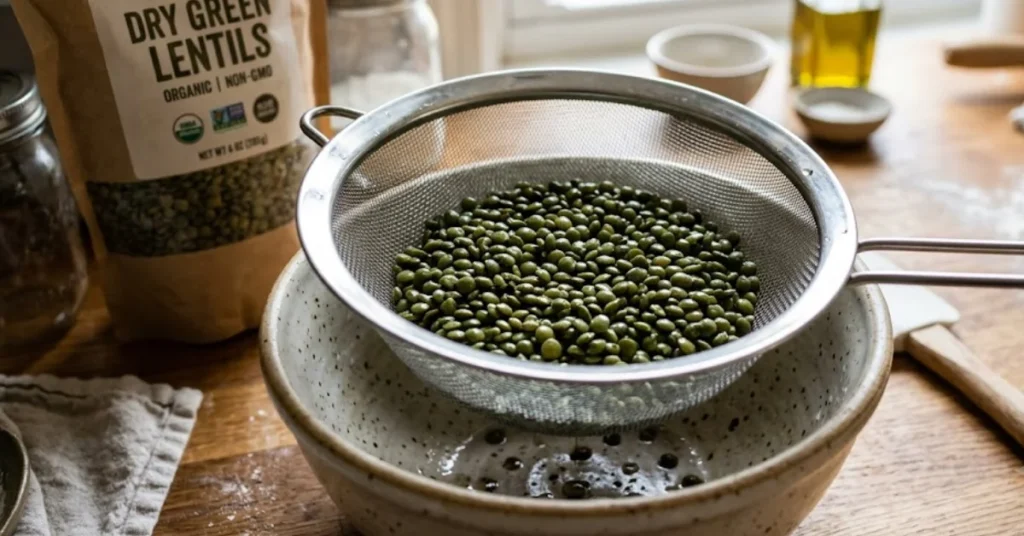
This is the method that shows up, in some form, in nearly every kitchen that gets it right. It doesn’t need a pressure cooker, a soak, or any special equipment.
Step 1 — Sort and rinse. Spread the dry lentils on a tray or pour them into a strainer and pick out any small stones or shriveled pieces. It sounds fussy, but it takes thirty seconds and it’s worth doing. Rinse under cold running water until it runs clear.
Step 2 — Measure the ratio. Use three cups of water or broth for every one cup of dry lentils. This slightly generous ratio keeps them fully submerged as they swell to nearly triple their original size, so you’re not standing over the pot topping up water every five minutes.
Step 3 — Bring to a boil, then drop to a simmer. Get the pot to a rolling boil over medium-high heat, then immediately cut the heat back so you see only gentle, occasional bubbles. A hard boil knocks the lentils against each other and cracks their skins.
Step 4 — Simmer uncovered or lid ajar. Cook for 20 to 30 minutes. Twenty minutes gives you firm lentils with a slight bite, ideal for salads. Thirty minutes gets you soft, creamy lentils that work in soups or as a side.
Step 5 — Salt at the end. Adding salt before the lentils are tender toughens the skins and slows cooking. Stir it in during the last five minutes, once they’re nearly done, along with any splash of vinegar or lemon juice.
Step 6 — Taste before you trust the clock. Every batch of lentils is a little different depending on age and moisture. Start checking at the 18-minute mark and taste every few minutes after that.
Common Mistakes That Ruin a Pot of Lentils
Anyone who has cooked a big batch of lentils for weekly meal prep has run into at least one of these.
- Salting too early. This is the number one cause of tough, leathery lentils that never quite soften.
- Boiling instead of simmering. A rapid boil breaks the skins and turns the pot into mush before the centers are even cooked through.
- Using old lentils without adjusting. Lentils that have sat in a pantry for a year or more absorb water more slowly and often need extra time.
- Skipping the rinse. Dust and small debris get trapped in the bag during harvesting and packaging, and rinsing removes it in seconds.
- Not tasting near the end. Bag instructions are often a rough estimate at best. Your own bite test is the only thing that matters.
What the Research Shows
Detailed analysis of lentil-based diets keeps circling back to the same finding: swapping refined carbs for legumes like green lentils measurably improves post-meal blood sugar response. Their low glycemic index, combined with a fiber content that slows digestion, is why nutritionists so often recommend them for people managing energy crashes or blood sugar swings.
Research into fiber intake more broadly backs this up. Most adults fall well short of daily fiber targets, and a single cooked cup of green lentils can cover a significant chunk of that gap in one meal. When examining cooking method specifically, firmer-textured lentils, the kind you get from the shorter end of the simmer time, retain more of their resistant starch than lentils cooked into a soft puree, which matters for anyone watching blood sugar closely.
Flavor Additions and Serving Ideas
Cooked plain, green lentils taste earthy and a little nutty. That’s a good base, not a finished dish. A bay leaf, a smashed garlic clove, or a halved onion dropped into the cooking water while they simmer adds depth without any extra work.
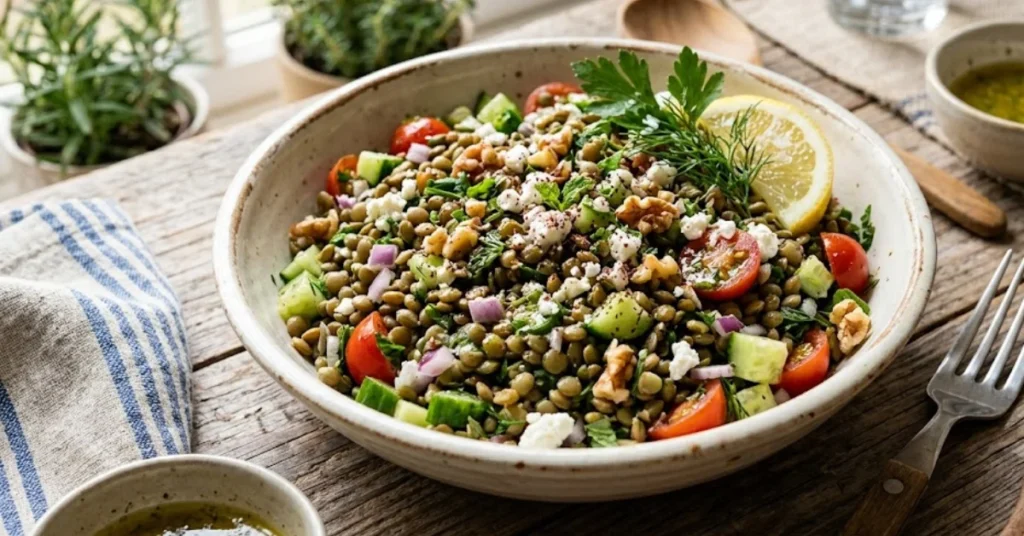
Once drained, warm lentils soak up dressing far better than cold ones. A simple mix of olive oil, lemon juice, and Dijon mustard turns a plain pot into a salad base in under a minute. Anyone who has meal-prepped for a week knows this trick: dress the lentils while they’re still warm, then build the rest of the bowl around them once they’ve cooled.
They also work folded into a bolognese-style sauce, stirred into a pot of vegetable soup, or served straight up with a fried egg on top and a scatter of chili flakes. It’s a dish that adapts to whatever’s already in the fridge.
Storing and Reheating Cooked Lentils
Drained and cooled lentils keep in the fridge for five to seven days in a sealed container, which makes them a solid batch-cooking staple. For longer storage, spread them on a tray to cool quickly, then freeze in flat, thin bags so they thaw fast when you need them.
Reheat gently, either in a pan with a splash of water or in the microwave with a lid on. Reheating them dry tends to dry out the skins and make them chewy in a way that’s hard to fix once it happens.
How to Cook Green Lentils Without Ending Up With Mush
If your last attempt turned into soup, the fix usually comes down to two things: too much heat and too little attention near the finish line. Learning how to cook green lentils without mush is really about restraint. Keep the simmer gentle the entire time, resist the urge to stir constantly, and pull them off the heat the moment they hit the texture you want, not the texture the bag suggests.
Older lentils are the other culprit. If a bag has been sitting in the pantry for a couple of years, expect it to take longer and shed a bit of its outer skin during cooking. That’s not spoilage, just age, and it’s still perfectly fine to eat.
Conclusion
Cooking lentils well isn’t complicated once you understand the two things that actually matter: a steady, gentle simmer and salt added at the right moment. Once you’ve nailed how to cook green lentils this way, you’ve got a fast, cheap, protein-packed base for salads, soups, and weeknight dinners that doesn’t demand much beyond a pot and twenty-five minutes of mostly hands-off time. It’s the kind of skill that pays for itself every single week.
FAQs
Do I need to soak green lentils before cooking?
No. Unlike chickpeas or dried beans, green lentils cook quickly enough on their own that soaking isn’t necessary, though it can shave a few minutes off the total time if you’re in a hurry.
Why are my lentils still hard after 30 minutes?
This usually points to old stock or salt added too early. Give them more time and taste every few minutes rather than assuming the clock is wrong.
Can I cook green lentils in a rice cooker or Instant Pot?
Yes. In an electric pressure cooker, roughly 8 to 10 minutes on high pressure with a natural release works well using the same 1:2 lentil-to-liquid ratio.
What’s the difference between green and French green lentils?
French green lentils, sometimes labeled Puy lentils, are a firmer variety that holds its shape even more than standard green lentils and takes slightly longer to cook.
Can I freeze cooked green lentils?
Yes, for up to three months. Cool them quickly, drain well, and freeze in flat bags so they thaw evenly when needed.