
Rubbery, gray, and tough as a shoe sole. That’s what most people remember about the first time someone tried to serve them chicken gizzards. It doesn’t have to go that way. If you know how to cook chicken gizzards properly, this cheap, protein-packed cut turns into something closer to a rich, savory bite you’d find on a Southern supper table or simmering in a pot of Filipino adobo.
Gizzards are the small, muscular part of a chicken’s digestive system, and they’re built for grinding, which is exactly why they’re so dense. That density is a gift once you understand it. Long, gentle cooking breaks down the connective tissue until the meat turns tender instead of chewy. Skip that step, and you’ll end up with the rubbery version everyone remembers.
This guide walks through cleaning, simmering, and finishing gizzards using methods home cooks actually rely on: stovetop, pressure cooker, and skillet frying after a slow braise.
Why Chicken Gizzards Deserve a Spot on Your Plate
Anyone who has cooked with organ meat knows gizzards punch above their weight nutritionally. A 100-gram serving of cooked, simmered gizzard packs roughly 154 calories and about 30 grams of protein, with very little carbohydrate. That’s a leaner protein-to-calorie ratio than most cuts of chicken breast, and it comes at a fraction of the price per pound.
They’re also rich in iron, zinc, and vitamin B12, nutrients that support red blood cell production and nerve function. Home cooks working on a budget, or anyone trying to eat more nose-to-tail, tend to gravitate toward gizzards for exactly this reason: they’re inexpensive, filling, and don’t waste a single part of the bird.
There’s a cultural angle too. Fried gizzards show up at Southern fish fries. Simmered gizzards land in Filipino adobo, Nigerian pepper soup, and Chinese five-spice braises. Anyone who has traveled through a night market or a small-town diner has likely encountered gizzards prepared a dozen different ways, each one built around the same basic idea: cook low, cook slow, then finish with heat.
What You Need Before You Learn How to Cook Chicken Gizzards
You don’t need specialty equipment. A heavy-bottomed pot, a sharp paring knife, and a little patience cover most of it. Here’s the short list:
- 1 to 1.5 pounds fresh or thawed chicken gizzards
- A pot large enough to submerge them in liquid
- Aromatics: onion, garlic, bay leaf, black peppercorns
- Broth, water, or a mix of both
- A skillet, if you plan to fry or sauté after simmering
- Optional: a pressure cooker to cut the wait time roughly in half
Fresh gizzards should smell clean, almost like nothing at all. If they smell sour or overly metallic,
that’s a sign to skip that batch.
How to Clean and Trim Gizzards Before Cooking
Most gizzards sold in grocery stores come pre-cleaned, but a quick trim still helps. Rinse them under cold water and look for a tough, silvery membrane or any small bits of grit left over from processing. Trim away visible fat or connective tissue with a paring knife.
Cut larger gizzards in half so they cook at the same rate as the smaller ones in the batch. Uneven sizes are the most common reason home cooks end up with some pieces tender and others still tough after the same simmering time.
How to Cook Chicken Gizzards on the Stovetop
This is the method most cooks reach for first, and it’s forgiving even if you’ve never worked with organ meat before.
- Place trimmed gizzards in a pot and cover with water or broth by about an inch.
- Add a quartered onion, two smashed garlic cloves, a bay leaf, and a teaspoon of peppercorns.
- Bring to a boil, then immediately drop to a low simmer. A hard boil toughens the meat instead of softening it.
- Simmer uncovered for 60 to 90 minutes, checking a piece with a fork around the one-hour mark.
- They’re done when a fork slides in with almost no resistance. If they’re still chewy, keep simmering in 10-minute increments.
Federal food-safety guidance sets the minimum safe internal temperature for all poultry, including giblets, at 165°F. Gizzards blow past that number well before they’re actually tender, which is why a thermometer alone won’t tell you when they’re ready. Texture, not temperature, is the real test once safety has been met.
How to Cook Chicken Gizzards in a Pressure Cooker
Anyone short on time will appreciate this shortcut. A pressure cooker collapses that hour-plus simmer into roughly 25 minutes.
- Add gizzards, aromatics, and just enough liquid to reach the fill line recommended by your appliance.
- Seal and cook on the poultry or meat setting for 20 to 25 minutes.
- Allow a natural pressure release for 10 minutes before opening the lid.
- Test one piece for tenderness; if it’s still firm, reseal and cook another 5 minutes.
This method works especially well for meal preppers who batch-cook proteins on Sundays and want gizzards ready to toss into rice bowls, gravies, or stir-fries throughout the week.
How to Fry Chicken Gizzards After Simmering
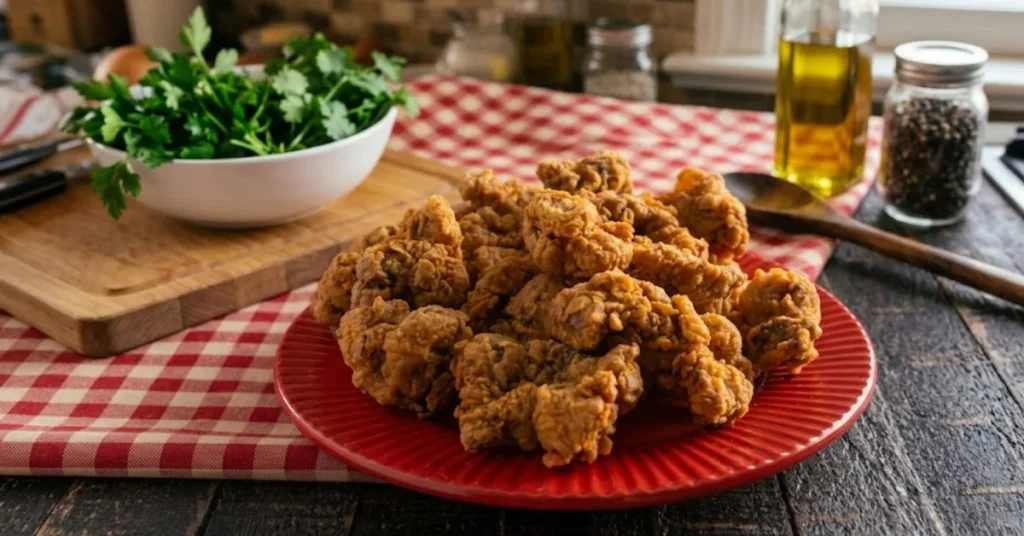
Southern-style fried gizzards start with the same simmering step above, then get finished in hot oil for crunch.
- Simmer gizzards until fork-tender, following the stovetop method.
- Drain well and pat completely dry. Wet gizzards cause oil to spatter violently.
- Toss with seasoned flour or a light buttermilk dredge.
- Fry in oil heated to 350°F for 3 to 4 minutes, until golden and crisp on the outside.
- Rest on a wire rack for a minute before serving so the crust stays crisp instead of steaming itself soft.
The contrast between the crisp shell and the tender, almost mushroom-like interior is the entire point of this dish, and it’s why fried gizzards remain a fixture at Southern fish fries and church potlucks.
What the Research Shows
Detailed analysis of home-cooking forums, culinary school curricula, and USDA nutrient data points to a consistent pattern: gizzards cooked below a gentle simmer for at least 60 minutes reach a texture most eaters describe as tender rather than chewy, while shorter cooking times consistently produce complaints of toughness.
On the nutrition side, verified federal nutrient data places cooked, simmered gizzards at close to 30 grams of protein per 100-gram serving, putting them on par with or ahead of many cuts of dark-meat chicken. That combination of low cost and high protein density is part of why gizzards have gained fresh popularity among home cooks focused on reducing food waste and stretching grocery budgets through 2026.
Common Mistakes That Ruin Gizzards
- Boiling instead of simmering. A rolling boil seizes the muscle fibers and locks in toughness.
- Skipping the trim. Leftover silverskin stays chewy no matter how long you cook it.
- Rushing the process. Thirty minutes is rarely enough. Give it the full hour, minimum.
- Overcrowding the pot. Gizzards packed too tightly cook unevenly; use a wider pot if needed.
- Frying without draining first. Excess moisture leads to splattering and a soggy crust.
Flavor Directions Worth Trying
Once you’ve nailed the base technique, gizzards take on almost any flavor profile you throw at them. A ginger-soy braise finished with a splash of rice vinegar works well for an Asian-inspired plate. A tomato-and-chipotle simmer turns leftovers into gizzard tacos. A lemon-and-olive braise, finished with fresh oregano, leans Mediterranean. Whatever direction you pick, the underlying technique for how to cook chicken gizzards stays the same: low heat, enough liquid, and patience.

Final Thoughts
Learning how to cook chicken gizzards really comes down to one idea: respect the connective tissue and give it time. Rush the process and you’ll get the rubbery texture that gives organ meat a bad reputation. Slow it down, whether on the stovetop, in a pressure cooker, or finished in hot oil, and gizzards turn into one of the most affordable, protein-dense ingredients in the entire grocery store.
This article discusses general cooking guidance. Always follow safe food-handling practices, including cooking poultry to a minimum internal temperature of 165°F and refrigerating leftovers promptly.
FAQs
How long does it take to cook chicken gizzards until tender?
Most gizzards need 60 to 90 minutes of gentle simmering on the stovetop, or about 25 minutes in a pressure cooker.
Why are my chicken gizzards still tough after simmering?
They likely need more time. Connective tissue in gizzards breaks down slowly, and even an extra 15 to 20 minutes of low simmering can make the difference between chewy and tender.
Can you cook chicken gizzards from frozen?
It’s best to thaw them fully in the refrigerator first so they cook evenly. Cooking from frozen usually leads to an overcooked exterior and an undercooked center.
What’s the difference between gizzards and giblets?
Giblets is the umbrella term for a chicken’s edible organs, usually the heart, liver, and gizzard sold together in a small packet inside whole birds. The gizzard itself is just one part of that package.
Do chicken gizzards need to be cleaned before cooking?
Most store-bought gizzards are already cleaned, but a quick rinse and trim of any leftover membrane or fat gives a cleaner final texture.