
A text lands on your phone. Someone claiming to be a talent scout says you’ve been picked for an empire casting call. Your stomach flips. Is this real?
That uncertainty is exactly why the phrase keeps showing up in searches. An empire casting call can mean a genuine audition notice tied to a production, or it can mean something dressed up to look like one. Knowing the difference isn’t just useful, it protects your time, your money, and sometimes your identity.
This piece breaks down what these notices typically involve, how legitimate ones operate, and where the red flags usually show up.
What an Empire Casting Call Actually Refers To
The word “empire” gets attached to entertainment postings in a few different ways. Sometimes it’s tied to a specific television production searching for background talent or speaking roles. Other times it’s used loosely by agencies, talent boards, or content mills that borrow the name because it sounds recognizable and searchable.
That’s part of what makes an empire casting call tricky to pin down. There isn’t one single company or platform that owns the term. It shows up across production job boards, social media groups, and blog posts written purely to attract clicks from hopeful performers.
What stays consistent is the basic structure. A notice describes a role, such as background actor, speaking part, model, or extra, states a location, and lists submission instructions like a headshot, resume, or self-tape.
How the Audition Process Actually Works
Real casting calls follow a fairly predictable rhythm, and understanding it removes a lot of the guesswork.
The notice goes out. A casting director or their team posts details: role type, age range, physical description, filming location, and dates. Legitimate notices are specific rather than vague.
Talent submits materials. This usually means a headshot, resume, and sometimes a short video introduction. Photos should be recent, unfiltered, and show your natural appearance. Most notices ask for a close-up and a full-body shot, along with a self-tape recorded horizontally in good lighting. Established actors often go through a talent agency, but many casting calls are open to the public, especially for background work.
A shortlist gets contacted. Only a portion of submissions hear back. Silence is normal and doesn’t mean your materials were bad.
Callbacks or auditions follow. Selected performers might read scenes, attend an in-person session, or submit a follow-up tape. This is the stage where a real production actually evaluates fit.
Anyone who’s spent real time chasing roles knows this process moves slowly and rarely gives instant answers. That waiting period is normal, not a warning sign.
Empire Casting Call Red Flags Worth Knowing
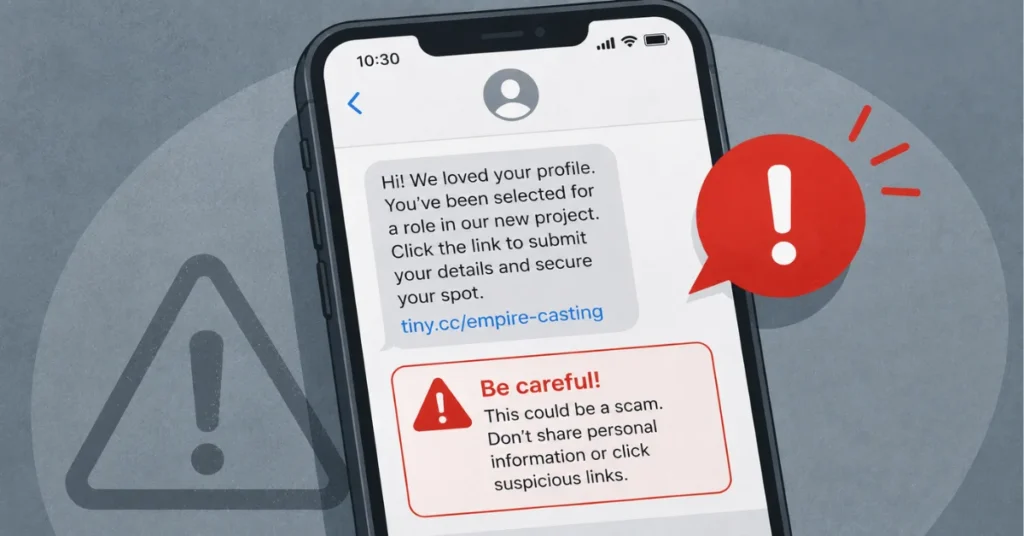
Here’s where things get serious. Fraudulent postings have grown more common, and they frequently borrow the excitement around a well-known project name to look convincing.
A few patterns show up again and again:
- Unsolicited texts claiming you were “handpicked” without ever applying
- Requests for payment before any work begins, whether for headshots, “priority access,” or class enrollment
- Pressure to respond within hours or lose the spot
- Vague production details that don’t match anything searchable
- Casting contacts who avoid phone calls and only communicate by text
- The same notice posted under different titles or names on separate pages
- Being asked to sign paperwork on the spot before you’ve had time to read it
That payment rule matters more than people expect. A production paying you should never ask you to pay them first. This single check filters out most scams tied to any empire casting call search.
What the Research Shows
Consumer protection regulators flagged a rise in fake casting outreach heading into 2026, specifically pointing to scam text messages that reference recognizable productions to seem believable. The pattern described matches almost exactly what shows up when people search for opportunities using broad, buzzy phrasing like “empire casting call.”
Professionals who track talent fraud describe a consistent pattern: scams often latch onto broad, high-interest search terms because they draw in large numbers of hopeful applicants. Established actors have also reported cloned casting-director profiles impersonating real industry contacts, which shows this isn’t only a beginner problem.
Professionals who work in casting consistently describe the same defense: verify before you engage, and never let excitement override basic caution.
Real-World Scenarios Actors Run Into
Anyone who has actually submitted to open casting notices knows the range of what shows up.
A production company filming in a major city posts a legitimate background-role notice, asking for a headshot and local availability, with no fees involved. That’s the standard, honest version.
Elsewhere, a message shows up claiming an empire casting call opportunity for a “major upcoming series,” but the sender wants a card number to “hold your slot.” That’s the version to walk away from immediately.
Somewhere in between sits the gray area: a small agency using flashy language to gather headshots for a database, technically legal but low-value for the performer. It’s worth being selective even when nothing outright criminal is happening.
Who Should Pay Attention to This
Beginners chasing a first credit are the most common target, simply because excitement can override caution. Parents submitting on behalf of a child face extra scrutiny, since scams targeting family submissions tend to lean harder on emotional pressure. A parent or guardian should always be present at any legitimate audition, meeting, or filming session involving a minor, and requirements around work permits and earnings protections vary by location, so it’s worth checking local labor laws or an entertainment attorney before agreeing to any role for a child.
Experienced performers aren’t immune either. Established actors have reported cloned casting-director profiles impersonating real industry contacts, which shows this isn’t only a beginner problem.
Pros and Cons of Chasing Open Casting Notices
The upside: open calls remain one of the few genuine entry points into the industry without needing an agent or insider connection. They’re low-barrier and, when legitimate, completely free to enter.
The downside: the sheer volume of postings using broad terms makes it harder to separate real opportunity from noise. Rates and protections also vary widely depending on whether a production is union or non-union, which is worth confirming before agreeing to any role. Time spent chasing dead ends or scams is time not spent building a real portfolio or relationships.
Weighing both sides honestly matters more than chasing every notice that appears.
Final Thoughts

An empire casting call can be a genuine door into the entertainment industry, or it can be bait dressed up to exploit ambition. The line between them usually comes down to a few practical checks: does the notice ask for money, does it pressure urgency, and does the production information actually check out.
Treat every notice with the same steady approach. Verify first, submit second, and never let excitement skip the basic safety steps.
Frequently Asked Questions
Is an empire casting call always connected to a specific TV show?
Not necessarily. The phrase gets used broadly across agencies, job boards, and unaffiliated postings, so it’s worth checking the specific production details before assuming a connection to any one show.
Do I need an agent to respond to a casting notice?
No. Many casting calls, especially for background or extra roles, are open directly to the public without representation.
Should I ever pay a fee to be considered?
No legitimate casting process charges you money to apply, audition, or be considered for a role. Payment requests are one of the clearest warning signs.
How long should I expect to wait for a response?
Weeks is common, and many submissions never receive a reply at all. Silence isn’t a rejection signal on its own.
What should I do if I think I’ve been targeted by a scam?
Stop communicating, avoid clicking any links, save screenshots of the messages, and report it through your phone’s spam-reporting option before deleting it.