
You grabbed a bag from the freezer aisle, and now you’re standing at the stove wondering exactly how to cook frozen ravioli pasta without turning it into a mushy mess or a broken, leaking disaster. It’s a fair worry. Ravioli looks delicate, and frozen pasta has a reputation for going wrong fast.
Here’s the good news. Cooking frozen ravioli well comes down to timing, water temperature, and a light hand when stirring. Skip the thaw, respect the clock, and you’ll have dinner on the table in under fifteen minutes.
This guide covers every method that actually works, from the classic boiling pot to the air fryer, plus the mistakes that turn a good bag of ravioli into a soggy pile of regret.
Why Frozen Ravioli Deserves a Spot in Your Freezer
Frozen ravioli isn’t a compromise. It’s a genuinely useful freezer staple that home cooks have relied on for decades, and the flash-freezing process most brands use locks in texture almost as well as fresh pasta.
Unlike dried boxed pasta, ravioli comes pre-filled with cheese, meat, or vegetables, so a single ingredient becomes a complete meal once it hits the sauce. That convenience matters on a Tuesday night when nobody wants to chop, stuff, and seal pasta by hand.
There’s also a shelf-life advantage. Properly stored frozen ravioli holds its quality for two to three months in the freezer, which makes it one of the easier proteins-plus-carb combos to keep stocked without waste.
How to Cook Frozen Ravioli Pasta on the Stovetop
Boiling is the method most cooks reach for first, and it’s the one that gives the most consistent results across brands.
Start with a large pot, at least four quarts of water for a standard twelve-ounce bag. Crowding the pot is one of the fastest ways to end up with ravioli that stick together or tear apart.
- Fill the pot with cold water and bring it to a full rolling boil before adding anything.
- Salt the water generously, roughly a tablespoon per quart, so it tastes close to seawater.
- Drop the frozen ravioli in straight from the freezer. Don’t thaw first — thawed dough absorbs extra water and tears more easily.
- Stir gently for about ten seconds right after adding, then leave the pasta mostly alone.
- Watch for floating. Ravioli typically rises to the surface in three to four minutes and finishes cooking about ninety seconds after that, for a total of roughly four to six minutes.
Once a few pieces float and feel tender when pressed with a spoon, drain immediately in a colander. Residual heat keeps cooking the pasta even off the stove, so don’t let it sit in the hot water. Anyone who has cooked stuffed pasta for a family dinner knows the difference between pulling it at the right second and pulling it thirty seconds too late — that gap is usually what separates springy ravioli from mushy ravioli.
Cooking Frozen Ravioli Directly in Sauce
This is the shortcut worth knowing, especially for a one-pot dinner. Instead of boiling water separately, you simmer the ravioli straight in marinara, alfredo, or a brothy sauce.
Bring the sauce to a gentle, steady bubble in a wide skillet or Dutch oven how to cook frozen ravioli pasta. Add the frozen ravioli in a single layer, cover partially, and let it simmer for five to seven minutes, stirring carefully every couple of minutes so nothing scorches on the bottom.
The upside is flavor. The pasta absorbs some of the sauce as it cooks, and cleanup drops to a single pan. The tradeoff is that you can’t watch for floating the way you can in plain water, so timing by the clock and checking the filling temperature with a fork matters more here.
Baking and Air Frying Frozen Ravioli
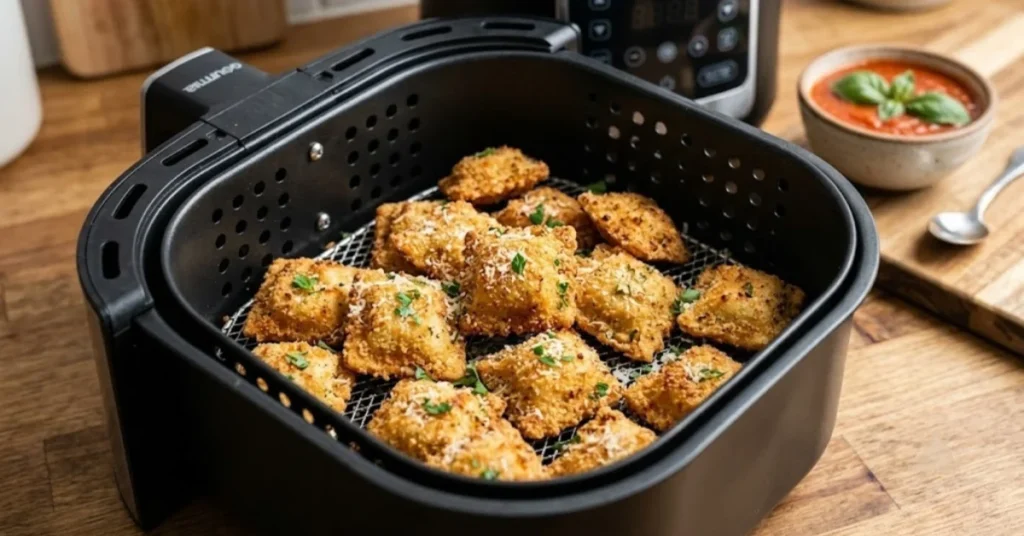
Not every night calls for boiling water, and both the oven and the air fryer turn frozen ravioli into something closer to a crisp, poppable appetizer.
Baked ravioli lasagna style: Spread a thin layer of sauce in a 9×13 dish, add a single layer of frozen ravioli, top with more sauce and shredded cheese, and repeat. Bake at 375°F for 30 to 40 minutes, covered with foil for the first twenty minutes, then uncovered until bubbly and golden.
Air fryer toasted ravioli: Toss frozen ravioli lightly in oil, season if you like, and air fry at 375°F for eight to ten minutes, flipping halfway. For a crunchier, breaded version, boil the ravioli for two to three minutes first, coat in egg and breadcrumbs, then air fry until golden.
Both methods skip the stovetop entirely, which makes them a solid option for anyone working with a small kitchen, a dorm setup, or just one working burner.
Common Mistakes When You Cook Frozen Ravioli Pasta
Even simple recipes go sideways, and ravioli has a few specific failure points worth knowing before you start.
Thawing first. It feels like it should help, but thawed ravioli turns soft and tears in boiling water. Cook it frozen, straight from the bag.
Stirring too aggressively. Ravioli seams are the weak point. A hard stir or scrape against the pot bottom is usually what causes filling to leak out into the water.
Overcrowding the pot. Too much pasta drops the water temperature and causes pieces to stick together. Cook in batches if you’re making more than one bag.
Losing track of time. Ravioli goes from perfectly tender to blown-out and mushy in under a minute past done. Set a timer the moment it starts floating.
Skipping the package instructions. Fresh-frozen brands and shelf-stable frozen brands can have different water content, which shifts cook time by a minute or two either direction.
What Home Cooks Notice About Cooking Frozen Ravioli
Anyone who has made frozen ravioli a regular weeknight fallback tends to land on the same handful of observations. Floating is a signal to start checking, not a signal that it’s automatically done — thicker, meat-filled ravioli often needs another thirty to sixty seconds past the float point.
Cooks who batch-prep also report better results saving a splash of the starchy pasta water before draining. Stirred into the sauce, it helps everything cling to the pasta instead of pooling at the bottom of the bowl, a trick borrowed straight from traditional Italian technique.
The pattern holds across brands and fillings: gentle heat, a full rolling boil before the pasta goes in, and a firm no to thawing beforehand are the three things that consistently separate a good batch from a disappointing one.
Storing and Reheating Leftover Ravioli
Cooked ravioli that’s tossed in a little oil or sauce keeps well in an airtight container in the fridge for up to three days. Reheat gently by simmering it in sauce over low heat rather than microwaving it dry, which tends to toughen the pasta and dry out the filling.
If you’re freezing leftovers, know that already-cooked ravioli doesn’t freeze back as well as it started. Texture softens noticeably on the second freeze, so it’s better to cook only what you’ll eat within a few days.
Final Thoughts
Once you know the timing, cooking frozen ravioli pasta stops being intimidating and turns into one of the fastest dinners in the rotation. Whether you boil it in salted water, simmer it straight in sauce, or crisp it up in the air fryer, the core rule stays the same: skip the thaw, watch the clock, and handle it gently. Master those three things and you’ll get restaurant-worthy ravioli on a weeknight schedule.
FAQs
Do I need to thaw frozen ravioli before cooking?
No. Cooking it frozen actually protects the texture. Thawed ravioli absorbs extra water and tears more easily in boiling water.
How long does frozen ravioli take to cook?
Boiled in salted water, most frozen ravioli is done in four to six minutes, or about ninety seconds after it starts floating.
Can I cook frozen ravioli directly in sauce without boiling water first?
Yes. Simmer it in a bubbling sauce for five to seven minutes, stirring gently and checking that the filling is hot in the center.
Why does my ravioli keep breaking apart while cooking?
Overly vigorous stirring and overcooking are the two main culprits. Stir gently, only when needed, and pull the pasta as soon as it floats and feels tender.
Can I bake or air fry frozen ravioli instead of boiling it?
Absolutely. Baked ravioli works well layered like lasagna, while air-fried ravioli comes out crisp in eight to ten minutes and makes a great appetizer.