
You’ve probably heard a photographer or agency mention “shoot casting” and wondered if it’s just a fancier way of saying audition. It isn’t, not exactly. Shoot casting is the specific process of selecting the right model, actor, or talent for a single photo or video production, and it happens well before anyone touches a camera.
This matters more than most people realize. A brand can have the perfect location, the perfect lighting rig, and the perfect concept, but if the shoot casting goes wrong, the entire project falls flat. Anyone who has managed a production knows the visuals live or die on who’s standing in front of the lens.
What Does Shoot Casting Actually Mean?
Shoot casting refers to the selection process production teams use to pick the specific person, or people, who will appear in a particular photo or video shoot. It’s narrower than general talent casting because it’s tied to one job, one concept, and often one day of work.
Traditional acting casting looks for someone who can play a role across weeks or months. Shoot casting is different. It’s transactional, fast, and built around a single creative brief. A skincare brand needs three faces for a spring campaign. A magazine needs one cover model. A fashion label needs five fitting models for a lookbook. Each of these is a shoot casting need, not a long-term casting decision.
The process usually starts with a casting brief that spells out age range, look, body type, availability, and sometimes specific skills like swimming or dance. From there, a casting director or the photographer themselves reviews submissions, shortlists candidates, and sometimes runs an in-person or virtual fitting before confirming the final choice.
How Shoot Casting Works From Start to Finish

The shoot casting process rarely happens overnight, even when the timeline feels tight. Here’s how it typically unfolds on a real production.
- Brief creation — the client or creative director outlines the look, mood, and requirements for the shoot
- Submission call — agencies, freelancers, or open casting platforms send headshots and portfolios
- Shortlisting — the casting director narrows dozens or hundreds of submissions to a handful
- Fitting or callback — selected talent may be asked to try on wardrobe or do a quick test shot
- Final confirmation — contracts, usage rights, and payment terms get locked in before the shoot date
Each of these steps adds real cost and time, which is why smaller studios sometimes skip the fitting stage entirely and go straight from portfolio review to booking. Bigger campaigns, especially ones involving advertising usage rights, rarely cut that corner.
How to Spot a Shoot Casting Scam
This part gets skipped too often, and it shouldn’t. Fake casting calls are one of the most common scams targeting new models and actors, and knowing the warning signs matters as much as knowing how to submit.
A legitimate shoot casting opportunity never asks the talent to pay upfront for “registration,” “portfolio review,” or “guaranteed booking.” Any request for money before work begins is a signal to walk away. Real productions pay talent, they don’t charge them to be considered.
Vague or missing production details are another warning sign. A genuine casting brief names the brand, agency, or photographer, and gives a real shoot date and location. If a message avoids specifics or pressures for quick personal or banking information, treat it as suspicious.
| Signal | Legitimate Shoot Casting | Likely Scam |
|---|---|---|
| Upfront payment | Never requested | Asked for “registration” or “photo processing” fees |
| Contact details | Verifiable agency, brand, or photographer with a public presence | Vague name, personal email only, no verifiable history |
| Communication | Professional, specific about date, location, and rate | Urgent, vague, pushes for quick decisions |
| Contract | Written model release or agreement provided | No paperwork, verbal promises only |
| Payment terms | Clear rate or usage terms stated before booking | Rate discussed only after personal details are shared |
Anyone who has worked in this industry for a while develops an instinct for these patterns fast. New talent, unfortunately, is exactly who scammers target.
Shoot Casting vs. Traditional Casting Calls
People often lump every kind of casting into one bucket, but the differences actually shape how talent should prepare and apply. The table below breaks down where shoot casting departs from other common casting formats.
| Feature | Shoot Casting | Traditional Casting Call | Open Casting |
|---|---|---|---|
| Purpose | Single photo/video project | Ongoing role (film, TV, theater) | Broad talent search, no specific job yet |
| Timeline | Days to a few weeks | Weeks to months | Ongoing, rolling basis |
| Selection basis | Look, fit, availability | Acting range, chemistry reads | General portfolio strength |
| Who decides | Photographer, art director, or casting agent | Casting director, producers, director | Agency scouts |
| Commitment | One shoot, defined usage rights | Contract across a season or run | No commitment until matched to a job |
Understanding this distinction saves talent from wasted applications. Someone chasing shoot casting opportunities needs a strong, current portfolio far more than a monologue reel or acting resume.
What Casting Directors Look For During a Shoot Casting Call
Casting directors working on shoot casting projects aren’t grading acting chops. They’re solving a visual puzzle, and every decision traces back to the brief.
Look match comes first. If the brief calls for a specific age range, skin tone, height, or body type, submissions outside that range typically get filtered out before anyone even opens the portfolio. This isn’t personal, it’s practical. Brands often have contractual obligations tied to a very specific visual direction.
Professionalism during the process matters almost as much as appearance. Casting directors talk to each other, and a model who shows up late, sends outdated photos, or negotiates aggressively before even being booked tends to get quietly dropped from future shoot casting lists.
Recent, unedited photos separate serious candidates from everyone else. Heavily filtered images create a mismatch between the portfolio and how someone actually looks on set, which wastes everyone’s time and money. Photographers who’ve run dozens of shoot casting sessions will tell you the biggest letdown on set is when reality doesn’t match the submission photos.
Availability and reliability round out the shortlist. A perfect look with a scheduling conflict doesn’t get booked. Production dates rarely move once locations, crew, and equipment are secured.
Common Mistakes That Sink a Shoot Casting Opportunity
Even strong talent loses shoot casting bookings over avoidable mistakes. A few show up again and again across the industry.
Submitting generic, one-size-fits-all applications is probably the most common. A casting brief asking for “editorial, moody, minimal makeup” doesn’t match a submission full of bright, heavily retouched glamour shots. Tailoring the submission to the brief, even slightly, dramatically improves response rates.
Ignoring usage rights conversations early creates friction later. Anyone who has worked in this industry knows that a low day rate paired with unlimited global usage rights is a red flag, not a bargain. Clarifying compensation and rights before confirming avoids disputes after the shoot wraps.
Overlooking test shots or fittings is another one. Skipping a scheduled fitting to save time often backfires when wardrobe doesn’t fit on the actual shoot day, forcing last-minute changes that stress the whole crew.
Shoot Casting Rates: TFP vs. Paid Bookings
Money questions come up constantly once someone actually gets a shoot casting offer, and the terms aren’t always obvious.
TFP, short for “time for print” or “time for photos,” is an unpaid arrangement where the model works in exchange for finished images rather than cash. It’s common for portfolio-building shoots between new photographers and new models, and both sides trade time for usable content.
Paid bookings work differently. A day rate is agreed before the shoot, and that rate typically covers a set number of hours plus a defined usage period for the images. Commercial usage, meaning the images will be used in advertising, almost always commands a higher rate than editorial or personal portfolio work, since the client profits directly from the images.
Talent new to shoot casting should treat TFP as a portfolio tool early on, then transition to paid work once the portfolio is strong enough to justify a rate. Mixing the two isn’t unusual even for experienced models, depending on the project’s creative value versus its budget.
The Model Release Form: What It Should Include
A model release is the paperwork that turns a shoot into a legally sound arrangement, and it’s worth understanding before signing anything.
A solid release names the photographer or brand, the talent, the shoot date, and exactly how the images can be used. Usage terms should specify the platforms (social media, print, billboards, website), the duration (six months, one year, in perpetuity), and the territory (local market, national, or worldwide).
Exclusivity clauses matter too. Some contracts prevent the talent from working with competing brands for a set period, and that restriction should come with fair compensation attached. A release without any usage limits at all, especially on a low-paying TFP shoot, deserves a second look before signing.
Casting Beyond Models: Actors, Hand Models, and Product Talent
Shoot casting isn’t limited to full-body fashion models. Product shoots regularly cast hand models for close-up work with jewelry, watches, or cosmetics, and those castings judge skin texture, nail shape, and hand proportions specifically rather than overall appearance.
Actors get cast for shoot-style work too, particularly for short commercial videos or lifestyle campaigns that need natural expressions rather than a scripted performance. Pet and animal talent occupies its own niche within shoot casting, usually coordinated through specialized animal talent agencies rather than standard modeling platforms.
Casting Minors: What Parents and Brands Should Know
Child and teen shoot casting comes with rules that adult casting doesn’t. Most regions require a parent or legal guardian to sign the model release and be present on set, and many jurisdictions cap the number of working hours per day for minors.
Brands casting children for campaigns typically require additional documentation, including work permits in some markets, and reputable agencies representing child talent will walk parents through these requirements before any booking is confirmed. A shoot casting call for a minor that skips consent paperwork or doesn’t require a guardian’s presence is a serious warning sign, not just an oversight.
Who Actually Needs Shoot Casting Services
Shoot casting isn’t limited to high fashion campaigns. Small business owners running e-commerce product shoots need it. Wedding photographers scouting couples for portfolio-building “styled shoots” use a lighter version of it. Advertising agencies running national campaigns rely on it constantly, often working through professional casting directors who specialize in commercial work rather than film.
Independent photographers building a personal portfolio also lean on informal shoot casting, usually posting a concept on social media or a casting platform and reviewing responses themselves. The scale changes, but the underlying logic stays the same: match the right face and body to the right creative concept.
Where Shoot Casting Calls Actually Happen
Casting calls surface across a mix of channels, and knowing where to look saves time. Dedicated casting platforms and agency portals post structured briefs with clear requirements. Instagram and other social platforms host a growing share of informal shoot casting, often through direct messages or public casting-call posts tagged by location.
Local photography communities and modeling forums still matter too, particularly for TFP and portfolio-building work. Established agencies remain the most reliable source for paid commercial shoot casting, since they vet clients and negotiate rates on behalf of their talent.
Building a Comp Card That Gets Noticed
A comp card, short for composite card, is the standard submission tool for shoot casting. It typically includes one strong headshot, two or three additional images showing range (editorial, commercial, casual), and a stats block listing height, measurements, shoe size, and sometimes hair and eye color.
Keeping a comp card current matters more than making it elaborate. Casting directors reviewing dozens of submissions in one sitting favor clean, accurate, recent information over heavily designed layouts that take longer to read.
Preparing for a Shoot Casting Submission
A few practical steps make a real difference for anyone trying to land shoot casting work regularly.
- Keep a rotating portfolio with recent, varied, and unedited images
- Respond to casting briefs quickly, since slots fill fast on tight timelines
- Be upfront about availability, rates, and any scheduling conflicts
- Read usage rights carefully before agreeing to a booking
- Follow up professionally rather than repeatedly messaging a casting director
- If there’s no response after a reasonable window, move on and keep submitting elsewhere rather than waiting indefinitely on one opportunity
None of these guarantee a booking, since fit and look ultimately decide most calls. They do, however, put a candidate in the strongest possible position when the brief happens to match.
Shoot Day: What to Bring and What Call Time Means
Once a shoot casting booking is confirmed, preparation shifts to the shoot itself. Call time is the exact time talent needs to arrive on set, and it’s treated as firm, not approximate. Arriving even fifteen minutes late can push back an entire production schedule involving crew, equipment rental, and location fees.
A basic kit makes a difference on set. Bringing a few backup outfit options, basic grooming items, comfortable shoes for standing between takes, and a printed or digital copy of the signed release avoids last-minute scrambling. Reading the call sheet, which lists location, timing, and contact numbers, before arriving prevents confusion once on set.
Getting Paid: Typical Payment Timelines After a Shoot
Payment terms should be settled before the shoot, not after. Many productions pay on a net-30 basis, meaning payment arrives within thirty days of the shoot or invoice date, while smaller independent bookings sometimes pay same-day or within a week.
Invoicing promptly after the shoot speeds things up. Talent working without an agency should confirm the exact payment method, timeline, and any required paperwork, like a signed invoice, before leaving the set, since chasing payment after the fact is far harder than confirming terms upfront.
Cancellations and Reschedules: Know Your Rights
Productions do get canceled or rescheduled, and how that’s handled separates professional bookings from disorganized ones. A confirmed shoot casting booking typically includes a cancellation policy, often involving a partial “kill fee” if the client cancels within a short window before the shoot date, compensating talent for holding the date and turning down other work.
Reschedules initiated by the production usually don’t carry a penalty as long as the new date works for the talent’s schedule. Talent canceling on short notice, on the other hand, can affect their standing with an agency or casting director for future opportunities, so genuine scheduling conflicts should be flagged as early as possible.
Shoot Casting Trends in 2026
Detailed analysis of how production teams actually operate reveals a consistent pattern: freelance, project-based work now dominates how talent gets booked for individual shoots rather than long, exclusive representation contracts. Most working models today move between agencies, direct bookings, and self-submitted castings depending on the project.
This shift toward freelance flexibility means shoot casting calls increasingly happen through digital portfolios and social platforms rather than in-person cattle calls, especially for commercial and e-commerce work. Professionals in this field consistently point to speed as the biggest change over the past few years, with casting decisions that once took weeks now often closing within days.
AI-generated and virtual models are also starting to appear alongside human talent in some shoot casting pipelines, particularly for quick digital ads and social content where a brand wants fast turnaround at lower cost. Industry analysts note this hasn’t replaced human casting for major campaigns, where audience trust and authenticity still favor real talent, but it’s added a new competing option that photographers and models are watching closely heading into 2026.
Conclusion
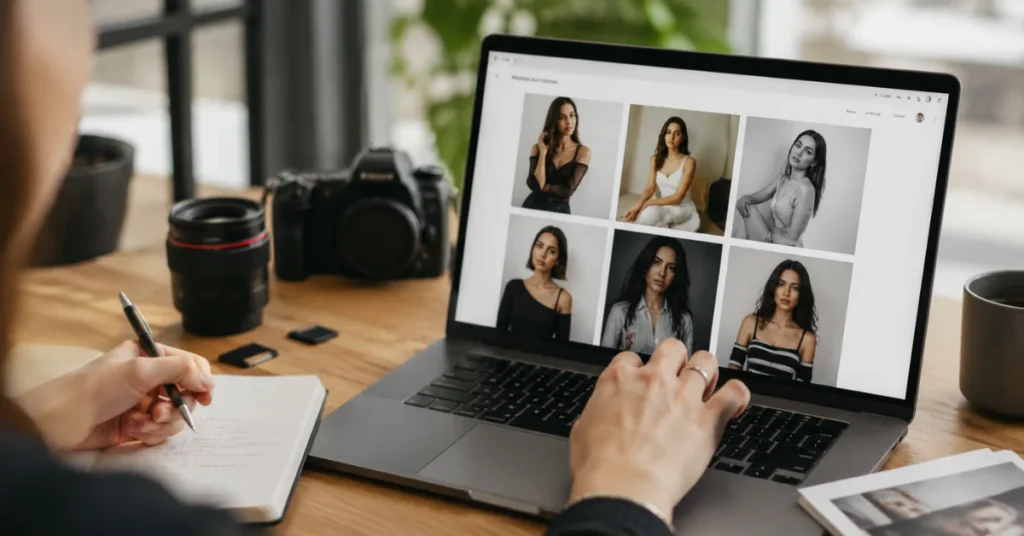
Shoot casting sits at the center of how modern photo and video productions come together. It’s not glamorous paperwork, it’s the decision that determines whether a campaign actually works. Whether you’re a brand hiring talent, a photographer building a portfolio, or a model chasing bookings, understanding how shoot casting really functions, from the initial brief down to payment terms and cancellation policies, changes how you approach every submission. As production timelines keep tightening through 2026, the teams and talent who treat shoot casting seriously, rather than as an afterthought, are the ones landing consistent work.
FAQs
What’s the difference between shoot casting and modeling agency representation?
Shoot casting is project-specific and short-term, tied to one shoot. Agency representation is an ongoing relationship where the agency books multiple jobs for a model over time.
Do I need an agent to get shoot casting work?
No. Plenty of shoot casting bookings happen through direct submissions, casting platforms, or social media, especially for smaller or local productions.
How far in advance does shoot casting usually happen?
It varies widely. Small local shoots can cast within days, while large advertising campaigns often start the casting process months before the shoot date.
What should be included in a shoot casting submission?
Recent, unedited photos showing your natural look, basic measurements or stats if requested, availability for the shoot dates, and a short note confirming you match the brief.
Can shoot casting happen virtually?
Yes. Many productions now run initial shortlisting entirely online through submitted photos and video calls, only meeting in person for fittings or the actual shoot day.