
Most people finish a meal expecting to feel good, not doubled over at the table. If you’ve typed “why does my stomach hurt after i eat” into a search bar more than once this month, you’re not alone. This kind of pain has dozens of possible triggers, and most of them are ordinary, not dangerous. Getting the right answer starts with paying attention to when the pain hits, where it sits, and what you ate beforehand.
Think of your digestive system like a small kitchen running a dinner rush. Give it a reasonable order, spaced out and manageable, and it keeps up fine. Slam it with a huge, greasy, rushed order and something backs up. That backup is what you feel as pain.
Why Does My Stomach Hurt After I Eat? The Short Answer
In most cases, why does my stomach hurt after i eat comes down to how fast you ate, how much you ate, or what was on the plate. Digestion asks a lot of your gut. It has to break down food, move it along, and manage acid production, all within an hour or two of a meal.
People who deal with recurring pain after eating often describe a tight, bloated feeling that grows within thirty minutes. Others say the pain shows up sharper and higher in the chest, closer to heartburn than a stomachache. Both patterns point toward different culprits, and neither one should be ignored if it keeps happening.
Common Everyday Triggers Behind Meal-Time Pain
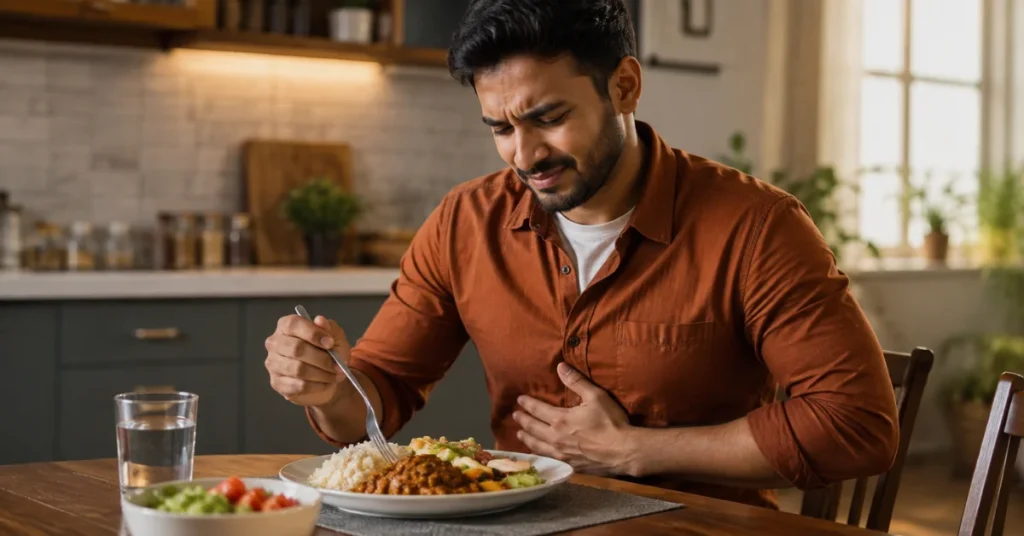
Not every stomachache means something is wrong. A lot of meal-time pain traces back to habits rather than illness.
Eating too much, too fast. Large portions stretch the stomach and force it to work overtime. Wolfing down food adds swallowed air into the mix, which turns into bloating within minutes.
Fatty and fried foods. Fat takes longer to break down than carbs or protein. A greasy meal sits in the stomach for hours, and that lingering digestion often shows up as cramping or a heavy, sluggish ache.
Spicy food and acidic drinks. Chili, citrus, tomato-based sauces, and fizzy soft drinks can irritate the stomach lining directly. People who already deal with a sensitive gut tend to notice this the most.
Caffeine and alcohol. Both relax the valve between the stomach and the esophagus. That relaxation lets acid travel upward, which is why coffee or wine with a meal sometimes ends in heartburn an hour later.
Stress at the table. Anyone who has eaten a rushed lunch during a stressful workday knows the feeling. Tension tightens stomach muscles and slows digestion, and that combination alone can trigger real, physical pain.
Why Does My Stomach Hurt After I Eat Certain Foods?
Sometimes the pattern isn’t about quantity or speed. It’s about specific foods your body reacts to badly.
Food intolerances, like lactose or gluten sensitivity, cause gas, cramping, and bloating within a couple of hours of eating the trigger food. Food allergies act faster and can bring swelling, hives, or breathing trouble alongside the stomach pain, which makes them a different, more urgent situation entirely.
Irritable bowel syndrome (IBS) is another common answer to why does my stomach hurt after i eat, particularly when the pain comes with bloating, gas, or a sudden urge to use the bathroom. IBS symptoms often follow certain trigger foods, like dairy, wheat, or foods high in fermentable sugars, though triggers vary a lot from person to person.
A Closer Look: Common Causes Compared
| Possible Cause | Typical Timing | Pain Location | Other Common Signs |
|---|---|---|---|
| Indigestion (dyspepsia) | 15–60 minutes after eating | Upper abdomen | Bloating, burping, fullness |
| GERD / acid reflux | 30–90 minutes after eating | Chest, throat | Burning, sour taste, cough |
| Gallstones | Often within 1 hour, worse at night | Upper right abdomen, back | Nausea, pain after fatty meals |
| IBS | Variable, often within 2 hours | Lower abdomen | Bloating, diarrhea or constipation |
| Food intolerance | 30 minutes–2 hours | Mid to lower abdomen | Gas, cramping, loose stool |
| Peptic ulcer | Empty stomach or shortly after eating | Upper abdomen | Gnawing or burning pain |
Anyone who has managed a recurring stomach issue knows this kind of table only gets you partway there. Patterns help you talk to a doctor with more clarity, but they’re never a substitute for an actual exam.
How Mobile Search Habits Guide This Question
Most people typing why does my stomach hurt after i eat are doing it from a phone, often minutes after the pain starts, sitting at a desk or in a car. That matters, because a quick search in the moment calls for a clear next step, not a long medical lecture.
If you’re reading this on your phone right now mid-discomfort, here’s the short version: sip water slowly, avoid lying flat, and loosen anything tight around your waist. Those three steps ease a lot of ordinary post-meal pain within twenty or thirty minutes. If the pain is sharp, severe, or paired with any of the warning signs further down this page, skip the home remedies and get checked out instead.
When It’s More Than a Heavy Meal
A few conditions cause stomach pain after eating on a regular basis, and they usually need more than a new eating pattern to sort out.
Gastroesophageal reflux disease, or GERD, sends stomach acid back up into the esophagus. The result is a burning sensation that shows up after meals and often gets worse when lying down soon after eating.
Gallstones form when cholesterol or calcium hardens inside the gallbladder. Fatty meals trigger the gallbladder to contract, and if a stone blocks the flow of bile, sharp pain grows in the upper right abdomen, sometimes moving into the back or shoulder.
Peptic ulcers are open sores in the stomach lining or the upper part of the small intestine. Pain from an ulcer can appear right after eating or, in some cases, when the stomach is empty, which makes timing a useful clue for a doctor.
Gastritis, an inflamed stomach lining, often follows infection, long-term use of pain medication, or heavy alcohol use. It causes a burning or gnawing pain that tends to worsen with meals.
What the Research Shows
Research into digestive health backs up how common this experience really is. According to guidance published by the UK’s National Institute for Health and Care Excellence, irritable bowel syndrome touches somewhere between 10% and 20% of the general population, with women dealing with it roughly twice as often as men. That’s not a small slice of people quietly living with pain after meals and assuming it’s just them.
Detailed analysis of digestive complaints also shows a pattern worth knowing: most cases of pain after eating are functional, meaning tests come back normal even though the discomfort is real. Doctors call this functional dyspepsia, and it’s one of the most frequently diagnosed reasons behind ongoing stomach pain after meals.
Anyone who has worked in gastroenterology will tell you the same thing. The story behind the pain matters as much as the pain itself, and timing, location, and trigger foods all point the doctor toward a diagnosis.
Practical Steps to Ease Discomfort After Eating
A few habits go a long way toward calming a sore stomach after meals.
- Eat smaller portions across the day instead of three large meals.
- Slow down. Chewing thoroughly gives your stomach a real head start.
- Cut back on fried, spicy, or heavily processed foods for a week and track how you feel.
- Skip lying down right after eating; staying upright for an hour helps keep acid where it belongs.
- Keep a simple food diary. Writing down what you ate and when the pain started often shows the pattern faster than guessing.
- Limit caffeine and alcohol around meal times, especially if heartburn is part of the picture.
None of these steps replace a proper diagnosis. They’re a starting point, not a treatment plan.
Different People, Different Patterns
Meal-time pain doesn’t look the same for everyone, and a few groups deal with it in their own way.
Pregnant women often ask why does my stomach hurt after i eat starting in the second half of pregnancy. Hormonal swings relax the valve between the stomach and esophagus, and a growing baby presses against the stomach, which leaves less room for a full meal to settle comfortably.
Children and teenagers can have the same triggers as adults, though constipation is a bigger factor in younger stomachs than most parents realize. A child who complains of pain after nearly every meal is worth a pediatrician visit rather than a wait-and-see approach.
Older adults face a wider list of possible causes, including medication side effects. Pain relievers like ibuprofen and aspirin irritate the stomach lining with regular use, and that irritation often shows up as pain right after a meal.
When to See a Doctor

Occasional discomfort after a big meal is normal. Certain signs are not, and they call for medical attention rather than home remedies.
See a doctor if pain after eating comes with unexplained weight loss, vomiting blood, black or tarry stools, trouble swallowing, or pain that wakes you up at night. Pain that keeps getting worse over several weeks, or that shows up alongside fever, also deserves a proper exam rather than a wait-and-see approach.
People managing chronic conditions like IBS or GERD should still flag any new or different pain to their doctor. A condition you’ve had for years can still turn up new complications, and catching those early makes treatment simpler.
Final Thoughts
Working out why does my stomach hurt after i eat usually comes down to detective work: noting timing, location, and trigger foods, then adjusting habits before assuming the worst. Most cases trace back to something fixable, like portion size, pace, or a food that doesn’t sit well. But persistent or severe pain is never something to push through alone, and a doctor can turn a guessing game into an actual answer.
Whether it’s an occasional twinge or a pattern you’ve noticed for months, why does my stomach hurt after i eat is a question worth taking seriously enough to track, but not one that should keep you up worrying every night. A few small tweaks, careful notes, and the right professional input usually get most people back to enjoying meals without dread.
This article is for informational purposes only. Always consult a qualified professional for advice specific to your health.
Frequently Asked Questions
Why does my stomach hurt right after I eat, even small meals?
Small meals can still trigger pain if the food is fatty, spicy, or hard to digest, or if an underlying condition like gastritis or a peptic ulcer is in the picture. Track what and when you’re eating to spot the pattern.
Can drinking water help stomach pain after eating?
Sipping water slowly can ease mild indigestion, but chugging large amounts right after a meal may add to bloating. Small sips between bites tend to work better than a big glass afterward.
Is stomach pain after every meal a sign of something serious?
Not always, but a pattern that repeats after nearly every meal is worth mentioning to a doctor. Many causes are manageable once identified, and ruling out anything serious brings real peace of mind.
Why does my stomach hurt after i eat but feel fine between meals?
This pattern usually points toward the meal itself rather than a constant underlying illness. Portion size, fat content, and eating speed are the first things worth checking before anything else.
How long does normal indigestion pain usually last?
Ordinary indigestion typically settles within a few hours. Pain that lasts much longer, or that keeps returning meal after meal, points toward a condition that needs a proper look.
Does stress really cause stomach pain after eating?
Yes. Stress works on digestion directly by tightening muscles and raising acid production, and plenty of people notice their worst stomach pain during high-pressure weeks.