
Every awards season, one phrase keeps showing up in headlines, and it isn’t an accident. Powerhouse casting is the reason a single trailer can pack five familiar faces into ninety seconds and still leave you guessing who the lead actually is. It’s a deliberate strategy, not a lucky coincidence, and once you notice it, you’ll spot it everywhere from Oscar contenders to Marvel-style tentpoles.
Anyone who’s scrolled through a 2026 release calendar has run into this pattern. A film gets announced, and instead of one recognizable name, there are six or seven, each pulled from a different corner of Hollywood. That’s not filler. That’s a calculated bet.
What Is Powerhouse Casting, Really?
Powerhouse casting refers to the practice of assembling multiple high-profile, critically respected, or commercially bankable actors into a single project, rather than building a film around one solo lead. It isn’t the same as a simple ensemble cast. A film can have twenty actors and still feel thin. Powerhouse casting means each name carries weight on its own.
Take “Digger,” the 2026 Warner Bros. release. Tom Cruise anchors it, but he’s surrounded by Jesse Plemons, Sandra Hüller, Riz Ahmed, Sophie Wilde, Emma D’Arcy, Michael Stuhlbarg and John Goodman. That’s not padding a call sheet. That’s stacking award-caliber talent so the film has multiple draws instead of just one.
The same logic shows up in “Street Fighter” (2026), which mixes Noah Centineo and Andrew Koji with wrestling stars Roman Reigns and Cody Rhodes, comedian Andrew Schulz, and Jason Momoa. Different fan bases, different reasons to buy a ticket, one movie.
Real Examples of Powerhouse Casting Shaping 2026 Releases
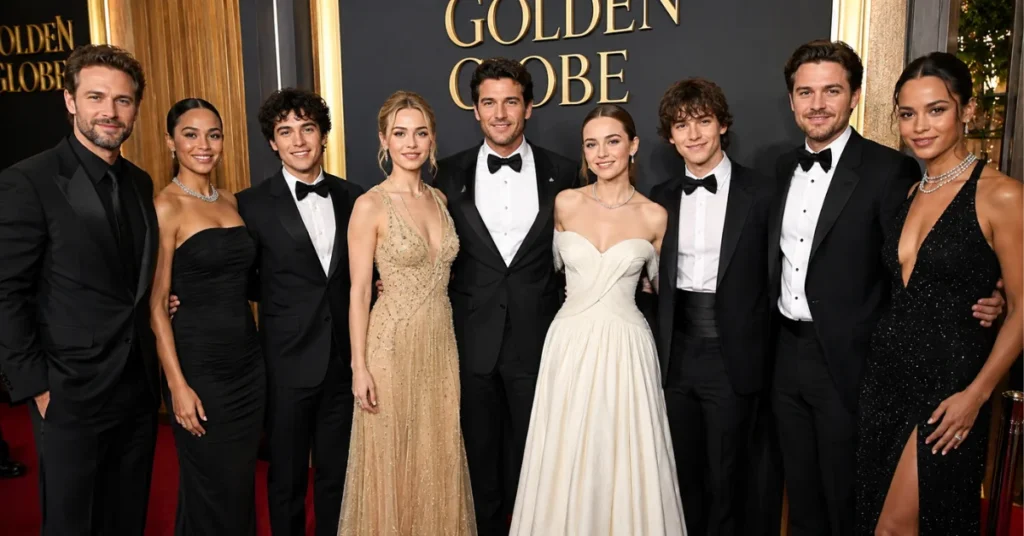
The trend isn’t limited to blockbusters. A24’s “The Drama,” starring Zendaya and Robert Pattinson, has been described repeatedly in coverage as carrying a powerhouse cast, and critics have pointed specifically at how the leads’ contrasting styles play off each other on screen. That’s not two similar performers competing for the same scene. It’s two different energies built to complement one another.
Older films get the same treatment when they resurface. “Sleepers,” the 1996 courtroom drama, is still described using this exact language decades later. Brad Pitt, Dustin Hoffman, Robert De Niro and Kevin Bacon shared one story about four childhood friends, and director Barry Levinson has spent recent interviews reflecting on why that particular mix of actors still holds up.
And at the 2026 Actor Awards, “Sinners” took the top ensemble prize, with Michael B. Jordan playing dual roles alongside Jayme Lawson, Wunmi Mosaku, Delroy Lindo and Hailee Steinfeld. On the television side, “The Pitt” and “The Studio” swept ensemble categories too, proving the strategy works just as well in scripted TV as it does in film.
Here’s a quick side-by-side of how this is playing out across 2026 releases:
| Project | Format | Powerhouse Names | 2026 Recognition |
|---|---|---|---|
| Digger | Film | Tom Cruise, Sandra Hüller, Riz Ahmed, John Goodman | Fall 2026 release, high anticipation |
| Sinners | Film | Michael B. Jordan, Delroy Lindo, Wunmi Mosaku | Top ensemble prize, Actor Awards 2026 |
| The Drama | Film | Zendaya, Robert Pattinson | Praised for contrasting lead chemistry |
| The Pitt | TV | Full rotating ensemble | Best ensemble, drama series |
| Only Murders in the Building | TV | Steve Martin, Martin Short, Selena Gomez | Competing lead-actor campaigns |
Casting Directors Are Finally Getting Credit
One thing most coverage of powerhouse casting skips entirely: the people actually assembling these casts. In 2026, the Academy Awards introduced its first-ever Best Casting category, a recognition that had been missing from the Oscars for decades despite casting shaping nearly every film built around a stacked lineup.
Veteran casting director Francine Maisler is a frontrunner in that inaugural category for her work pairing veteran actors with newcomers on “Sinners,” working directly with director Ryan Coogler to build the ensemble around Michael B. Jordan. That single fact reframes the whole conversation. Powerhouse casting isn’t something that happens to a script by accident. It’s a craft, led by specialists whose job is to figure out exactly which names belong in the same room together.
Casting directors working on television describe the same challenge in their own words. One casting director working on a returning genre series has said that refreshing an ensemble each season, while keeping the world feeling consistent, is one of the hardest parts of the job. That kind of first-hand craft perspective rarely makes it into articles that treat powerhouse casting as a pure marketing tactic.
The Business Case Behind Powerhouse Casting
Here’s the deal: studios don’t do this for prestige alone. There’s money behind it.
Academic research into star power backs up what casting directors have believed for years. A widely cited study out of a leading business school analyzed more than 1,200 casting announcements and matched them against simulated stock market reactions tied to a film’s expected revenue. The finding: a single star’s involvement was worth roughly three million dollars in projected theatrical earnings, on average. And that number climbed higher when a strong cast already existed before the new star joined, meaning the effect of powerhouse casting compounds rather than simply adding up.
That compounding effect is exactly why studios don’t stop at one big name. If adding a second star boosts a film’s earning potential more than the first one did, the incentive to keep stacking talent only grows.
But it’s not risk-free. A separate industry analysis comparing actor pay against box office return found that star power doesn’t always translate to profit. Some heavily cast films still underperform relative to what their talent cost, which means powerhouse casting is a bet, not a guarantee.
Where Powerhouse Casting Can Go Wrong
No strategy is foolproof, and this one has real drawbacks worth naming.
- Diluted screen time. Pack too many recognizable faces into one script, and someone’s arc gets shortchanged.
- Bloated budgets. Multiple A-list salaries add up fast, and that pressure lands on marketing and box office expectations.
- Mismatched tone. Not every actor’s style blends. A cast can look impressive on paper and still feel disjointed on screen.
- Audience fatigue. Viewers who’ve seen the “stacked cast” marketing pitch a dozen times this year may start tuning it out.
- Award-category headaches. A stacked cast doesn’t just create a marketing problem. It creates a campaign problem. When “Only Murders in the Building” built its cast around Steve Martin and Martin Short, both actors ended up competing as lead actors in the same category, forcing voters to choose between two performers from the same show. “Hacks” avoided that trap by splitting Jean Smart into lead and Hannah Einbinder into supporting instead. Powerhouse casting, in other words, can turn award season into its own strategic puzzle.
Anyone who’s worked in production knows the tension here. A packed cast list photographs beautifully for a poster, but it takes a genuinely strong script and director to keep that many strong performers from stepping on each other.
What the Research Shows
Detailed analysis of casting-announcement data consistently points to one pattern: the impact of adding a star isn’t flat across every film. Movies that already have a strong existing cast see a bigger lift from each additional big name, while films starting from a weaker base see less benefit per star added. That’s a meaningful distinction, because it means powerhouse casting works best as a compounding strategy, not a one-time fix for a struggling script.
Industry analysts also note that award recognition tends to matter more than raw fan following once a film moves past its opening weeks. Fan-driven buzz fades fast. A track record of critical respect holds up longer, which is part of why the same directors and casting offices keep returning to proven, awards-adjacent talent rather than chasing whoever trended online last month.
Who Should Actually Care About This
This isn’t just industry trivia. If you’re choosing what to watch this year, understanding powerhouse casting gives you a shortcut. A film built around one big name can be a coin flip. A film where five or six respected actors all signed on tends to mean the script cleared a higher bar before anyone agreed to show up.
For aspiring actors and industry newcomers, it’s worth knowing that landing a role in one of these projects, even a smaller part, carries real weight on a resume, since casting directors and producers do track which ensembles a performer has been part of.
For producers and studios, the lesson from 2026’s slate is straightforward: stacking talent still works, but only when the material supports it, and only when a skilled casting team is steering who actually belongs together. “One Battle After Another,” “Frankenstein,” “Hamnet” and “Marty Supreme” were all nominated for ensemble honors this year alongside “Sinners,” proof that this approach isn’t limited to one genre or one studio’s playbook.
Wrapping It Up
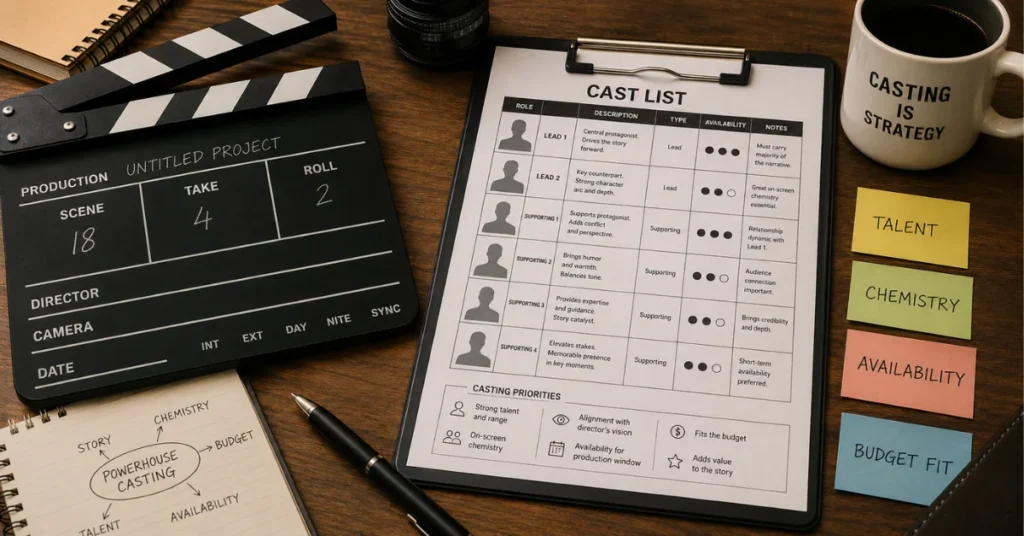
Powerhouse casting isn’t a marketing buzzword invented for a press release. It’s a documented, research-backed practice that shapes which films get greenlit, how they’re marketed, and often how they perform. From “Digger” to “Sinners” to “The Drama,” 2026’s biggest releases keep proving the same point: when a project brings together several respected names instead of leaning on one, it changes the calculation for everyone involved, from the casting director in the room to the person deciding what to watch this weekend.
FAQs
What does powerhouse casting mean in film and TV?
It describes assembling multiple high-profile or critically respected actors into a single project, rather than building the film around just one lead performer.
Is powerhouse casting the same as an ensemble cast?
Not quite. An ensemble simply means multiple characters share screen time. Powerhouse casting specifically means several of those actors already carry significant star power or critical reputation on their own.
Does powerhouse casting guarantee box office success?
No. Research shows star power increases expected revenue on average, but some heavily cast films still underperform relative to their production costs.
Why do studios keep using this strategy in 2026?
Because data from casting-announcement studies shows the effect compounds, adding a strong name to an already strong cast lifts expected earnings more than doing so for a weaker film.
Why did the Oscars add a Best Casting category in 2026?
Because casting directors, who are directly responsible for assembling powerhouse casts like the one behind “Sinners,” had never had a dedicated Academy Award category despite shaping nearly every major stacked-cast film.
Can too much powerhouse casting hurt a movie?
Yes. Overloading a script with big names can dilute screen time, inflate budgets, create tonal mismatches, and even complicate award-season campaigns when co-stars end up competing in the same category.