
Can you freeze cream cheese? Yes, you can, and it’s one of the easiest ways to stop a half-used block from going to waste before your next recipe. You just bought it for one dish, and now three-quarters of it is sitting in your fridge with an expiration date creeping closer. It won’t come out of the freezer quite the same as it went in, and knowing that upfront saves you a ruined cheesecake.
Cream cheese is roughly half water, held in an emulsion with fat and milk solids. Freezing forms ice crystals that break that emulsion apart. When it thaws, the water and curds separate instead of staying blended, and that’s what leaves the texture grainy or crumbly. It isn’t a safety problem. It’s a structure problem.
Can You Freeze Cream Cheese Without Ruining It?
Short answer: not entirely, but you can get close enough that most recipes won’t show it. Whether you can freeze cream cheese and still enjoy it comes down to what you’re planning to do with it after thawing.
If you want that smooth, spreadable bagel topping, freezing isn’t your friend. The grainy texture is hard to fully undo, and no amount of stirring brings back the original silkiness completely. But if the cream cheese is headed into a baked dip, a casserole, brownies, or a sauce, the difference is barely noticeable once it’s mixed with other ingredients and heated.
Restaurant kitchens and home cooks who batch-cook regularly treat this as routine. Anyone who has managed a busy kitchen knows frozen cream cheese gets folded into hot dishes constantly, precisely because the texture issue disappears once it’s blended and cooked.
How to Freeze Cream Cheese the Right Way
If you’re set on learning how you can freeze cream cheese with the least amount of texture loss, the prep work matters more than the freezer itself.
Getting decent results starts before the cheese ever touches the freezer.
For unopened blocks: Leave the foil wrapper and box intact and place the whole thing in the freezer. The original packaging does a reasonable job of blocking air on its own.
For opened cream cheese: Wrap it tightly in plastic wrap, then slide it into a freezer bag or airtight container with as much air pressed out as possible. Air is the enemy here — it accelerates freezer burn and dries out the edges.
For tubs, whipped cream cheese, or frosting: Transfer to a freezer-safe container, leaving a little room at the top since the product expands slightly as it freezes.
A few practical habits matter more than people expect:
- Label everything with the freeze date. Cream cheese holds decent quality for about two months in the freezer; after that, flavor starts to fade even though it’s still technically safe.
- Portion it out before freezing if you use small amounts at a time. Thawing a whole block for two tablespoons of frosting is wasteful.
- Never refreeze cream cheese once it’s thawed. Each cycle degrades the texture further and increases the risk window for bacterial growth.
Thawing Cream Cheese Without Making It Worse
The freezer is only half the story — thawing technique decides how much of the original texture you get back.
Move it to the refrigerator and give it 24 hours, or longer for a full block. Resist the urge to leave it on the counter to speed things up. Room-temperature thawing pushes dairy through the 40°F–140°F danger zone where bacteria multiply fastest, which is why the USDA FoodKeeper guidance recommends thawing dairy products in the refrigerator rather than at room temperature.
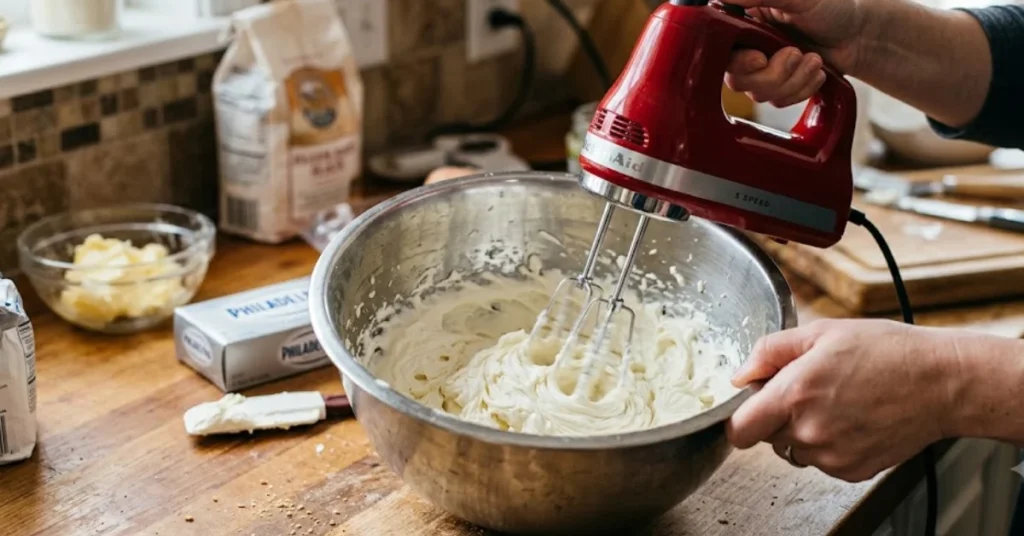
Once thawed, don’t just stir it and call it done. Beat it with a hand mixer, stand mixer, or even a sturdy whisk for a minute or two. This re-emulsifies what it can and smooths out a good chunk of the graininess. A short spin in a food processor works even better if you have one handy. If it’s still a little lumpy after that, running it through a fine sieve rescues most baking and dip recipes completely.
Where Frozen Cream Cheese Works — and Where It Doesn’t
This is really the heart of whether you can freeze cream cheese successfully for your specific purpose.
Good uses for thawed cream cheese:
- Baked dips (spinach artichoke, buffalo chicken, corn dip)
- Casseroles and hot pasta bakes
- Cheesecake batter that gets baked (not no-bake cheesecake)
- Brownies or muffins with a cream cheese swirl
- Soups and creamy sauces where it melts in
Where to avoid it:
- Spreading on a bagel, toast, or crackers
- No-bake cheesecakes or chilled mousses, where smoothness is the whole point
- Cream cheese frosting that needs to pipe cleanly
- Any dish where the cheese is the visible, unblended star
Anyone who bakes regularly will tell you the pattern is consistent: heat and mixing hide the graininess, cold and raw presentation exposes it.
What the Research Shows
Food science research on dairy emulsions backs up what home cooks have long noticed by trial and error. Detailed analysis of cream cheese’s structure shows it behaves as an oil-in-water emulsion stabilized by milk proteins, and that structure is fragile against ice crystal formation. Freezing at standard home freezer temperatures (0°F or below) forms crystals large enough to physically tear that protein network apart, which is why the fix isn’t prevention so much as mechanical repair through beating or blending after thawing.
Industry guidance from the USDA’s Food Safety and Inspection Service confirms freezing keeps food safe indefinitely at 0°F, though quality — not safety — declines the longer it . That two-month quality window professionals recommend for cream cheese lines up with general dairy freezing guidance across the industry, not a rule specific to one brand or product line.
The Bottom Line
Can you freeze cream cheese? Yes, and it’s a genuinely useful trick for cutting food waste — as long as you’re realistic about where it’s headed next. Save it for baking, dips, and cooked dishes, wrap it tightly, thaw it slowly in the fridge, and beat it back together before you use it. Keep expecting bagel-ready smoothness and you’ll be disappointed every time; treat it as a cooking ingredient instead and it earns its spot in your freezer.

FAQs
Can you freeze low-fat or fat-free cream cheese?
Yes, but expect a rougher texture on thawing. Lower-fat versions have less fat to help stabilize the emulsion, so they separate more visibly than full-fat cream cheese.
Does freezing cream cheese make it unsafe to eat?
No. Freezing halts bacterial growth entirely. The concern is texture and flavor, not safety, as long as it was fresh when frozen and thawed properly in the fridge.
How long can you freeze cream cheese?
Around two months for the best flavor and texture. It stays technically safe well beyond that at a steady 0°F, but quality drops off noticeably.
Can you freeze cream cheese frosting?
Yes, though the texture change is more noticeable in frosting than in plain cream cheese. Beat it thoroughly after thawing and expect it to work better on a cake that’s already been iced roughly rather than for delicate piping.
Why is my thawed cream cheese watery?
That’s the separated liquid from the broken emulsion. Pour it off or beat it back in — either works, though beating usually gives a smoother result.