
You made too much pasta again. It happens to everyone who’s ever eyed a box of penne and guessed at “enough for two.” The good news? Once you know how to store cooked pasta properly, that extra batch turns into tomorrow’s lunch instead of a sad, clumped mass at the back of the fridge.
Anyone who cooks regularly knows the disappointment of pulling out yesterday’s noodles only to find them dry, stuck together, or smelling faintly off. It’s rarely the pasta’s fault. It’s almost always a storage mistake made in that first hour after the pot comes off the stove.
This guide walks through what actually works, drawing on food safety guidance from the USDA and real kitchen habits that keep noodles tasting like they were made today.
The First Two Hours Matter Most
Here’s the thing most people get wrong. They leave the pasta sitting in the colander, or worse, still in the warm pot, while they finish eating dinner and clean the kitchen.
That warm, moist environment is exactly where bacteria thrive. The USDA’s food safety guidance is clear on this: perishable food should go into the fridge within two hours of cooking, and within one hour if your kitchen is running hotter than 90°F during a summer cookout.
Anyone who has managed a busy home kitchen knows the drill. Cool it fast, then get it cold. Spreading hot pasta out on a baking sheet for a few minutes before packing it away speeds up the cooling process and keeps condensation from building inside your storage container.
How to Store Cooked Pasta in the Fridge
This is the part most people search for, and it’s simpler than it sounds. Toss the drained noodles with a small amount of olive oil before they go into their container. It’s a small step, but it makes a real difference in preventing that dense, gummy clump you get from starch release.
Use an airtight container or a resealable bag. Shallow containers work better than deep ones because they let the pasta cool evenly instead of trapping heat in the center.
A few practical points worth knowing:
- Plain cooked pasta with no sauce typically lasts 3 to 5 days in the fridge
- Pasta already tossed with a cream-based sauce holds up for about 3 to 4 days
- Anything containing seafood should be eaten within 2 days, no exceptions
- Short shapes like penne or rotini tend to store a little better than long noodles like spaghetti, simply because they clump less
Storing sauce and noodles separately is one habit that pays off every time. Combine only what you’re eating that meal, and the leftover portion stays in better shape for the next round. Cooks who batch-prep for the week swear by this method, and it’s easy to see why once you’ve compared the texture side by side.
Why Temperature Control Actually Changes the Outcome
It’s not just about tossing pasta in a container and hoping for the best. Your fridge temperature plays a bigger role than most people assume.
The USDA recommends keeping refrigerators at or below 40°F at all times. A fridge running even a few degrees warmer, say 43°F or 44°F, shortens how long your leftovers stay safe. It’s worth checking your fridge with an appliance thermometer once in a while, since the built-in dial isn’t always accurate.
The “danger zone,” as food safety experts call it, sits between 40°F and 140°F. Bacteria multiply fast in that range, doubling roughly every twenty minutes. Pasta left on the counter overnight sits in that zone for eight to ten hours, which is well past what’s considered safe.
How to Store Cooked Pasta for Longer in the Freezer
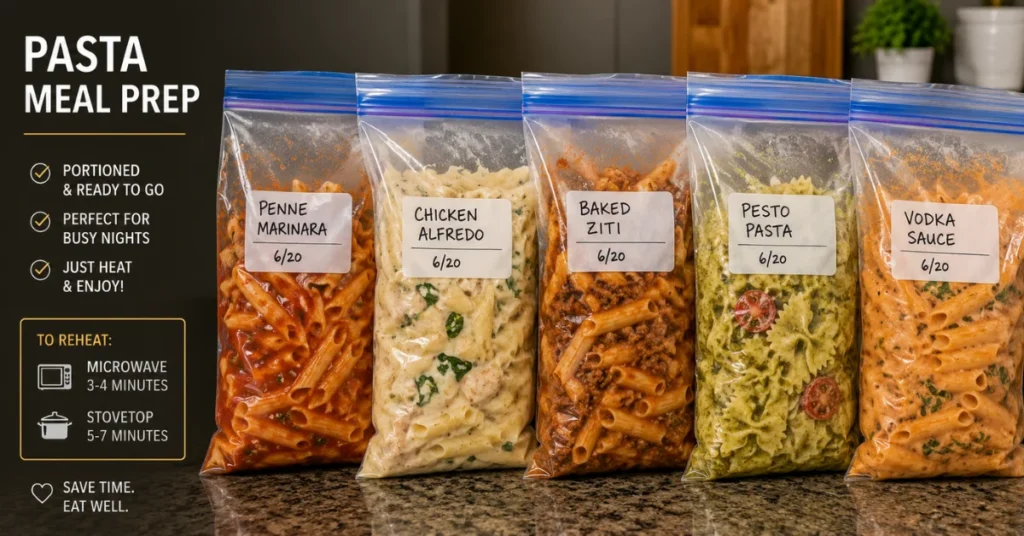
Sometimes a fridge just isn’t the answer, especially if you’ve cooked a double batch on purpose for future meals. Freezing solves that problem, and cooked pasta actually holds up reasonably well in the freezer.
Toss the noodles in a bit of neutral oil before freezing to keep them from sticking into one solid block. Portion them into individual servings first. It sounds like an extra step, but future you will be grateful when a single serving thaws in minutes instead of an entire brick.
Frozen cooked pasta stays at its best quality for about 1 to 2 months. After that, it’s still technically safe if kept at 0°F, but the texture starts to suffer. Thaw it in the fridge overnight rather than on the counter. Dropping frozen noodles straight into boiling water for thirty to sixty seconds also works well and revives the texture nicely.
Stuffed pasta like ravioli or tortellini behaves a little differently. It can go straight from freezer to boiling water without thawing first, which makes it one of the more convenient options for a fast weeknight dinner.
Signs Your Stored Pasta Has Gone Bad
Part of learning how to store cooked pasta well is knowing when it’s already past saving. Trusting your senses matters here, but not blindly. Fresh cooked pasta should feel firm or gently tender. If it’s slippery, slimy, or leaves residue on your fingers, that’s a clear signal to toss it.
Smell is a useful clue but not a perfect one. Spoiled pasta often carries a sour or faintly vinegary odor. That said, some bacteria don’t announce themselves with any smell at all, which is exactly why the 3-to-5-day window matters more than how the pasta looks or smells on day six.
Discoloration is another giveaway. A grayish or dull white tint, or visible spotting, means it’s time to let it go. When in doubt, the safer move is always to throw it out rather than risk a bout of food poisoning over a few dollars of pasta.
Different Readers, Different Needs
Meal preppers batch-cooking for the week benefit most from portioning pasta into individual containers right after cooking, so each meal grabs and reheats without disturbing the rest. Parents managing a family fridge often find labeling containers with the date helps everyone in the house avoid guessing games about what’s still good. And anyone cooking for one person alone might lean toward freezing half the batch immediately, since a single-serving pot of pasta rarely gets finished within the fridge’s safe window.
What the Research Shows
Detailed analysis of food safety data from the USDA points to a consistent pattern: improper cooling, not the pasta itself, causes most spoilage-related illness tied to starches and grains. Skipping the two-hour cooling rule is one of the most common mistakes home cooks make, according to USDA Food Safety and Inspection Service guidance.
Reheating habits matter just as much as initial storage. The safe internal reheating temperature sits at 165°F, verified with a food thermometer rather than a guess. Reheating only the portion you plan to eat, rather than cycling the whole batch through the fridge and stove repeatedly, keeps both texture and safety intact.
Reheating Without Ruining It
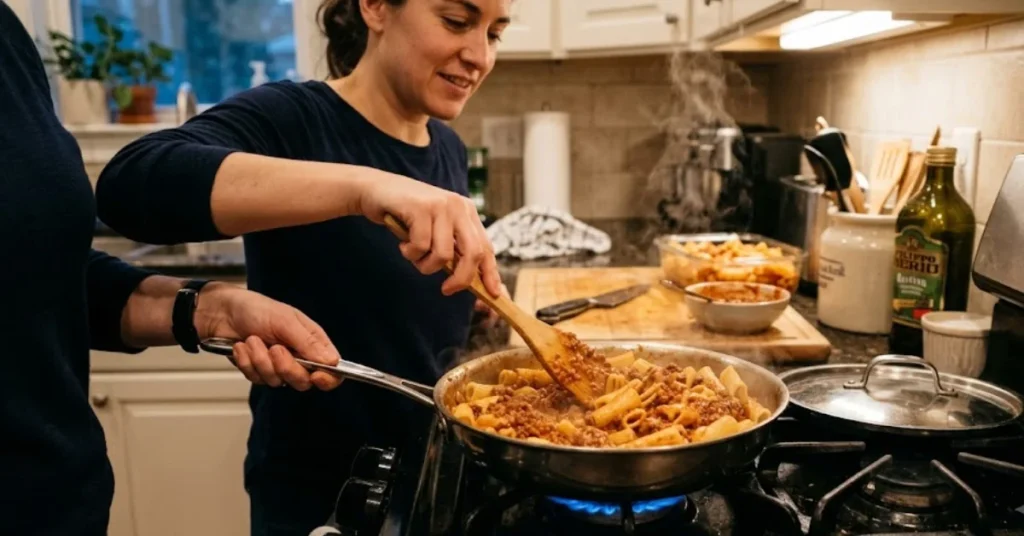
Getting storage right only helps if the reheating step doesn’t undo all that work. A splash of water, broth, or extra sauce before microwaving in short bursts keeps noodles from drying out. Stovetop reheating with a bit of liquid, stirred over medium heat, tends to restore texture better than the microwave alone.
Plain noodles can also go back into a pot of boiling water for thirty seconds to a minute. It’s fast, and it brings the pasta back close to its original bite without overcooking it.
Conclusion
Learning how to store cooked pasta properly comes down to a handful of habits: cool it fast, seal it tight, keep the fridge cold, and respect the clock on how long it’s been sitting. None of these steps take much effort, but skipping them is exactly what turns good leftovers into wasted food. Get the basics right once, and every future pot of pasta becomes a meal you can count on for days, not just the night you cooked it.
FAQs
Can I refrigerate pasta while it’s still warm?
It’s better to let it cool for a few minutes first. Sealing hot pasta traps steam, which creates condensation and speeds up spoilage.
How long does cooked pasta last outside the fridge?
No more than two hours at room temperature, or one hour if the kitchen is above 90°F.
Does adding oil actually help storage?
Yes. A light coating of olive oil reduces clumping caused by released starch, though it won’t stop it completely.
Is it safe to reheat pasta more than once?
It’s best avoided. Each cycle through the danger zone adds risk and degrades both texture and safety. Only reheat what you’re eating.
Can I freeze pasta that already has sauce mixed in?
Yes, though plain pasta and separate sauce generally freeze and reheat with better texture than a pre-mixed dish.