
What actually counts as one of the best outdoor toys for active kids? Not the flashiest box on the shelf. The winners are the ones that get a kid moving, sweating a little, and coming back for more the next day.
Here’s the short answer: bikes, trampolines, water play sets, sports gear, and climbing structures top the list because they push kids toward real physical effort instead of passive fiddling. But the full picture is a bit more layered than a simple ranking, so let’s dig into it.
What Are the Best Outdoor Toys for Active Kids, Really?
A toy earns a spot on this list when it does two things at once: it holds a child’s attention and it demands actual movement. Sitting still while pressing buttons doesn’t count, no matter how bright the packaging is.
Parents who have watched a kid abandon an expensive gadget within a week already know this. The toys that stick around are usually simple. A bike. A ball. A trampoline. Something that rewards effort with fun rather than doing the fun for the child.
Anyone who has managed a busy backyard on a Saturday afternoon knows the pattern: the toy that gets used every single day is rarely the one that came with the most instructions.
Why Active Play Still Matters in 2026
Screens aren’t going anywhere, and nobody’s pretending otherwise. But the numbers on kids’ movement habits tell their own story. Federal health guidelines recommend that children and teens aged 6 to 17 get at least 60 minutes of moderate-to-vigorous activity every day. Recent national survey data found that just over six in ten adolescents hit that mark most days, and that share drops sharply as screen time climbs past four hours daily.
That gap is exactly where the right toys step in. A scooter parked by the front door does something a tablet can’t: it nudges a kid outside without a lecture.
There’s also a seasonal angle worth mentioning. Summer months naturally push families toward yards, parks, and driveways, which makes early 2026 a smart window to build (or refresh) an outdoor toy collection before the heat peaks.
The Best Outdoor Toys for Active Kids by Age Group
Not every toy fits every kid. Age changes everything, from safety to attention span.
Toddlers (1–3 years)
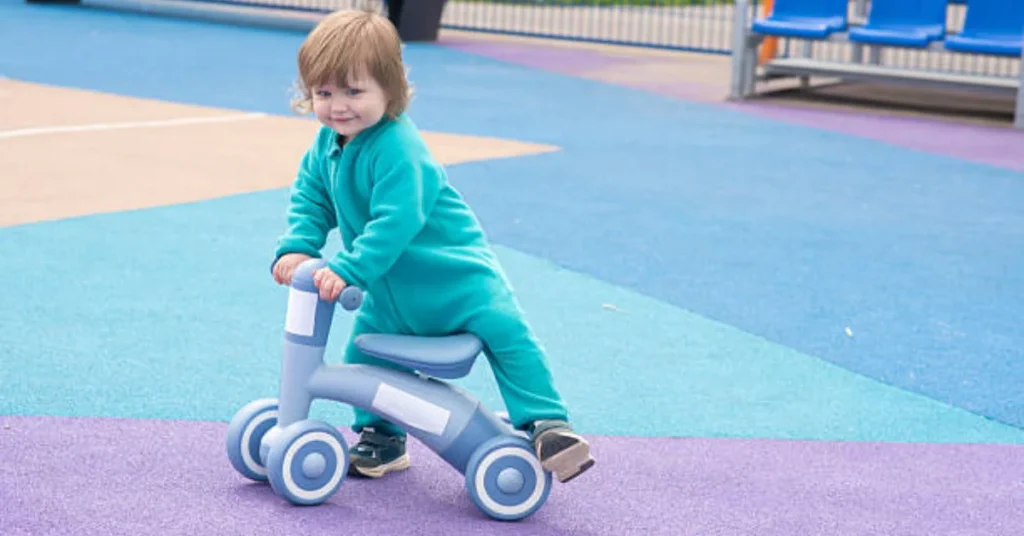
- Push trikes and balance bikes for early coordination
- Water tables for sensory exploration
- Soft-sided climbing domes with low platforms
Preschoolers (4–5 years)
- Pedal bikes with training wheels
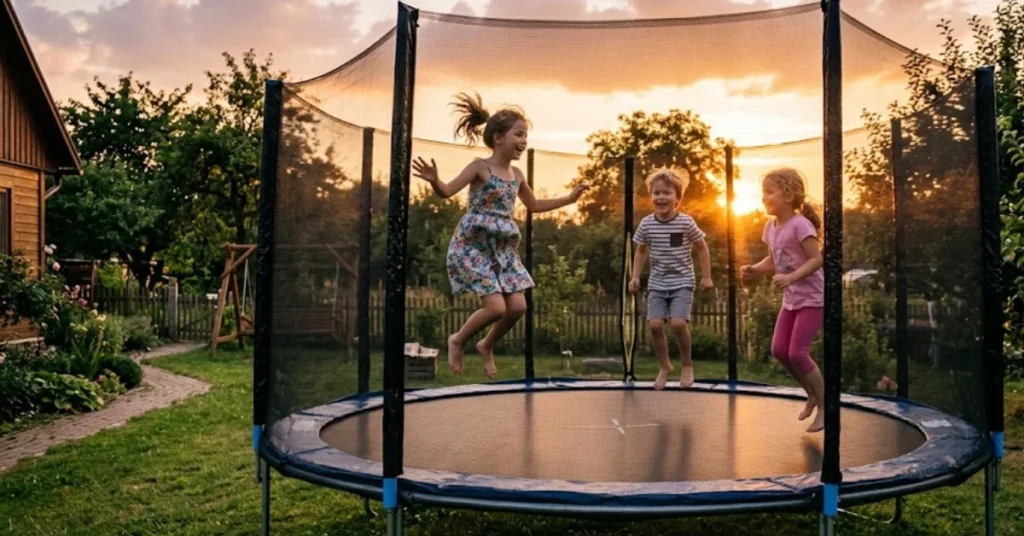
- Small trampolines with safety netting
- Sprinklers and splash pads for hot afternoons
School-age kids (6–9 years)
- Scooters and standard bicycles
- Basketball hoops, soccer nets, and cornhole sets
- Obstacle course kits that can be rearranged weekly
Tweens (10–12 years)
- Spikeball and other fast four-player games
- Larger trampolines with sports attachments
- Skateboards and inline skates for kids ready for more speed
This isn’t a rigid ladder. Plenty of eight-year-olds still love a good water table, and that’s fine. Kids revisit old favorites in new ways as they grow, turning a simple ride-on toy into an imaginative race course a few years later.
Toys That Build Real Skills, Not Just Screen Time
Here’s where the best outdoor toys for active kids separate themselves from novelty items. The good ones quietly teach something while the child is having fun and not paying attention to the lesson at all.
Climbing structures build grip strength and spatial judgment. Balance bikes teach weight distribution before a pedal ever enters the picture. Sports sets like basketball hoops or soccer nets build hand-eye coordination and, honestly, a bit of patience when the first ten shots miss.
Rocket launchers and stomp toys deserve a mention too. They’re battery-free, they launch on pure kid-powered force, and they sneak in a physics lesson about angle and force without ever calling itself a lesson.
And then there’s the social layer. Games like Spikeball or giant Jenga pull siblings and neighborhood kids into the same activity, which matters more than it sounds. Group play tends to stretch outdoor time far longer than solo play does — kids negotiate rules, invent new versions, and keep going well past when a parent expected them to come inside.
Best Outdoor Toys for Active Kids vs. Passive Outdoor Toys
Not everything labeled “outdoor toy” gets a child moving. It helps to draw a clear line here.
| Feature | Active Outdoor Toys | Passive Outdoor Toys |
|---|---|---|
| Physical demand | High — running, climbing, pedaling | Low — sitting, watching, pressing buttons |
| Skill development | Balance, strength, coordination | Limited motor engagement |
| Longevity of interest | Often years, growing with the child | Frequently short-lived |
| Examples | Bikes, trampolines, sports sets | Battery-powered ride-ons with no pedaling, screen-linked outdoor gadgets |
Think of it like the difference between a treadmill and a recliner with a view of the yard. Both are technically outside. Only one is doing anything for the body.
That said, passive toys still have a place. A remote-controlled car isn’t the enemy — it just shouldn’t make up the whole collection if the goal is genuinely active play.
Who Should Prioritize These Toys
Parents managing screen-time battles are the obvious audience, but they’re not the only one.
Grandparents shopping for birthdays often default to electronics because they seem impressive. A well-chosen bike or trampoline tends to get more actual use over a longer stretch.
Teachers and after-school program coordinators also lean on this category, since giant outdoor games like ring toss or cornhole work well for groups with mixed ages and short attention spans.
And families in smaller spaces shouldn’t assume this list doesn’t apply to them. Jump ropes, sidewalk chalk, and portable parachute toys need almost no yard at all and still check every box for active, skill-building play.
What the Research Shows
Pediatric researchers keep landing on the same conclusion: movement habits formed early tend to stick. National tracking data shows physical activity levels drop noticeably as recreational screen time rises, which lines up with what most parents already sense anecdotally.
Analysts following the toy industry through 2025 and into 2026 have also flagged a steady swing back toward screen-free, movement-based play — bikes, climbing sets, and water play in particular. That pattern fits with what pediatric health bodies have said for years: kids don’t need perfect, scheduled workouts. They need repeated chances to run, climb, and jump, accumulated in short bursts across the day.
The Bottom Line
There’s no single miracle product here. The best outdoor toys for active kids share a formula: low barrier to play, real physical demand, and enough flexibility that a child can invent new games with the same item for years. Bikes, trampolines, sports sets, and climbing structures consistently deliver on all three. Pair a couple of these with open, unstructured yard time, and most of the “how do I get my kid outside” problem tends to solve itself.
FAQs
What age should a child start using active outdoor toys?
Most balance bikes and push trikes are safe from around age one, once a toddler can stand and walk steadily.
Are trampolines safe for young kids?
Trampolines with enclosed netting and adult supervision are generally considered safer for kids under six. Smaller, low-height models are the better starting point.
How much daily outdoor playtime should a school-age kid get?
Health guidelines point to at least 60 minutes of moderate-to-vigorous activity daily for kids aged 6 to 17, which active outdoor toys can help cover in manageable chunks.
Do outdoor toys really reduce screen time?
Not automatically, but they give kids a compelling reason to step away from a screen. Placement matters too — a bike by the door gets used more than one buried in a shed.
What’s the most budget-friendly option on this list?
Jump ropes, sidewalk chalk, and simple sports balls deliver strong activity value for very little cost and work across almost any age range.