
Angel hair pasta looks delicate, and it cooks that way too. If you’ve ever dumped a box into boiling water and walked away for ten minutes like you would with spaghetti, you probably ended up with a gummy, stuck-together mess instead of dinner. So how long to cook angel hair pasta, exactly? Most brands need just two to four minutes in rapidly boiling water, though the real number depends on the brand, the pot, and how firm you like your noodles.
That short window is exactly what trips people up. This pasta is thin enough that thirty extra seconds can be the difference between a silky strand and a soggy clump. Here’s what actually happens on the stove, why the box instructions aren’t always right, and how to get it done properly.
How Long to Cook Angel Hair Pasta on the Stove
Once your water hits a full rolling boil and you’ve added a generous amount of salt, angel hair pasta typically needs two to four minutes to reach al dente. Some thinner artisan brands are ready in as little as ninety seconds. Thicker commercial versions can stretch closer to five minutes, though anything beyond that usually pushes the texture past al dente and into mush.
Regular pasta shapes like penne or spaghetti generally take eight to ten minutes to cook fully, roughly double or triple the time angel hair needs, according to food science guidance from university extension programs. That gap comes down to surface area. Angel hair is so thin that water penetrates it almost instantly, which means it finishes cooking long before a thicker noodle would even soften.
A practical habit worth building: set a timer for one minute less than whatever the package says, then start tasting. Cooks who make this pasta regularly know the printed time is often a worst-case estimate, not a target.
Why Package Instructions Aren’t Always Reliable
Package directions on a box of angel hair pasta are written to cover many different stove types, altitudes, and water volumes. That’s why one brand might say two minutes while another says five for what looks like an identical noodle.
Anyone who has cooked pasta professionally knows the box is a starting point, not gospel. The safer approach is to treat the printed number as the outer limit and check the noodles well before that clock runs out. Pull a strand out with tongs around the halfway mark. If it bends without resistance and has just a slight bite left in the center, it’s close to done.
Water temperature also plays a bigger role with angel hair than with thicker shapes. If the water drops off the boil after you add the pasta, cooking slows down and the total time creeps upward, so it’s worth using a large pot with plenty of water and keeping the heat high throughout.
How Long to Cook Angel Hair Pasta for Al Dente Texture
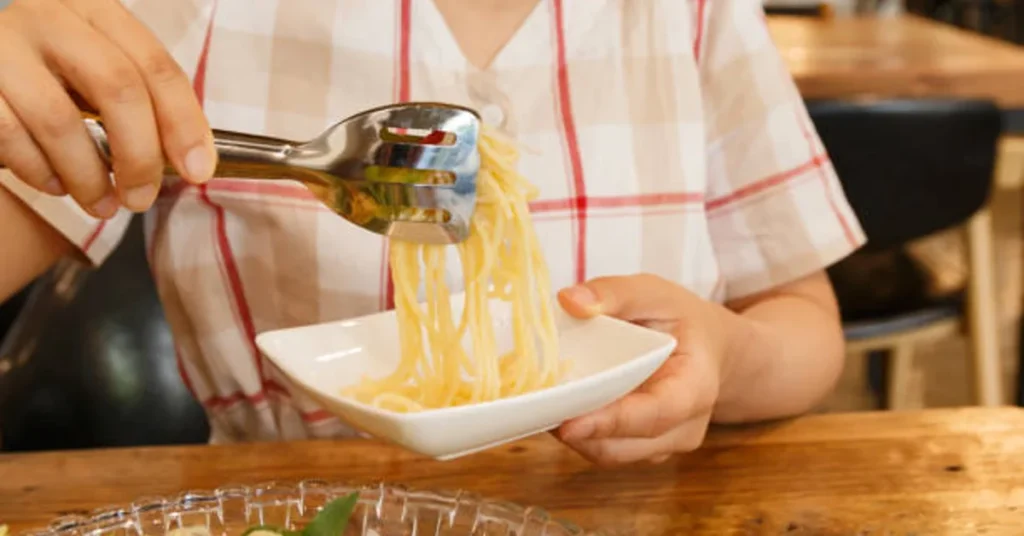
Al dente means “to the tooth” in Italian, and for angel hair, hitting that mark takes more attention than it does with penne or rigatoni. The strands go from underdone to overcooked in a narrow band of maybe thirty to sixty seconds.
A few markers to watch for:
- The pasta should bend easily when lifted with tongs, not snap
- There should still be a faint firmness at the center when bitten
- The water should look faintly cloudy, not thick and starchy, which usually signals overcooking
- Strands should separate cleanly rather than clumping into a tangled mass
Home cooks who’ve burned a batch or two learn to pull the pot off the heat a touch early, since residual heat keeps cooking the noodles even after draining. That’s especially true if the pasta is going straight into a hot sauce for a final toss.
Cooking Angel Hair for Different Recipes
The exact cook time can shift depending on what you’re making with it, and this is where a lot of recipes leave out useful detail.
Classic buttered or oil-based sauce: Boil until just shy of al dente, drain, then finish the pasta directly in the warm sauce for thirty to sixty seconds. This lets the noodles absorb flavor without turning mushy in plain water.
Soups and broths: Break the strands in half before adding them, and toss them in during the final two to three minutes of simmering. Angel hair left in hot broth for too long will disintegrate and thicken the liquid unpleasantly.
Cold pasta salads: Cook fully to al dente, then rinse immediately under cold water to stop the cooking and prevent the strands from gluing together as they cool.
Instant Pot or pressure cooker: This pasta needs far less pressure time than the stovetop, often just two to three minutes on high pressure followed by a quick release, since the sealed environment cooks it faster than an open pot.
Common Mistakes That Ruin Angel Hair Pasta
A handful of habits explain most of the “why is my pasta always mushy” complaints, and none of them are hard to fix.
Not using enough water is the biggest one. Angel hair needs room to move, and a cramped pot lowers the water temperature the moment the pasta goes in, which throws off timing. A good rule is around four quarts of water per pound of pasta.
Walking away is the second culprit. Because the cook window is so short, checking a phone or stirring a sauce for even ninety seconds can mean the difference between perfect and ruined. Anyone who cooks this pasta regularly stays at the stove for the whole process.
Skipping the salt is a smaller but real issue. Salted water seasons the pasta from the inside, and without it, even a perfectly timed batch can taste flat.
Finally, rinsing pasta that’s headed straight into a hot sauce washes away the starch that helps sauce cling to the strands. Save the rinse step for cold dishes only.
What the Research Shows
Culinary science research consistently points to surface-area-to-thickness ratio as the main driver of pasta cook time. Because angel hair has one of the smallest diameters of any common pasta shape, it absorbs water and softens far faster than shapes like fettuccine or rigatoni.
Food science extension data comparing pasta shapes found that standard pasta cooks in roughly 8 to 10 minutes, while angel hair finishes in about 3 to 5 minutes, a gap wide enough that using the wrong timing guide for angel hair almost guarantees overcooking. That pattern holds across brands, though the exact number still varies by manufacturer and how the noodles were dried during production.
Angel Hair vs. Other Thin Pasta Shapes
It helps to see how angel hair stacks up against its closest relatives, since people often confuse the three.
| Pasta Type | Typical Cook Time | Best Match |
|---|---|---|
| Angel Hair | 2–4 minutes | Light oil, butter, or thin tomato sauces |
| Capellini | 3–5 minutes | Broths, delicate cream sauces |
| Vermicelli | 4–6 minutes | Stir-fries, heartier sauces |
| Spaghetti | 8–10 minutes | Bolognese, thick meat sauces |
Angel hair is the thinnest of the group, which is exactly why so many people search how long to cook angel hair pasta before ruining their first attempt. Heavier, chunky sauces tend to weigh down the delicate strands and cause them to break apart, so lighter preparations are usually the better call.
Conclusion
The short version: how long to cook angel hair pasta comes down to two to four minutes in a rolling, well-salted boil, checked early and often rather than left to the clock. This pasta rewards attention more than any other shape in the pantry, and the payoff is a light, silky dish that’s ready in less time than it takes to set the table. Once the timing clicks, angel hair becomes one of the fastest, most reliable weeknight dinners around, whether it’s tossed with garlic and olive oil or dropped into a quick soup.
This article is for general informational purposes only. Cooking times can vary by pasta brand, altitude, stove type, and personal texture preference, so always check the pasta as it cooks rather than relying on time alone.
FAQs
Is angel hair pasta done at 3 minutes?
For most standard brands, yes. Start checking at the two-minute mark and pull it as soon as it bends easily with a slight firmness left at the center.
Do you cook angel hair pasta the same way as spaghetti?
No. Spaghetti needs roughly double the time. Using spaghetti timing on angel hair will almost always overcook it.
Why does my angel hair pasta always turn out mushy?
Usually it’s a combination of too little water, cooking too long, or not checking the texture until the printed box time has already passed.
Can you cook angel hair pasta in the microwave?
It’s possible using a covered microwave-safe bowl with enough water to submerge the pasta, checking every minute, though stovetop cooking gives far more control over texture.
Should you rinse angel hair pasta after cooking?
Only for cold dishes like pasta salad. For hot sauces, skip the rinse so the starch helps the sauce stick to the strands.