
The first time you drop orzo into boiling water, you’ll swear you grabbed the wrong bag of rice. It isn’t. Learning how to cook orzo pasta is one of those small kitchen skills that quietly upgrades a dozen weeknight dinners once you get it right, and it takes less effort than boiling regular spaghetti.
Standing over the stove with a box of this rice-shaped pasta in hand, you start to understand why so many home cooks keep it stocked in the pantry. It slips into soups, salads, and skillet dinners without ever demanding much attention. But here’s the catch: get the timing or the water ratio wrong, and you’ll end up with a gluey, clumped mess instead of tender little grains.
What Orzo Actually Is
Orzo looks like rice, but it’s pure pasta, made from semolina or wheat flour and shaped to resemble a fat grain. That resemblance causes plenty of confusion in the kitchen. Cooks reach for a rice cooker, follow rice timing, and end up disappointed.
The name comes from the Italian word for barley, though the shape is really a nod to rice. In Greece, the same pasta shows up as kritharaki, and it’s a staple in soups like avgolemono. Once you know it’s pasta through and through, the cooking method makes a lot more sense.
How to Cook Orzo Pasta on the Stovetop
This is the method most people reach for, and it’s nearly foolproof once you know the timing.
Bring a medium pot of water to a rolling boil. Season it generously with salt, since orzo won’t absorb much flavor once it’s out of the water. Add the orzo and stir right away, because its small size makes it prone to clumping and sticking to the bottom of the pot.
Boil for roughly 8 to 10 minutes, tasting a piece around the 7-minute mark to track how close it is to al dente. Drain it in a fine mesh strainer, since a regular colander will let the smaller pieces slip through. Toss with a bit of olive oil or butter right after draining so the grains don’t fuse into a solid clump as they cool.
That’s genuinely most of what you need to know about how to cook orzo pasta if you’re serving it plain, in a soup, or folding it into a quick salad.
The Toasted Method: A Different Way to Cook It
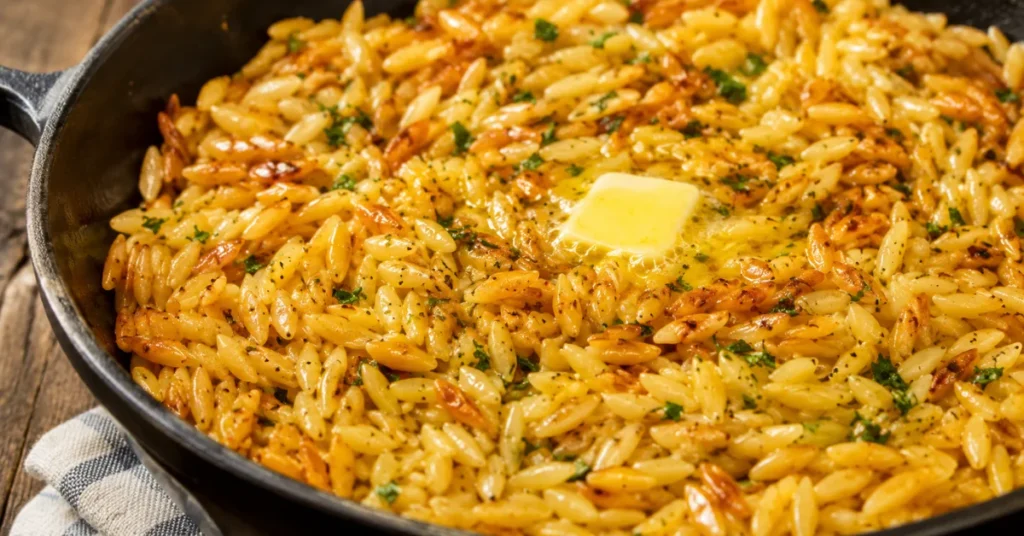
Anyone who has run a busy home kitchen for a while knows there’s a second method worth learning, one that treats orzo more like a pilaf than plain pasta.
Melt a couple tablespoons of butter or olive oil in a skillet over medium-low heat. Add the uncooked orzo and stir constantly for three to five minutes, until it turns a light golden color and smells faintly nutty. This step is what separates flat, boiled orzo from something with real depth of flavor.
Once it’s toasted, pour in warm water or stock at a ratio of about two cups of liquid for every cup of orzo. Bring it to a light simmer, then cover and reduce the heat to low. Let it cook undisturbed for 12 to 15 minutes, until the liquid is fully absorbed. This technique produces a richer, almost risotto-like texture without the constant stirring risotto demands.
Getting the Water Ratio Right
Confusion around ratios is the single biggest reason people mess this up. If you’re boiling orzo like standard pasta, the exact water amount barely matters, since you’ll be draining it anyway. Just use enough water to give the pasta room to move.
If you’re using the pilaf-style toasting method, though, the ratio matters a great deal. Stick with two cups of liquid for every one cup of dry orzo, whether you’re using water or broth. Too little liquid leaves undercooked, chalky bits at the center. Too much, and you’ll end up with soggy, overcooked pasta swimming in starchy water.
Gluten-free orzo behaves a little differently, so check the package instructions since the water ratio and cook time can shift depending on the base grain used.
Common Mistakes to Avoid
A few small errors show up again and again in home kitchens, and they’re easy to fix once you spot them.
- Walking away without stirring, which lets orzo settle and clump at the bottom of the pot
- Skipping the salt in the cooking water, leaving the finished dish bland no matter what sauce goes on top
- Using a standard colander, which loses grains through the holes
- Overcooking past al dente, especially when the orzo will keep cooking further in a hot soup or sauce
- Adding orzo straight from the freezer aisle without adjusting time for pre-cooked or frozen varieties
Fixing even two or three of these habits makes a noticeable difference in texture.
What the Research Shows
Industry analysts tracking the broader pasta category project global market value climbing from close to $79.8 billion in 2026 to more than $120 billion by 2034, driven largely by demand for quick, versatile weeknight staples. Orzo sits squarely inside that growth story, since its short cook time and adaptability match exactly what busy households are searching for.
Nutrition researchers examining orzo alongside rice and other grains note it delivers a solid carbohydrate base along with meaningful protein and B vitamins when made from enriched flour, making it a reasonable rotation item rather than an occasional novelty. That combination of speed and nutrition helps explain why orzo keeps showing up in more recipe boxes as 2026 rolls on.
How to Cook Orzo Pasta for Salads, Soups, and Beyond
Once you’ve nailed the basic method, the real fun starts. For a cold pasta salad, cook the orzo just to al dente, then rinse briefly under cool water to stop the cooking and prevent clumping before mixing in vegetables, feta, and a lemony dressing.
For soups, add the orzo directly into simmering broth a few minutes before serving rather than pre-cooking it separately, and pull it slightly before full doneness since it will keep absorbing liquid. For a warm side dish, the toasted method paired with parmesan and fresh herbs turns a handful of pantry staples into something that tastes far more deliberate than it actually is.
Anyone who has managed a weeknight dinner rush knows the appeal here: one small pot, minimal cleanup, and a base that pairs with almost anything already in the fridge.

Conclusion
Once you understand how to cook orzo pasta properly, it stops feeling like a mystery ingredient and starts working like the flexible pantry staple it’s meant to be. Whether you boil it plain, toast it in butter, or drop it straight into a simmering soup, the technique stays simple and forgiving. Get the ratio and timing right once, and you’ll find yourself reaching for this rice-shaped pasta far more often than you expected.
FAQs
Does orzo need to be rinsed before cooking?
No. Like most pasta shapes, orzo cooks fine straight from the box without pre-rinsing.
Why did my orzo turn out mushy?
Overcooking or using too much liquid in the pilaf-style method are the usual culprits. Watch the clock closely and start tasting a few minutes before the recommended time.
Can I cook orzo in a rice cooker?
It’s possible, but it’s easy to overcook this way since rice cookers aren’t calibrated for pasta timing. A stovetop pot gives far more control.
How much orzo should I cook per person?
Plan on about a third of a cup of dry orzo per person as a main component, or a quarter cup if it’s part of a soup or loaded salad.
How long does cooked orzo last in the fridge?
Stored in an airtight container, cooked orzo keeps well for three to five days and reheats easily with a splash of water or broth.