
You’ve probably tried this before. A new planner, a 5 a.m. wake-up plan copied from someone on YouTube, three days of motivation, then nothing. Knowing how to create a routine isn’t about discipline you don’t have. It’s about designing a structure your brain will actually keep using once the excitement wears off.
Anyone who has gone through this cycle a few times knows the problem usually isn’t laziness. It’s that the routine was built for an imagined version of life instead of the one actually being lived.
Why Most Routines Collapse by Week Two
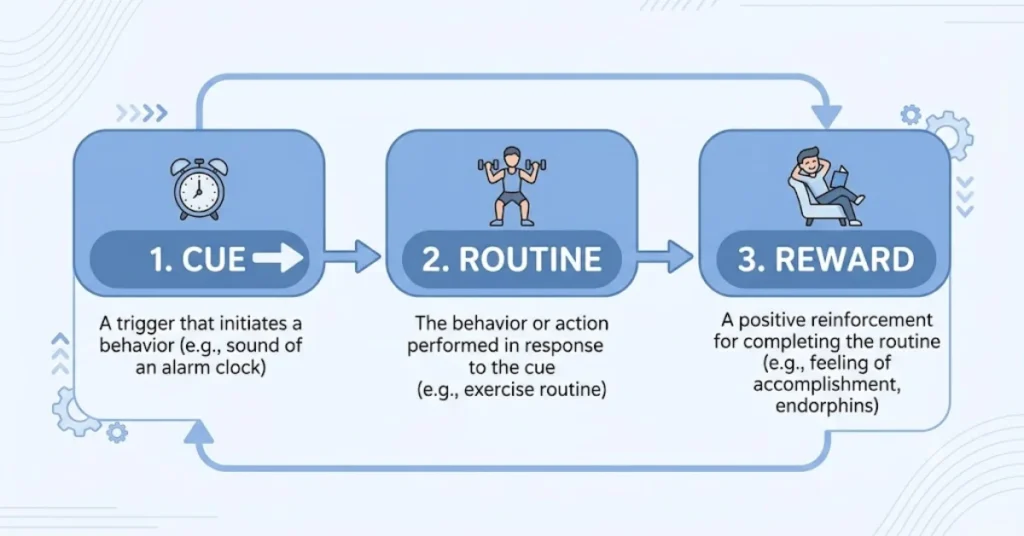
Here’s the deal. Most people build routines around willpower instead of design. They pick a long list of new habits, attach them to one fragile burst of motivation, and expect that burst to last for months.
It rarely does. A widely cited University College London study found that habits take an average of 66 days to become automatic, with a range stretching anywhere from 18 to over 200 days depending on the complexity of the behavior. Two months of conscious effort is a long runway, and most routines aren’t built to survive it.
Duke University research has also shown that roughly 40% of daily actions aren’t decisions at all. They’re habits running on autopilot. That’s the real target when you create a routine: getting a behavior off your to-do list and into the automatic part of your brain.
Step One: Pick a Single Anchor Habit
Forget the seven-part morning routine for now. Pick one behavior that matters most and build everything else around it later.
Professionals who study behavior change consistently point to this same idea: a routine built around one anchor habit survives far longer than one built around five new habits at once. The anchor could be a ten-minute walk, a fixed wake-up time, or fifteen minutes of focused work before checking a phone.
Pick something small enough that skipping it feels almost silly. That’s intentional. A two-minute version of a habit, expanded slowly over weeks, beats an ambitious version that collapses after day four.
Step Two: Attach It to Something You Already Do
This is where habit stacking earns its reputation. Instead of relying on memory or motivation, the new behavior gets tied to something already wired into the day, like brushing teeth, making coffee, or sitting down at a desk.
Anyone who has actually built a lasting routine knows the pairing matters more than the habit itself. “After I pour my coffee, I’ll write three lines in a journal” works because the coffee step is already automatic. The new behavior rides along on a cue that never gets forgotten.
Step Three: Design the Environment Before the Willpower Runs Out
Environment does more heavy lifting than most people give it credit for. Gym clothes laid out the night before remove a decision point. A book left on the pillow nudges a reading habit forward without a single ounce of self-control involved.
The opposite is just as true. A routine that depends on remembering where the running shoes are, finding a charger, or hunting for a notebook is a routine fighting itself before it even starts.
How to Create a Routine That Survives a Bad Week
Life interrupts everything eventually. Travel, illness, a brutal work deadline. The routines that survive aren’t the ones built for perfect conditions; they’re the ones with a built-in minimum version.
If the full routine is a 30-minute workout, the bad-week version might be five push-ups. If it’s a full meal-prep Sunday, the bad-week version might be one prepped lunch. The goal isn’t intensity during hard weeks. It’s keeping the habit loop alive so it doesn’t have to be rebuilt from scratch.
This matters more than people expect. Research on missed habit days has found that a single skipped day doesn’t meaningfully damage the formation process. What actually derails a routine is the story that follows a missed day, the “I already failed, so why bother” spiral that turns one skip into a three-week gap.
Morning, Evening, or Both?
There’s a reasonable debate here, and the honest answer depends on the person.
Morning routines tend to benefit from higher willpower reserves and fewer competing demands, which is why so many habit guides default to them. Evening routines work better for people whose mornings are chaotic by nature, like parents of young kids or shift workers.
The mistake is assuming one schedule is morally superior. A routine that fits a real schedule beats a “perfect” routine borrowed from someone with a completely different life.
What the Research Shows
Detailed analysis of habit-formation studies reveals a pattern that surprises a lot of people: consistency in the first month matters more than intensity at any single point. Behavior repeated daily during the early formation window reaches automaticity noticeably faster than behavior repeated every other day, even when the total number of repetitions ends up similar.
Findings on habit recovery point the same direction. People who get back to a routine at the very next opportunity, rather than waiting for a symbolic “fresh start” like a Monday or a new month, are far more likely to keep the routine going long-term. The lesson is blunt: don’t wait. Resume immediately.
For Parents and People With Unpredictable Schedules
A routine built around a fixed clock doesn’t survive contact with a toddler’s nap schedule or a job with rotating shifts. The fix is anchoring routines to events instead of exact times. “After drop-off” or “before the night shift” holds up where “7:00 a.m. sharp” falls apart within a week.
This is also where habit stacking earns its keep twice over. Tying a new behavior to an existing, unavoidable event, like a school pickup or a shift change, gives the routine a cue that won’t move even when the clock does.
For Beginners Who Have Never Kept a Routine Before
Start with one habit, not a system. A single anchor habit, tracked loosely, beats an elaborate planner nobody opens after the first week. Tracking itself changes behavior; simply writing down whether something happened tends to increase the odds it happens again, even without elaborate analysis.
Comparing Two Common Approaches
| Approach | Strength | Weakness |
|---|---|---|
| All-at-once routine overhaul | Fast results if it sticks | High failure rate, burns out quickly |
| One habit at a time | Slower visible change | Far higher long-term success |
Most people who actually keep a routine for a full year chose the second path, even if it felt unimpressive in the first month.
Who Should Pay Attention to This
This applies to almost everyone, but it matters most for people who’ve tried and failed at routines before. If three or four attempts have already fizzled out, the issue usually isn’t motivation. It’s that the routine asked for too much, too fast, without an environment built to support it.
Knowing how to create a routine that survives real life means accepting a slower start in exchange for something that’s still standing in six months.
Conclusion
Building a lasting routine isn’t about finding more willpower. It’s about choosing one anchor habit, attaching it to something already automatic, shaping the environment around it, and building in a minimum version for the weeks that go sideways. Anyone serious about learning how to create a routine that lasts through 2026 and beyond should expect a slow, unglamorous start. That’s exactly what the research says actually works.

FAQs
How long does it take to create a routine?
Research from University College London puts the average at 66 days, with a realistic range of 18 to over 200 days depending on how complex the behavior is.
What’s the best time of day to build a new routine?
Whichever time fits the actual schedule. Morning routines have a slight edge in willpower studies, but a routine that matches real-life constraints will always outlast a “perfect” one that doesn’t.
Should I build several habits at once?
No. Starting with one anchor habit and adding more only once it feels automatic produces far better long-term results than overhauling everything at once.
What happens if I miss a day?
Very little, according to the research. A single missed day has no measurable impact on habit formation. The damage comes from treating one missed day as a reason to quit entirely.