
So you want to know exactly how long to cook pasta al dente, not the vague “check the box” answer you’ve probably heard a hundred times. Good instinct. The truth is the timing changes depending on shape, freshness, and even your altitude, and getting it right is the difference between a dish that holds sauce beautifully and one that turns to mush the second it hits the pan.
Standing over a pot of boiling water with a fork in hand, you start to notice things a box label never tells you. The pasta softens unevenly at first. It smells different in the last minute before it’s ready. And once you’ve tested it a few dozen times, you stop needing the timer at all.
What Al Dente Actually Meansrolling boil
Al dente translates from Italian as to the tooth. It describes pasta cooked firm enough that it pushes back slightly when you bite it, with no chalky or crunchy center left behind. The term didn’t even exist widely before World War I; older Italian cooks favored much softer pasta, and it took until the mid-1900s for the firmer bite to become the standard people now expect.
That history matters because it explains why so many home cooks still overcook their noodles without realizing it. Older recipe habits die hard. Once you taste pasta actually cooked al dente, next to something boiled soft, the difference is obvious immediately.
How Long to Cook Pasta Al Dente by Shape
This is the part most people actually came here for, so let’s get specific. Cooking times below assume a rolling boil in well-salted water, starting the clock the moment the pasta hits the pot.
- Spaghetti and linguine: 8 to 10 minutes
- Penne and rigatoni: 10 to 13 minutes
- Fettuccine: 10 to 12 minutes
- Farfalle (bow-tie): 11 to 13 minutes
- Elbow macaroni and rotini: 6 to 8 minutes
- Fresh pasta (refrigerated or homemade): 4 to 5 minutes
Fresh pasta cooks in roughly half the time of dried pasta because it hasn’t been dehydrated. Anyone who has cooked both side by side knows how easy it is to blow past al dente with fresh noodles if you’re used to timing dried spaghetti instead.
The general rule that experienced cooks lean on: pull your pasta about two to three minutes before the package time listed, then taste from there. Package times are usually calibrated for fully soft pasta, not the firmer al dente bite most recipes actually want.
The Bite Test: Why It Beats Any Timer

Here’s the thing. A timer tells you when to start checking, not when the pasta is actually done. Shapes vary by brand, altitude changes boiling temperature, and even how much water you used affects the outcome.
Start testing about two minutes before your estimated finish time. Fish out a single piece with a fork and bite straight through it. You’re looking for a slight resistance in the center, not a hard or chalky bite. Cut the piece in half if you’re unsure. A thin white line or dot in the middle means it needs another minute or so.
Test every 30 to 60 seconds once you’re in that window. It sounds fussy, but it takes seconds and saves an entire dish. Overcooked pasta can’t be fixed once it’s mushy, and that soft texture also means it sheds much of the starch and flavor that should stay in the noodle.
Setting Up the Pot for Even Cooking
Timing only works if the setup is right first. A few habits make a bigger difference than most people expect.
Use plenty of water — roughly four quarts per pound of pasta — so the shapes have room to move freely instead of clumping together. Salt the water generously once it’s boiling; this seasons the pasta from the inside rather than just the surface. Bring it to a full, rolling boil before adding anything, since starting the clock in lukewarm water throws off every timing estimate above.
Stir immediately after adding the pasta and again every couple of minutes. Long shapes like spaghetti need a gentle push under the surface as they soften, since the top half stays stiff and sticks out of the water for the first minute or so.
What the Research Shows
Detailed analysis of pasta cooking behavior points to something most home cooks overlook: the difference between al dente and fully soft pasta isn’t just texture, it’s nutritional. The American Diabetes Association has noted that al dente pasta carries a lower glycemic index than pasta cooked soft, meaning it’s digested more slowly and causes a gentler rise in blood sugar. Examining pasta density closely also shows why undercooking slightly and finishing in sauce, rather than boiling to full doneness, produces a firmer, more sauce-friendly result.
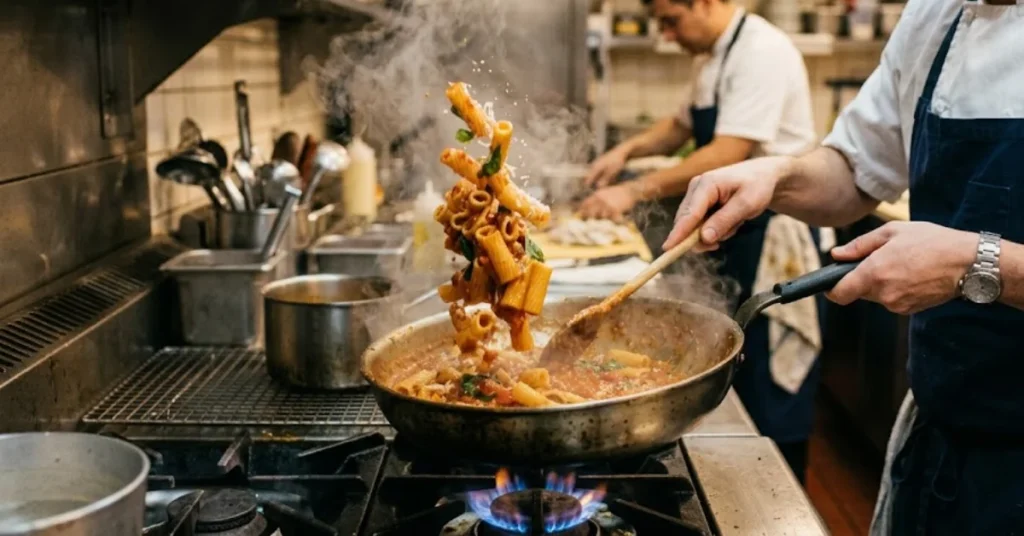
That last technique — cooking pasta about a minute short and finishing it directly in a warm sauce with a splash of reserved pasta water — has become standard practice in professional kitchens, and it’s a small shift that makes a noticeable difference at home too.
Common Mistakes That Ruin Al Dente Texture
A few habits sabotage al dente pasta more than anything else:
- Walking away during the last few minutes. This is when texture changes fastest.
- Rinsing the pasta after draining. It strips away the starch that helps sauce cling.
- Skipping the reserved pasta water. That starchy water thins sauce without watering down flavor.
- Using too little water. Crowded pasta cooks unevenly and turns gummy.
- Trusting the package time blindly. It’s a starting point, never the final word.
Anyone who has managed a busy kitchen knows the pasta rarely finishes exactly when the timer goes off. Weather, stove strength, and even the pot’s material all shift the outcome slightly.
Al Dente for Different Cooking Methods
Not everyone boils pasta the traditional way, and the timing shifts depending on the method.
One-pot pasta, where noodles cook directly in sauce or broth, usually needs two to three extra minutes compared to boiling separately, since the liquid isn’t at a full rolling boil the entire time. Pressure cooker pasta cooks in roughly half the standard time, but it’s far easier to overshoot al dente since there’s no way to taste-test mid-cook. Baked pasta dishes, like lasagna or baked ziti, should be boiled two to three minutes under al dente, since the oven finishes the cooking and overdone noodles turn to mush after baking.
Conclusion
Knowing how long to cook pasta al dente comes down to a mix of shape-specific timing, a proper boil, and trusting the bite test over the clock. Once you’ve tested pasta a handful of times, you stop guessing and start recognizing that firm, slightly resistant bite the moment it happens. Whether you’re making a quick weeknight spaghetti or building out a baked dish for later, the same principle holds: pull it early, taste it, and let the sauce finish the job.
FAQs
Is it better to undercook or overcook pasta for al dente?
Slightly undercook it. Pasta keeps cooking from residual heat after draining, and it often finishes further once it’s tossed with hot sauce.
Does salt in the water actually change the cooking time?
Not significantly. Salt seasons the pasta as it cooks, but it doesn’t meaningfully speed up or slow down the boiling process.
Can you tell al dente pasta just by looking at it?
Not reliably. Color changes are subtle, so the bite test or cutting a piece to check the center remains the most accurate method.
Why does my pasta turn out mushy even when I follow the package time?
Package times are often calibrated for fully soft pasta, and stove strength or altitude can also shift how fast water actually boils.
Does gluten-free pasta cook the same way?
Not exactly. Gluten-free shapes tend to lose structure faster, so start testing three to four minutes earlier than you would with wheat pasta.