
The first time I cooked wild rice, I drained it too early and ended up with grains that fought back against every bite. Learning how to cook wild rice properly is less about following a rigid recipe and more about understanding what this grain actually is and how it behaves in water. Get that part right, and the rest falls into place.
Anyone who has cooked this grain a few times knows it doesn’t behave like the white or brown rice sitting next to it at the grocery store. It takes longer, needs more water, and rewards patience with a chewy, nutty result that holds up beautifully in soups, salads, and stuffing.
What Wild Rice Actually Is
Wild rice isn’t rice at all. It’s the seed of an aquatic grass, native to the shallow lakes and slow rivers of the Great Lakes region in North America. Long before it showed up in supermarket blends, it was a staple food and a sacred plant for Ojibwe communities, who call it manoomin, meaning “good berry.” The Ojibwe people consider wild rice a sacred part of their culture, and in 2018 the White Earth Nation granted the plant certain legal protections.
That heritage still shapes how the grain is harvested and sold today. Some wild rice is hand-harvested from lakes using canoes, while most of what’s sold commercially is cultivated in paddies across Minnesota and California. The hand-harvested variety cooks faster and has a lighter color, while cultivated rice is darker, tougher, and takes longer at the stove.
How to Cook Wild Rice on the Stovetop
This is the method most cooks rely on, and for good reason. It’s hands-off enough to let you prep other parts of a meal while the rice simmers away.
Here’s the basic process:
- Rinse one cup of wild rice under cold water until it runs clear.
- Add it to a saucepan with 3 to 4 cups of water or broth and a pinch of salt.
- Bring it to a boil, then reduce to a gentle simmer and cover.
- Cook for 35 to 55 minutes, checking after the 35-minute mark.
- Drain any extra liquid, cover with a towel, and let it steam for 10 minutes before fluffing with a fork.
The wide time range isn’t a mistake. Cultivated wild rice can take up to 70 minutes, while lighter, hand-harvested grains might be done in 20. That’s why tasting a grain rather than watching the clock is the real test.
Anyone who has managed a big batch of this grain for a dinner party knows the texture should be chewy with a slight bite, not soft all the way through. When grains split open and curl slightly at the ends, that’s your cue to start checking every five minutes.
Getting the Water Ratio Right
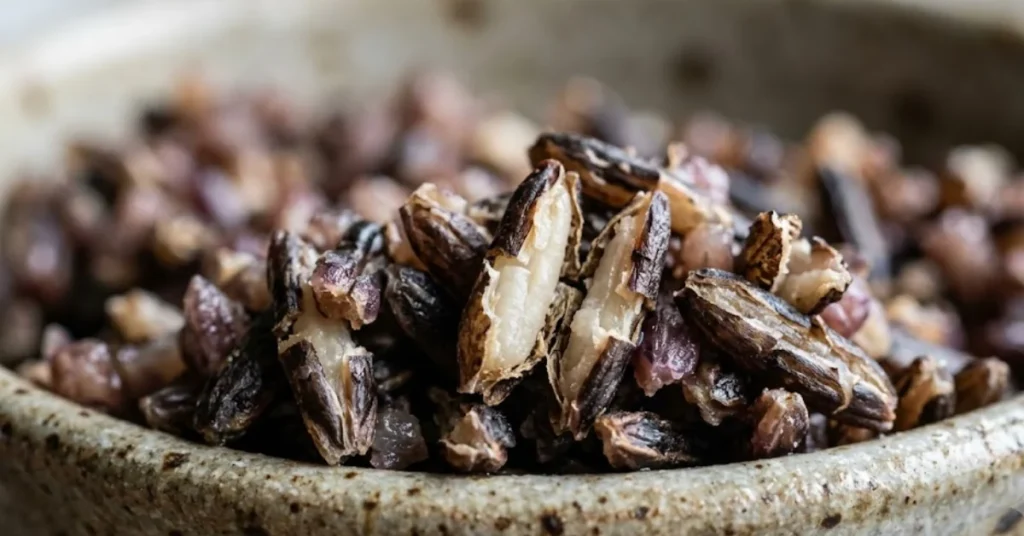
Recipes vary here, and that’s worth knowing before you start. Some cooks use a snug 3:1 ratio of water to rice, treating it almost like pasta that gets drained at the end. Others prefer a looser 4:1 or even higher ratio, simmering the rice in an abundance of liquid the way you’d poach something delicate.
Neither approach is wrong. A tighter ratio means less draining and more absorbed flavor if you’re using stock. A looser ratio gives you more control, since excess water just gets poured off at the end regardless of exact timing. If you’re new to cooking this grain, start with 3 cups of liquid per cup of rice and adjust from there once you see how your batch behaves.
Soaking is optional but useful if you’re short on time. Leaving the rice in cold water for two to three hours before cooking can cut the cooking time by close to half, though it shouldn’t sit longer than that or the grains may burst before they even hit the pot.
What the Research Shows
Nutrition data from USDA FoodData Central shows that one cup of cooked wild rice, at roughly 164 grams, contains about 166 calories, 7 grams of protein, and 3 grams of fiber, along with meaningful amounts of magnesium, phosphorus, and zinc. That’s notably more protein and fiber than an equivalent serving of white rice, which helps explain why the grain shows up so often in health-focused meal plans.
Analysis of how the grain is used across recipe databases and cooking forums also shows a consistent pattern: most home cooks combine wild rice with a broth rather than plain water, specifically because the grain’s porous structure absorbs liquid flavor exceptionally well during the long simmer. That single swap, broth instead of water, is one of the simplest ways to upgrade a basic side dish without adding a single extra step.
Cooking It Beyond the Stovetop
Not everyone wants to babysit a pot for 45 minutes, and that’s a fair concern for anyone managing a busy kitchen.
Rice cooker method: Combine one cup of rinsed wild rice with two cups of water in the insert, select the brown rice setting if your machine has one, and let it run. It typically finishes in 45 to 55 minutes with almost no attention required.
Pressure cooker or Instant Pot method: Use roughly one cup of rice to one and a third cups of liquid, cook on high pressure for 20 to 30 minutes, then allow a natural release. This is the fastest hands-off option and works well for anyone cooking wild rice regularly for meal prep.
Oven method: Combine rice and liquid in a covered baking dish, then bake at 375°F for about an hour. This works surprisingly well if your oven is already on for something else, like roasting vegetables for the same meal.
Whichever method you pick, the same rule applies: check texture, not the timer, since grain thickness varies from bag to bag.
Common Mistakes That Ruin the Texture
A few missteps show up again and again with this grain, and they’re easy to avoid once you know what to look for.
Skipping the rinse is one of them. Wild rice often carries dust and loose starch from processing, and a quick rinse under cold water prevents a slightly gritty finish. Draining too early is another. The grains might look done on the outside while the center is still firm, so a bite test beats a visual check every time.
Overcooking is just as common, usually from leaving the pot unattended past the point where the grains have already split. Once that happens, the rice turns soft and loses the chew that makes it worth cooking in the first place. And using too little liquid without checking on it partway through can leave you scrambling to add more water mid-simmer, which throws off the timing entirely.
How to Cook Wild Rice for Salads, Soups, and Stuffing
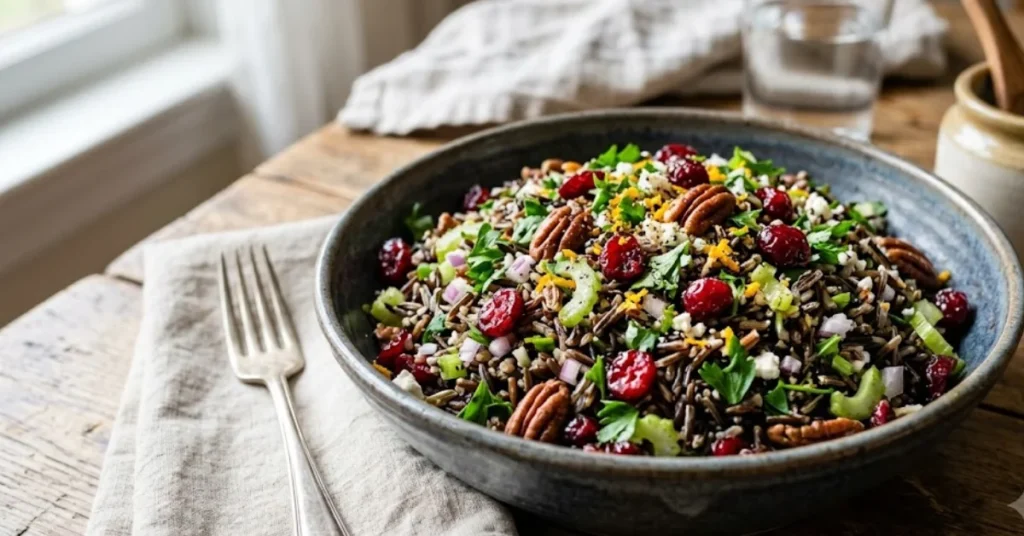
Once you’ve nailed the basic method, using the grain in other dishes gets easy. For a cold salad, cook it slightly firmer than usual, since it will continue to soften as it sits with dressing. For soups, add the rice raw straight into the simmering broth about 40 minutes before serving, letting it cook directly in the liquid it will be served in.
For stuffing, cooked wild rice mixed with sautéed onion, celery, and dried cranberries makes a filling that holds its shape without turning mushy inside a bird or squash. Professionals in test kitchens often cook wild rice a day ahead for exactly this reason, since the grains firm up slightly overnight and hold their structure better in a stuffing mix.
Bringing It All Together
Knowing how to cook wild rice comes down to three things: enough liquid, enough time, and checking texture instead of the clock. Once you’ve made a batch or two, you’ll start recognizing the exact moment the grains split and soften just enough, and from there it becomes second nature. Whether you’re making a quick side dish or building it into a soup, the technique barely changes, just the timing around it.
FAQs
Do I need to soak wild rice before cooking it?
No. Soaking is optional and mainly useful if you want to shave 30 to 50 percent off the cooking time. Unsoaked rice cooks perfectly fine; it just takes longer.
Why is my wild rice still hard after 45 minutes?
Cultivated wild rice can take up to 70 minutes depending on grain thickness. Keep simmering and checking every 5 to 10 minutes rather than assuming it’s done at a fixed time.
Can I cook wild rice in a rice cooker?
Yes. Use about two cups of water per cup of rinsed rice on the brown rice setting, and let it rest for 10 minutes after the cycle ends before fluffing.
Is wild rice healthier than white rice?
It’s higher in protein and fiber per serving, based on USDA nutrition data, which is part of why it’s popular in health-conscious cooking.
What’s the best liquid-to-rice ratio for wild rice?
Most reliable results come from 3 to 4 cups of water or broth per cup of rice, adjusted slightly based on whether your grain is hand-harvested or cultivated.