
My closet used to have three coats I never wore, a drawer of cables for gadgets I’d already replaced, and a shoebox of receipts from 2019. Figuring out how to live with less stuff started for me the day I realized none of it made me happier. It just sat there, taking up space and quietly adding to the low hum of stress that comes from living around too much stuff.
If you’re wondering how to live with less stuff, you’re not chasing some Pinterest-perfect empty room. You’re chasing something simpler: a home that doesn’t feel like a second job to maintain.
Why Learning How to Live With Less Stuff Actually Changes Something
Clutter isn’t just a visual problem. It’s a decision-making problem. Every object in your home is something your brain quietly registers, whether you’re paying attention or not.
Anyone who has cleared out a garage or a closet knows the feeling afterward isn’t just tidiness. It’s relief. Research into minimalist behavior found a measurable positive effect on happiness, and the mechanism wasn’t the number of things people owned. It was the time and mental space freed up once the excess was gone.
That distinction matters. You’re not trying to hit some arbitrary item count. You’re trying to stop spending your Saturday mornings shuffling things you don’t use from one pile to another.
There’s a financial angle too. American shoppers now purchase roughly five times more clothing than they did in 1980, according to reporting cited by Forbes. Most of it ends up worn a handful of times before it’s forgotten in a drawer. Owning less isn’t just about a cleaner house. It’s about not funding a habit that never actually satisfies you.
How to Live With Less Stuff Without Feeling Like You’re Depriving Yourself
This is where most people get stuck. They picture minimalism as white walls and a single chair, and that image scares them off before they even start.
Here’s the deal. Learning how to live with less stuff doesn’t mean owning nothing. It means owning things on purpose.
Start with a single category, not a single room. Pick something low-stakes like kitchen gadgets or old phone chargers. Sort into four piles: keep, donate, discard, relocate. Anyone who has run this exercise knows the “relocate” pile is usually bigger than expected — items that belong somewhere else in the house entirely.
A few ground rules that actually hold up over time:
- If you haven’t touched it in a year, it’s a candidate for donation
- Duplicate items rarely need to stay duplicated
- Sentimental items get one designated box, not an entire room
- Anything you’re keeping “just in case” deserves a hard second look
None of this needs to happen in a weekend. Small, steady progress beats a burnout purge that leaves you too exhausted to keep the habit going.
A Room-by-Room Way to Live With Less Stuff That Doesn’t Burn You Out

Trying to declutter an entire house in one go is how most people quit by lunchtime. A room-by-room approach works better because it gives you visible wins without demanding your whole weekend.
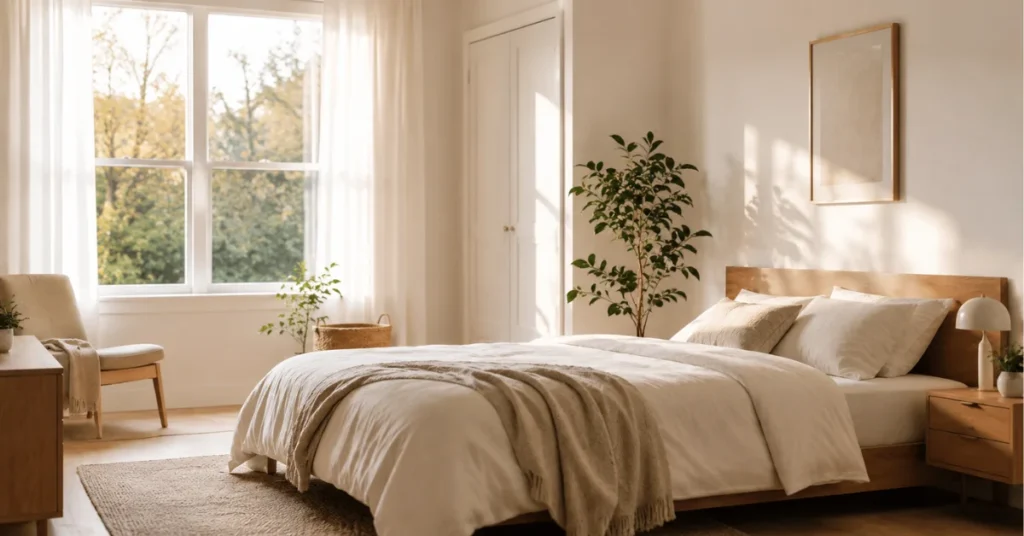
Bedroom first. This is where clutter affects you most directly, since it’s tied to sleep. Bedroom storage habits are common — plenty of people use their bedroom as overflow space for things that don’t have a home elsewhere. Clearing surfaces here first tends to produce the fastest sense of relief.
Kitchen second. Counters accumulate appliances used twice a year. If you own a waffle iron you’ve touched once since buying it, it’s fine to let it go.
Closet third. This is usually the biggest emotional hurdle, since clothes carry memory and identity. Try the hanger trick: turn every hanger backward, and flip it forward only after you wear that item. After three months, whatever’s still backward tells you exactly what you don’t need.
Digital spaces last, but not skipped. Living with less stuff isn’t only physical anymore. A cluttered inbox or a phone full of unused apps creates the same low-grade friction as a messy shelf.
What the Research Shows About Living With Less
People assume decluttering research is mostly anecdotal, but there’s more behind it than personal testimonials.
A global study on minimalist lifestyle adoption found people identifying as minimalists reported meaningfully higher life satisfaction scores than average consumers, despite spending less on possessions. That’s a notable gap, and it lines up with what anyone who has gone through this process tends to say afterward: less buying didn’t cost them anything they actually missed.
There’s also a sustainability thread. Minimalist consumers tend to have a smaller carbon footprint than average shoppers, largely because fewer purchases mean fewer resources extracted, shipped, and eventually discarded. For readers thinking about this in 2026, that overlap between personal calm and environmental impact is becoming harder to ignore.
None of this means owning things is inherently bad. It means most of us own far more than we consciously chose, and untangling that gap is where the actual benefit lives.
Common Mistakes That Stall Your Progress
Even motivated people trip on the same few things when they try to live with less stuff.
Buying storage before decluttering. Bins and organizers feel productive, but they often just make clutter easier to hide rather than reduce it. Sort first. Buy storage only for what’s left.
Trying to do it all at once. A full-house purge in a single weekend sounds efficient. In practice, decision fatigue sets in fast, and the second half of the house gets rushed or skipped entirely.
Ignoring sentimental items until the end. Save the hardest boxes for when you’ve already built momentum with easier categories. Confidence from small wins makes the tough decisions easier.
Forgetting to deal with the “maybe” pile. A maybe box works, but only with a deadline. Set a date, usually 90 days out, and if it hasn’t been opened by then, donate it unopened.
Who Actually Benefits From Living With Less Stuff
Living with less stuff isn’t reserved for people in small apartments or those about to move. It matters for families managing kids’ toys that multiply overnight, for remote workers whose home office doubles as storage, and for anyone who’s noticed they spend more time cleaning around objects than using them.
Parents in particular tend to benefit fast, since kids notice tidy spaces just as much as adults do, even if they can’t articulate why a calmer room feels better. Professionals working from home often find that a decluttered desk translates directly into fewer distractions during the day.
How to Live With Less Stuff for the Long Term
The purge is the easy part. Staying there is where most people slip back into old patterns.
Build a simple rule: one thing in, one thing out. Buy a new jacket, donate an old one. It sounds almost too basic to work, but it prevents the slow creep that undoes months of decluttering in a single year of unchecked shopping.
Schedule a seasonal check-in rather than waiting for clutter to become overwhelming again. Fifteen minutes every few months catches small accumulations before they turn into another weekend project.
And give yourself permission to keep things that genuinely add value. This was never about owning as little as physically possible. It’s about making sure everything left in your home earns its place.
Conclusion
Learning how to live with less stuff isn’t a one-weekend fix, and it was never supposed to be. It’s a slow shift in how you decide what deserves space in your home and your attention. Start with one drawer, one shelf, one category. The rest tends to follow once you feel the difference that first small change makes.
FAQs
Is minimalism the same as decluttering?
Not quite. Decluttering is a single event, like clearing out a closet. Minimalism is the ongoing habit of being intentional about what comes into your home afterward.
How long does it take to declutter a whole house?
It depends on how much you own and how much time you can give it weekly, but most people see real progress within four to eight weeks working room by room.
What should I do with sentimental items I can’t part with?
Keep a single designated box for genuinely meaningful items. If everything is “sentimental,” nothing gets the space it deserves.
Will living with less stuff save me money?
Often, yes. Beyond the upfront value of items you sell or avoid replacing, owning less tends to slow down future impulse purchases, since you become more aware of what you actually use.
Do I need special containers or apps to start?
No. A few empty boxes labeled keep, donate, and discard are enough to start today.