
Few casting decisions in Hollywood carry the kind of pressure that comes with finding a new Tarzan. Casting Tarzan means choosing someone who can look believable swinging through a studio jungle set, survive months of physical conditioning, and still carry a story that’s well over a century old. It’s one part talent search, one part athletic tryout, and it’s been happening on and off since the silent film era.
Anyone who has followed a few Hollywood casting seasons knows the drill by now: a big property gets announced, fan casting explodes online, and half the internet convinces itself that a specific actor already has the part. Tarzan is a special case here, though, because the role demands something most casting calls don’t — a body that can physically survive the shoot, not just an audition that reads well on paper.
The Real Work Behind Casting Tarzan
Casting Tarzan isn’t a single decision made in one room. It typically runs through several stages: a search for someone with the right screen presence, a physical assessment to see whether the actor can realistically bulk up and train for months, and then a long conditioning period once the role is locked in.
When Alexander Skarsgård was cast in “The Legend of Tarzan,” directed by David Yates and released in 2016, he later described a training period that changed his daily life completely. He worked with trainer-nutritionist Magnus Lygdback, waking at 4:30am most mornings, eating roughly 7,000 calories a day, and adding more than 11 kilograms of muscle over three months. That’s the kind of physical transformation casting directors and studios expect once an actor signs on for the part.
The film went on to earn $356.7 million worldwide, proof that a well-executed transformation story around casting Tarzan can translate into real box office pull. Studios know this, which is part of why the search for a new Tarzan actor gets treated like a genuine event rather than a routine hire.
A Short History of the Actors Who Played Tarzan
| Actor | Year | Medium |
|---|---|---|
| Johnny Weissmuller | 1930s–1940s | Film |
| Gordon Scott | 1950s | Film |
| Ron Ely | Mid-1960s | Television |
| Christopher Lambert | 1984 | Film (“Greystoke”) |
| Tony Goldwyn | 1999 | Animated film (voice) |
| Kellan Lutz | 2013 | Animated film (voice) |
| Alexander Skarsgård | 2016 | Film |
The character has passed through many hands since Edgar Rice Burroughs created him in 1912. Weissmuller remains the most recognized name in the role, and he’s still the actor most people picture when they hear the name Tarzan. His run set the template that every casting search since has been measured against, even the ones happening nearly a century later.
Disney’s 1999 animated take reshaped the character for a new generation, pairing Goldwyn’s voice work with Minnie Driver as Jane and Glenn Close as Kala. That version became one of the studio’s most beloved animated films of its era and later spawned a long-running stage musical with a score by Phil Collins, which regional theaters still produce today, giving new performers a shot at the role every season.
Each of these actors approached casting Tarzan from a different angle, whether that meant voice work, physical stunt performance, or a blend of both. What ties them together isn’t style; it’s that every one of them had to convince producers they could sustain the character across an entire production, something a single strong audition rarely proves on its own.
Why Casting Tarzan Is So Physically Demanding
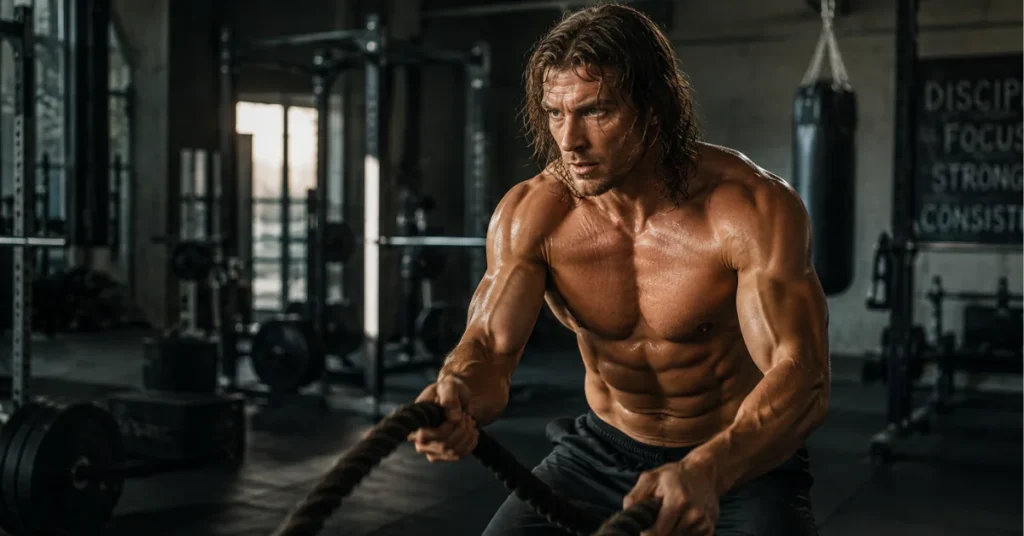
Here’s the thing about this particular role: it isn’t really acting in the traditional sense until the physical baseline is met. Producers who are casting Tarzan look for actors who can commit to months of strength training, stunt rehearsal, and often aerial work involving harnesses and cables.
That physical bar rules out a huge portion of working actors before a single line reading happens. It also means the casting process leans on people with athletic backgrounds, military training, or prior stunt experience, in addition to raw acting ability. Skarsgård, for what it’s worth, had served in the Swedish military before his acting career took off, something he later said helped him approach the physical demands with more discipline than a typical Hollywood shoot requires.
There’s a tradeoff here worth naming honestly. On one hand, hiring an actor who can genuinely do the physical work reduces reliance on stunt doubles and digital effects, and it tends to read as more convincing on screen. On the other hand, it narrows the casting pool significantly and can push production timelines out by months while an actor trains up to the required condition.
What the Research Shows on Physical Transformation Roles
Detailed analysis of roles built around major physical transformation shows a consistent pattern across the industry. Films built around a lead actor’s visible physical change, whether that’s a superhero part, a boxing drama, or a role like Tarzan, tend to generate outsized pre-release media coverage compared to films with similar budgets and no transformation angle.
That pattern held for the 2016 Tarzan film, where training footage and interviews became part of the marketing rollout well before the movie reached theaters. Industry analysts covering entertainment marketing have noted that transformation stories give studios a built-in press cycle that costs nothing extra to produce, since journalists tend to request access to trainers and workout routines on their own.
Early interest in any new Tarzan production tends to follow the same rhythm: speculation builds for months before a single frame is shot, driven almost entirely by casting rumors rather than confirmed plot details.
The 2026 Rumor Mill: Separating Fact From Fan-Made Content
As of 2026, plenty of posts online claim a new Tarzan film is in production with a range of A-list names attached. Much of this traces back to an AI-generated fan trailer built by a digital creator studio, which went viral and sparked genuine confusion among casual viewers about whether a real production existed. It didn’t, at least not one confirmed by any studio.
This is worth flagging clearly: no major studio has officially confirmed a new live-action Tarzan film with a locked cast as of this writing. Anyone searching for casting Tarzan news right now is going to run into a mix of genuine entertainment reporting, outdated speculation, and AI-generated content designed to look like a real trailer. It’s smart to check whether a claim traces back to a verified trade outlet before treating it as fact.
Who Should Care About Tarzan Casting News
Film fans tracking adaptations of classic literary characters have an obvious reason to follow this story. But there’s a second audience too: casting directors, acting students, and fitness professionals often study these high-transformation roles as case studies in what a modern physical casting process actually looks like.
Theater fans shouldn’t be left out either. Regional productions of the stage musical continue casting new leads every season, and those auditions carry their own version of the same physical expectations, minus the film budget.
Casting Tarzan and What Comes Next

Casting Tarzan has never been a simple process, and that’s unlikely to change anytime soon. Whether it’s a new film eventually getting greenlit or the stage musical rotating through another cast in 2026, the role keeps demanding the same rare combination: screen presence, physical commitment, and the willingness to spend months in genuinely uncomfortable training. Until an actual studio makes an official announcement, the safest approach is treating most viral casting claims as speculation rather than confirmed news.
FAQs
Is a new Tarzan movie officially confirmed for 2026?
No major studio has confirmed a new live-action Tarzan film with a locked cast as of 2026. Much of the recent buzz traces back to an AI-generated fan trailer rather than an actual production announcement.
Who has played Tarzan in film and television?
Notable actors include Johnny Weissmuller, Gordon Scott, Ron Ely, Christopher Lambert, and Alexander Skarsgård, along with voice performances from Tony Goldwyn and Kellan Lutz in animated versions.
How physically demanding is training for the role?
Extremely. Alexander Skarsgård added over 11 kilograms of muscle in roughly three months for “The Legend of Tarzan,” training daily and eating around 7,000 calories a day under a dedicated trainer.
Why does casting Tarzan take so long compared to other roles?
Because the physical requirements narrow the pool of eligible actors, and once someone is cast, months of conditioning typically happen before filming even begins.
Where can I see a real cast currently playing Tarzan?
Regional theater productions of the Tarzan stage musical, featuring Phil Collins’s score, continue casting new performers each season and are a reliable way to see the role performed live.