
Somebody says it at every family gathering. Usually an uncle, usually after two drinks, usually staring at a phone-obsessed nephew. Weren’t we free back then? And here’s the thing: he’s not entirely wrong.
There’s a specific ache behind that question. It isn’t just about missing being young. It’s about missing a version of childhood, and even adulthood, that had fewer eyes on it, fewer schedules, fewer notifications demanding a response before the notification even finishes buzzing. If you grew up before smartphones, you probably remember leaving the house after breakfast and not checking in until the streetlights came on. Nobody tracked you. Nobody expected a location pin.
That memory keeps surfacing because something about it feels true, not just nostalgic. So let’s actually dig into whether we were freer back then, what changed, and why so many people your age are asking the same question this year.
Weren’t We Free Back Then? The Short Answer
Yes. In several measurable ways, an earlier generation had more unsupervised time, fewer scheduled obligations, and less surveillance than kids and even adults do now. That doesn’t mean life was easier or better across the board. It means freedom took a different shape, and a lot of that shape has quietly disappeared.
Anyone who grew up riding bikes to a friend’s house without a phone in their pocket knows exactly what’s being described here. There was no group chat confirming arrival. No smartwatch pinging a parent. You just showed up, or you didn’t, and everyone sorted it out in person.
Why This Question Keeps Coming Back Around
Part of the reason “weren’t we free back then” resurfaces so often is timing. Every few years, a new wave of adults hits the stage of life where they’re comparing their own childhood to their kids’, or comparing their twenties to the twenties they’re currently living through.
Standing at that comparison point, the contrast is hard to miss. Where an afternoon once meant open-ended play, it now often means a scheduled activity, a tracked location, and a parent one text away from checking in. Where a Saturday once meant genuine downtime, it now competes with a phone that never fully turns off.
Longtime educators and pediatricians describe the same shift from a different angle. Not fewer opportunities exactly, but fewer unstructured ones. Kids today often have more organized activities than any generation before them, and somehow less actual freedom inside a normal day.
What the Research Shows
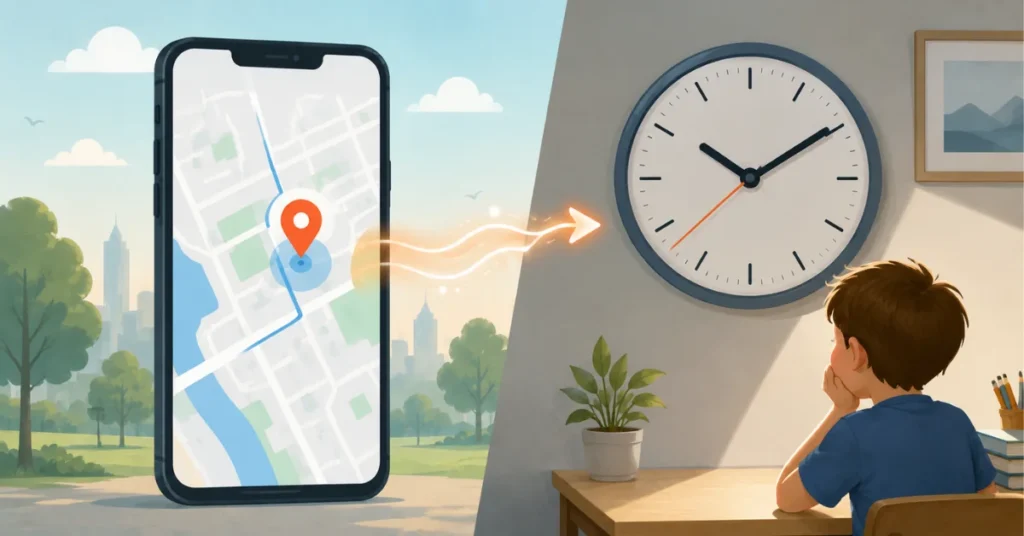
Detailed analysis of children’s independent mobility backs up the gut feeling behind this question. The British Children’s Play Survey, a nationally representative study of nearly 1,900 parents published through the National Institutes of Health’s research archive, found a clear generational gap. Parents reported being allowed out alone at an average age of 8.91, while their own children weren’t given that same freedom until around 10.74, nearly two full years later.
That’s not a small shift. It’s a measurable rollback in independence across a single generation, and it lines up almost exactly with what that uncle at the family gathering is complaining about.
Researchers studying this pattern point to a mix of causes: heightened safety anxiety, denser scheduling, smartphone-based tracking, and a cultural shift toward constant parental availability. None of these causes are irrational on their own. Stacked together, they add up to a childhood, and often an adulthood, with a much tighter leash than the one worn by the generation before it.
Comparing Then and Now
Anyone who has lived through both eras can feel the difference without needing a chart. Here’s what that shift looks like laid out side by side.
| Aspect of Daily Life | Then (1980s–1990s) | Now (2020s) |
|---|---|---|
| Unsupervised outdoor time | Common from early childhood | Delayed until age 10+ on average |
| Staying in touch | Come home by dark, no check-ins | Real-time location tracking |
| Free afternoons | Largely unstructured | Filled with scheduled activities |
| Work-life boundary | Ended when you left the office | Extends through phone and email |
| Decision-making as a kid | Figured out through trial and error | Often managed by adults directly |
That table isn’t meant to romanticize the past completely. Crime data, road safety, and access to information have all changed too, and not always for the worse. But the pattern across nearly every row points the same direction: less open time, more oversight.
It Wasn’t Just Childhood
This is where the nostalgia gets more interesting, and more honest. The freedom people miss wasn’t only a kid thing. Adults who came of age before smartphones describe a version of daily life that simply had more blank space in it.
Professionals who worked before constant connectivity became standard often describe a workday with a real ending. You left the office, and the office stayed there. There was no expectation of a reply at 9 p.m. because there was no way to send one instantly, and no way to know if it had been read.
People who dated before dating apps describe something similar. Fewer options, sure, but also less second-guessing, less comparison shopping, less performance. A phone number scribbled on a napkin carried a kind of finality that a swipe simply doesn’t.
None of this means older systems were superior in every way. It means unstructured time, once a default setting in daily life, has become something people now have to fight to protect.
The Trade-Off Nobody Mentions
It would be dishonest to frame this as pure decline. The generation asking “weren’t we free back then” also grew up without instant access to emergency help, without GPS if they got lost, and without the ability to reach a parent immediately if something went wrong.
Today’s tighter supervision exists because it solves real problems too. Fewer child abduction cases go unnoticed. Fewer people vanish without a trace on a hiking trail. Fewer workplace mistakes go uncorrected overnight. The freedom that got lost was traded for a version of safety and connectivity that genuinely helps in specific situations.
The honest answer sits in the middle. Earlier decades offered more unsupervised time and fewer eyes watching, The present offers more safety nets and faster help when something goes wrong. Both things are true, and pretending otherwise flattens a conversation that deserves more nuance.
What People Are Doing About It in 2026
Interest in reclaiming some of that lost freedom has grown noticeably through 2025 and into 2026. The “free-range parenting” movement, once a fringe idea, has picked up real momentum, with several US states passing laws that explicitly protect a parent’s right to let kids play or walk to school unsupervised.
Adults are applying the same logic to their own lives. Phone-free weekends, scheduled “no-notification” hours, and deliberate unstructured time have all become common recommendations from psychologists studying burnout and attention fatigue. The pattern emerging from these efforts is consistent: people who carve out unscheduled time report feeling calmer and more present, even when the change is small.
This is the practical answer to “weren’t we free back then.” The freedom didn’t disappear because it became impossible. It disappeared because it stopped being the default, and getting it back now takes intention instead of just showing up outside after breakfast.
So, Weren’t We Free Back Then? Where This Leaves Us

Weren’t we free back then? In several concrete ways, yes. Genuinely, measurably yes. Unsupervised time was more common, schedules were looser, and the expectation of being reachable at all hours simply didn’t exist. That freedom came with real trade-offs, and the current version of connected, supervised life solves problems that used to go unsolved.
The honest takeaway isn’t that the past was better or the present is worse. It’s that freedom, once a passive backdrop to everyday life, now has to be built on purpose. Anyone who still finds themselves asking “weren’t we free back then” already knows the answer. The real question is what they’re willing to change about today to get a little of that back.
For parents navigating these same tensions between safety and freedom, our Family and Parenting Resources offer practical perspectives on raising kids in the digital age.
This article discusses generational and cultural shifts from an observational perspective, drawing on published research where available.
Frequently Asked Questions
Why do people keep asking “weren’t we free back then”?
The question usually surfaces when comparing an earlier, less scheduled and less tracked version of daily life to a more supervised, more connected present. Research on children’s independent mobility confirms the comparison holds up, showing that actual freedom has measurably declined across a generation.
Is nostalgia for the past always accurate?
Not entirely. Memory tends to smooth over the harder parts of earlier decades: less access to help in emergencies, fewer safety nets, and real risks that today’s tools help reduce. The freedom was real, but so were the gaps it left behind.
What changed the most between then and now?
Constant connectivity is the biggest shift. Smartphones, location tracking, and always-on communication replaced a default of being unreachable for hours at a time, which affected both childhood independence and adult downtime.
Can adults get some of that freedom back?
Yes, though it usually takes deliberate effort now rather than happening by default. Scheduled phone-free time, boundaries around work communication, and intentional unstructured hours are the most common approaches people use in 2026.
Does this affect kids differently than adults?
Both groups experienced a real decline in unsupervised time, but children’s independent mobility has been the most studied. The British Children’s Play Survey found children are now allowed out alone nearly two years later than their parents were at the same age.