
That sharp twinge every time you swallow can turn a normal day into a miserable one. If you’ve been asking yourself why does my throat hurt when I swallow, you’re dealing with something doctors call odynophagia, and it’s one of the most common reasons people search their symptoms online in 2026.
The pain can feel like a scratch, a burn, or a stabbing sensation that hits right as food or saliva goes down. Sometimes it’s mild and fades in a day. Other times it lingers for weeks and needs a proper medical workup. Here’s what’s actually going on.
Why Does My Throat Hurt When I Swallow? The Short Answer
In most cases, the reason your throat hurts when you swallow comes down to inflammation somewhere along the path food and liquid travel — the mouth, throat, or esophagus. A virus is the usual culprit, but bacteria, acid reflux, allergies, dry air, and even a scratch from a chip or cracker can all trigger the same sensation.
Doctors sort these causes into three broad buckets: infection, inflammation, and physical irritation or obstruction. Figuring out which bucket you fall into usually comes down to what else is going on with your body — fever, a cough, heartburn, or swollen glands all point toward different explanations.
What the Research Shows
Detailed clinical reviews of painful swallowing consistently point to viral pharyngitis as the single most frequent cause across all age groups, followed by bacterial infections like strep throat and inflammatory conditions such as acid reflux. Ear, nose, and throat specialists who evaluate this symptom regularly describe a clear pattern: pain that’s worse with dry, solid food but eases with liquids often traces back to a mechanical or structural issue, while pain that hits equally hard on liquids and solids more often signals infection or inflammation.
Clinicians also note that painful swallowing tends to cluster seasonally — spiking during cold and flu months, then again during allergy season when postnasal drip irritates the throat lining. That pattern has held steady through 2026, with primary care visits for throat pain following the same predictable seasonal curve seen in prior years.
Common Causes Behind Painful Swallowing
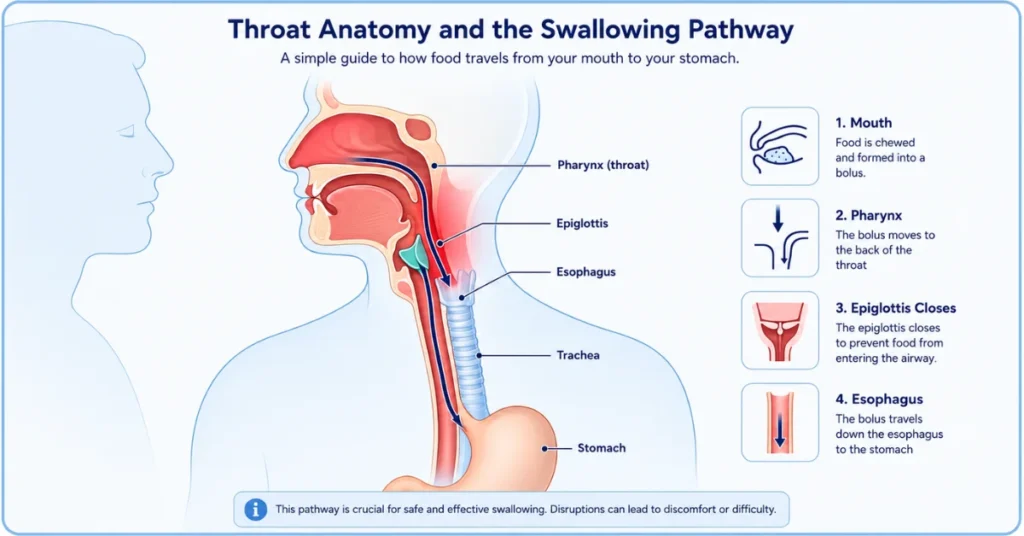
Here’s a breakdown of what typically sits behind the question why does my throat hurt when I swallow, starting with the most frequent culprits.
Viral infections. Colds, flu, and mono all inflame the throat lining. This is by far the most common trigger, and it usually comes bundled with a runny nose, cough, or fatigue. Much like managing other viral issues, such as finding instant remedies for cold sores, these throat infections respond best to rest, hydration, and basic home care.
Strep throat and other bacterial infections. Bacterial pharyngitis tends to hit harder and faster than viral illness. Look for a fever, white patches on the tonsils, and swollen lymph nodes in the neck.
Acid reflux (GERD). Stomach acid creeping back up the esophagus burns the tissue lining, which can make swallowing feel like fire, especially after meals or lying down.
Tonsillitis. Swollen, inflamed tonsils make every swallow feel tight and sore, sometimes with visible redness or pus pockets at the back of the throat.
Oral thrush (candidiasis). A yeast overgrowth in the mouth and throat causes white patches and a raw, burning feeling. It’s more common in people with weakened immune systems, dentures, or recent antibiotic use.
Physical injury. A scratchy cracker, a fish bone, or scalding hot coffee can nick or burn the throat lining directly, producing sharp, localized pain.
Allergies and postnasal drip. Constant mucus dripping down the back of the throat irritates the tissue over time, leaving it raw even without any infection present.
Dry air and irritants. Smoke, pollution, and dry heated air during winter months strip moisture from the throat, leaving it sore and sensitive.
Cause Comparison Table
| Cause | Typical Extra Symptoms | Usual Duration | Pain Pattern |
|---|---|---|---|
| Viral pharyngitis | Runny nose, cough, mild fever | 3–7 days | Worse with both liquids and solids |
| Strep throat | High fever, white patches, swollen glands | Improves within 24–48 hrs of antibiotics | Sudden, severe onset |
| Acid reflux | Burning chest, sour taste, worse when lying down | Ongoing until managed | Burning, worse after eating |
| Tonsillitis | Visible swelling, bad breath, ear pain | 4–7 days (viral) or longer (bacterial) | Constant ache, worse swallowing solids |
| Oral thrush | White patches, cotton-mouth feeling | Until treated with antifungal | Raw, burning sensation |
| Physical injury | Localized sharp pain, sometimes minor bleeding | 1–3 days | Sharp, worse with solids |
Why Does My Throat Hurt When I Swallow on Only One Side?
One-sided throat pain deserves its own mention, because anyone who has dealt with it knows it feels different from a general sore throat. This pattern often points to a single swollen tonsil, a localized infection, or occasionally a peritonsillar abscess — a pocket of infection that forms next to the tonsil and needs urgent medical care.
A lodged piece of food, a sore on one side of the mouth, or even referred pain from an ear infection can also cause one-sided discomfort. If the pain is severe, worsening, or paired with trouble opening your mouth fully, that’s not something to wait out at home.
Home Remedies That Actually Help
Most cases of throat pain when swallowing improve with basic self-care while the underlying cause runs its course. A few things people consistently find helpful:
- Gargling warm salt water several times a day
- Sipping warm liquids like broth or herbal tea
- Sucking on ice chips, lozenges, or popsicles
- Using a humidifier to add moisture back into dry air
- Resting the voice and avoiding smoke or strong fumes
- Taking over-the-counter pain relief as directed on the label
Anyone who has managed a bad sore throat knows that soft, cool foods go down far easier than dry crackers or toast during the worst days. Staying hydrated also thins mucus and keeps the throat lining from drying out further.
When Painful Swallowing Signals Something Serious
Most throat pain resolves on its own within a week to ten days. But certain signs mean it’s time to book an appointment rather than wait it out:
- Pain lasting longer than two weeks without improvement
- Difficulty breathing or a feeling that the throat is closing
- Drooling or inability to swallow liquids at all
- A high fever that won’t come down with medication
- Unexplained weight loss alongside ongoing pain
- Blood in saliva or a muffled, “hot potato” voice
These symptoms can point toward a more serious infection, an abscess, or in rare cases a structural issue that needs imaging or a specialist referral. It’s never a bad idea to get checked out if something feels off and doesn’t improve on its own.
The Bottom Line

Figuring out why does my throat hurt when I swallow usually comes down to matching your other symptoms — fever, cough, heartburn, or a scratchy feeling — to the likely cause. Most cases clear up within a week with rest, fluids, and basic home care.
Persistent, severe, or one-sided pain, especially paired with breathing trouble or a high fever, is a signal to stop guessing and see a professional. Getting it checked early usually means a faster, simpler fix.
This article is for informational purposes only. Always consult a qualified healthcare professional for diagnosis or treatment of throat pain that persists or worsens.
Frequently Asked Questions
Why does my throat hurt when I swallow but I don’t have a cold?
Acid reflux, allergies, dry air, or a minor throat injury can all cause pain without any cold symptoms at all. If it persists beyond a week, a doctor visit is worth scheduling.
How long should a sore throat from swallowing last before I worry?
Most cases clear up within seven to ten days. Pain lasting past two weeks, or getting worse instead of better, warrants a medical check.
Can allergies really cause throat pain when swallowing?
Yes. Postnasal drip from allergies constantly drips mucus down the throat, leaving the tissue raw and irritated even without any infection present.
Is it normal for only one side of my throat to hurt?
It can happen with a swollen tonsil or localized infection, but severe one-sided pain combined with trouble opening the mouth needs prompt medical attention.
Should I take antibiotics for a sore throat?
Only a healthcare provider can determine that after an exam or throat swab. Most throat pain is viral, and antibiotics won’t help those cases at all.