
Standing in front of an open freezer with a half-used tub of yogurt in hand is a familiar kitchen moment. Can you freeze yogurt without turning it into a sad, watery mess? Yes, and once you know the right method, it becomes one of the easiest ways to stop wasting dairy before it spoils.
Can You Freeze Yogurt? The Short Answer
Plain, Greek, flavored, dairy or non-dairy: nearly every type holds up in the freezer for one to two months. Federal food safety guidance backs this up directly. Food kept at a constant 0°F stays safe indefinitely, and freezer time is really about quality, not safety.
So when someone asks “can you freeze yogurt,” the honest answer has two parts. From a safety standpoint, absolutely. From a texture standpoint, there’s a catch worth knowing before you toss a whole tub in the freezer.
That catch comes down to water. Yogurt is mostly liquid held together by milk proteins. Freeze it, and ice crystals form and push those proteins apart. Thaw it, and the water separates out, leaving a grainy, watery product behind. Anyone who has pulled a frozen container of dairy from the freezer knows this look: a layer of liquid sitting on top of a curdled-looking base.
That doesn’t mean frozen yogurt is ruined. It just means plain, spoon-from-the-container eating isn’t the best use for it once thawed. Cooking, baking, and blending are where it earns its keep.
What Happens to Yogurt in the Freezer
Freezing doesn’t kill the live cultures that make yogurt what it is. Those probiotic strains, the bacteria responsible for the tang and the gut-health reputation, go dormant in the cold rather than dying off. Once the yogurt thaws and warms back up, a good portion of them wake back up and keep working.
What changes is structure. The whey, the watery part of milk, separates from the solids during freezing far more visibly than it would in the fridge. A quick stir, or better yet a run through a blender, usually brings it back to something close to its original consistency for cooking purposes. It won’t ever look quite like it did fresh out of the tub, though, and that’s worth accepting up front.
Flavor holds up reasonably well for the full one to two months. Push past that window, and taste starts to flatten out even if the yogurt stays technically safe to eat. This is the same quality-versus-safety split that applies to most frozen dairy, including milk and cream cheese.
Nutrient content barely moves during freezer storage either. Protein, calcium, and most vitamins stay intact through the freeze-thaw cycle, since cold temperatures don’t break down these compounds the way heat can.
How to Freeze Yogurt the Right Way
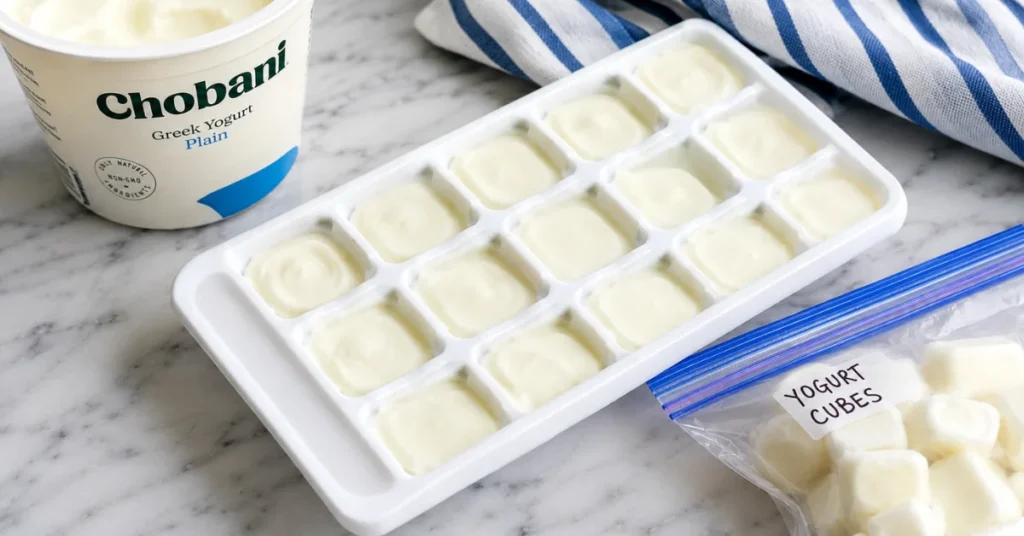
Getting this right takes about thirty seconds of prep. A few habits separate people who end up with usable frozen yogurt from people who end up tossing the whole batch.
Leave room for growth. Yogurt gets a little bigger as it freezes, the same way most liquids do. Freezing a completely full, sealed container risks a cracked lid or a burst seal. Leave an inch or two of headspace, whether that’s in the original tub or a separate freezer-safe container.
Portion before freezing. Freezing the entire container at once means thawing the entire container at once, usually more than anyone needs for a single smoothie or recipe. Scooping yogurt into an ice cube tray, freezing it solid, then transferring the cubes into a freezer bag solves that problem. Grab a few cubes at a time and leave the rest frozen.
Label everything. A container without a date is a container that gets forgotten in the back corner. Write the freeze date directly on the lid or bag.
Thaw low and slow. The safest method is an overnight stretch in the refrigerator rather than the counter or a bowl of hot water. Dairy left sitting at room temperature for more than two hours moves into unsafe territory, and that clock doesn’t reset just because the yogurt started out frozen.
So, Can You Freeze Yogurt in Every Form?
Not every tub of yogurt behaves the same way once it hits sub-zero temperatures, and that matters for anyone deciding whether can you freeze yogurt applies to their specific situation at home.
Plain and Greek yogurt freeze the most predictably. Their higher protein content, especially in strained Greek varieties, helps them hold together a bit better than thinner styles once thawed.
Flavored and fruit-blended yogurts freeze fine too, but the added sugars and fruit pieces can change texture even further after thawing. These tend to work best blended into a smoothie rather than eaten straight from the container.
Non-dairy yogurts made from oat, almond, or coconut bases freeze reasonably well, though separation after thawing tends to be more noticeable since these products rely on stabilizers rather than milk proteins.
One thing worth skipping: freezing a full, unopened container straight from the store shelf. Retailers pack these tight, and the extra volume during freezing has nowhere to go. Open it first, or move a portion into a container with room to spare.
Where Frozen Yogurt Actually Works Best
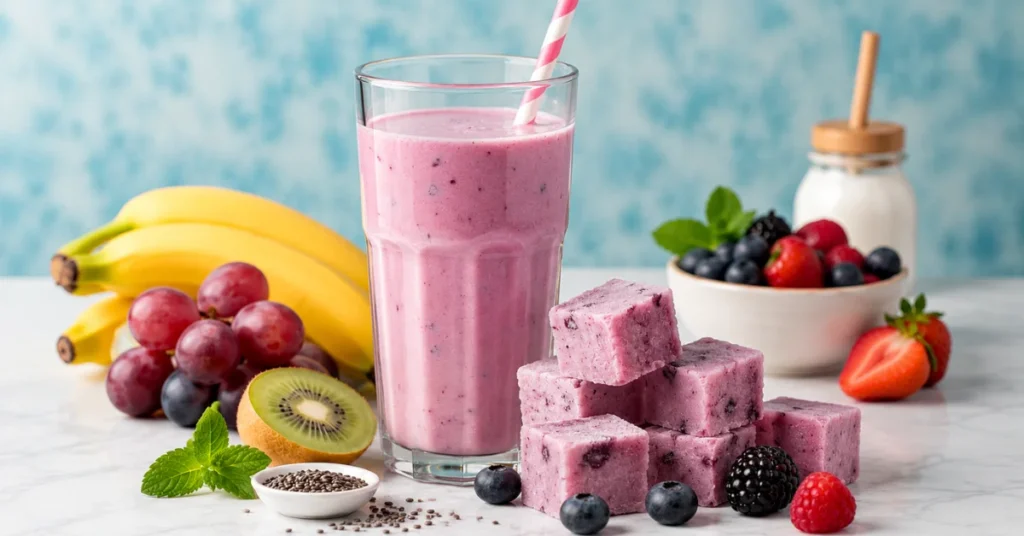
Home bakers and smoothie regulars get the most out of this trick. Frozen yogurt cubes drop straight into a blender without any thawing step at all, adding thickness and a slight tang that plain ice cubes can’t match.
Bakers turn to thawed yogurt in banana bread, muffins, and marinades, where a slightly looser texture blends in without anyone noticing. Anyone who bulk-buys yogurt during a sale, or who bought a large tub for one recipe and used a fraction of it, benefits the same way. Freezing turns a use-it-or-lose-it situation into a stretched-out supply that lasts weeks longer.
Frozen yogurt bark, made by spreading yogurt thin on a tray with fruit or granola before freezing, works as a quick homemade treat for kids too. It skips the texture problem entirely since it’s meant to be eaten frozen, not thawed.
People who eat yogurt plain with granola or fresh fruit will likely be less thrilled with the results. If smooth, creamy texture matters for the way you eat it, freezing probably isn’t the right move for that particular tub.
What the Research Shows
Detailed analysis from food safety researchers consistently points to the same conclusion: freezing works as a preservation method, not a sterilization one. It slows microbial activity to a near standstill rather than wiping it out completely, which is exactly why quality, not safety, becomes the limiting factor over time.
Dairy industry testing on yogurt specifically has found that live cultures largely survive the freeze-thaw cycle, coming back to life once the product returns to a normal temperature. That finding lines up with what home cooks report anecdotally: frozen yogurt used in smoothies or baking still carries that familiar tang, even months after the freeze date.
Common Mistakes to Avoid
A few small errors turn a good freezing plan into a wasted tub of yogurt.
- Freezing a completely sealed, unopened container without leaving room for growth
- Thawing on the counter instead of in the refrigerator
- Skipping the label and forgetting how long it’s been frozen
- Expecting thawed yogurt to taste and feel exactly like it did fresh
- Refreezing yogurt after it has already thawed once
Avoiding these five habits covers almost every complaint people have after trying this for the first time.
The Bottom Line
Can you freeze yogurt?Yes, and it’s a genuinely useful way to stretch a tub before it spoils, as long as expectations get set correctly going in. Expect a texture change, plan to use thawed yogurt in smoothies, baking, or cooking rather than eating it plain, and it turns into a reliable freezer staple rather than a wasted grocery purchase.
Want to reduce food waste? Our Food Culture section has more guides on smart kitchen storage.
FAQs
Does freezing kill the probiotics in yogurt?
No. The cultures go dormant in the cold rather than dying, and most come back to life once the yogurt thaws and returns to a normal temperature.
How long can you freeze yogurt before it goes bad?
One to two months is the sweet spot for quality. It typically stays safe to eat beyond that window if kept at a constant 0°F, but flavor and texture decline the longer it sits.
Can you refreeze yogurt after it’s been thawed?
It’s best avoided. Refreezing previously thawed dairy raises the risk of bacterial growth during the thaw cycle and does further damage to the texture.
Is frozen yogurt from the grocery store the same as freezing regular yogurt at home?
No. Store-bought frozen yogurt gets formulated as a dessert, often with added sugar, and isn’t the same product as a home-frozen tub of regular yogurt.
Does Greek yogurt freeze better than regular yogurt?
Generally, yes. Its higher protein content and thicker starting consistency help it hold together somewhat better after thawing compared to thinner styles.